

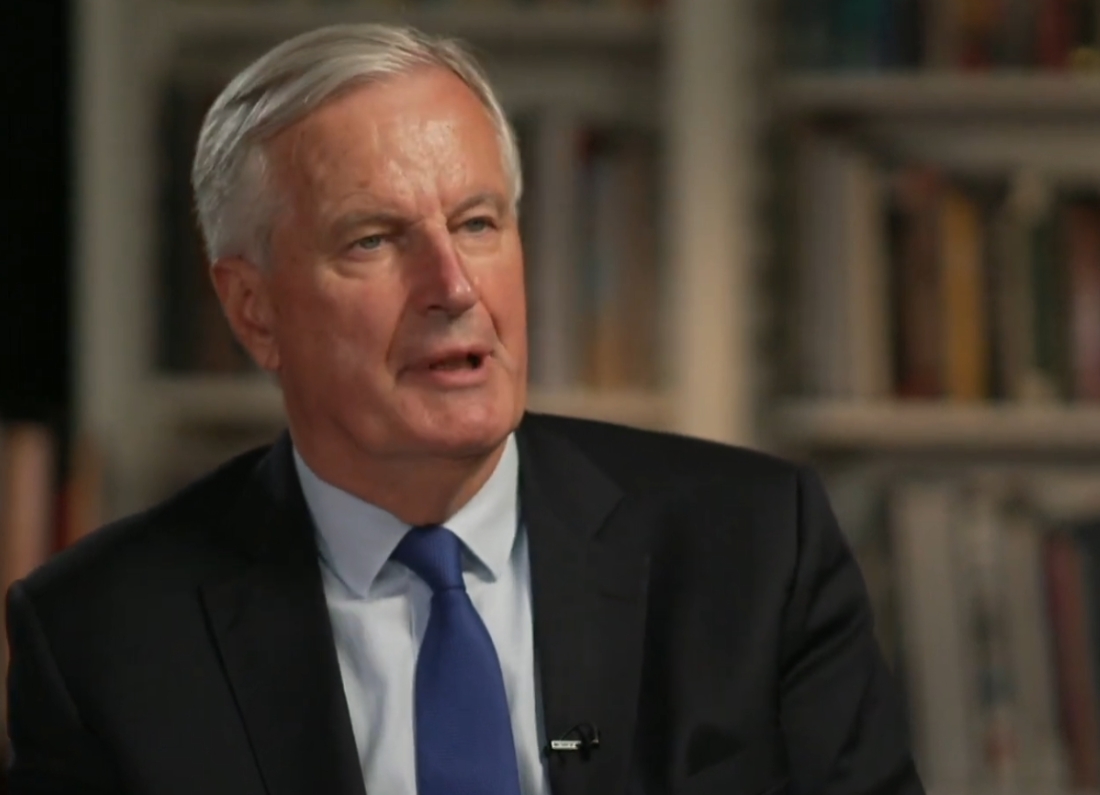
Michel Barnier has said the UK could rejoin the European Union on a “short” timeline, because of the significant regulatory alignment that remains between Britain and the EU a decade after the Brexit vote.
Speaking at the UK in a Changing Europe Brexit anniversary conference on the day Britain marks ten years since the 2016 referendum, Barnier said the logistics of re-entry were not the obstacle. “It could be short,” he said, when asked about the potential timescale. The harder part, he predicted, would be the political journey rather than the technical one – saying “it would take much longer” for the UK government to decide to rejoin than it would to actually become a member again once that decision was made.
No cherry-picking on the four freedoms
Barnier was clear, however, that a return to EU membership would come with conditions. He restated his position that there would be “no cherry-picking” and that the EU would take “no risk” about the indivisibility of the single market’s four freedoms – the free movement of labour, capital, services and goods. His earlier interview this week had suggested the UK could keep the pound and stay outside Schengen, but on the central question of free movement as part of single market membership, there is no flexibility on offer.
That distinction matters enormously in the British political context. Free movement of people was the most combustible element of the 2016 campaign, and successive governments have maintained it as a hard red line. Any path back to the single market – let alone full EU membership – runs directly through that question.
The European security council proposal
Barnier also used the anniversary conference to push his proposal for a new European Council for Security and Defence – a body that would sit outside the formal EU institutional structure and allow non-EU European countries including the UK, Norway and Ukraine to cooperate on defence and security. “It is so important to be together, not to be a subcontractor to China or the US,” he said, setting out the geopolitical logic for deeper European cooperation beyond current structures.
“I proposed creating a European Council for Security and Defence alongside the current institution, in the spirit of the coalition of the willing, working well and working efficiently to support Ukraine with British government and many others,” he said. The proposal would give the UK a formal seat at the European security table without requiring it to be an EU member – an idea that has attracted interest on both sides of the channel at a time when the transatlantic relationship is under strain. Only one in ten Europeans now see the United States as an ally, according to recent ECFR polling. Zelensky has separately called on the UK to rejoin the EU alongside Ukraine for European security reasons.
The context: ten years on
Barnier’s comments land on a day when the evidence of what Brexit has cost is hard to avoid. Two-thirds of Britons now believe Brexit has made every major issue they care about worse – from the cost of living and economic growth to trade and immigration. Every specific promise made by the Leave campaign has failed to materialise: the NHS money, the easiest trade deals in history, the control over immigration.
Philip Rycroft, the civil servant who actually led Britain’s EU exit, has called for a public rejoin debate. Lord Heseltine called it a “heinous crime”. Mazzucato called it a crime on Channel 4. And the UK is now quietly aligning itself with EU single market rules in a reset process that critics on both sides say doesn’t go nearly far enough.
Barnier’s verdict today – that the mechanics of coming back could be quick, and that the real obstacle is political will – is perhaps the most pointed summary of where Britain stands on the tenth anniversary of the vote that changed it. The door, he is saying, is not locked. It is simply that nobody in power has yet decided to walk through it.






Leave a Reply