


Only 11% of people across 15 European countries now see the United States as an ally, according to a major survey published by the European Council on Foreign Relations thinktank. That is down from 16% six months ago and from 22% in November 2024 – when Donald Trump won the presidential election. In six months, the share of Europeans who consider the US an ally has halved. Majorities in every country surveyed now doubt the US would come to their aid if they were attacked. The research, timed to land before G7 and Nato summits in France and Turkey, describes “deep European distrust in the US” and finds clear public appetite across the continent for reducing strategic dependence on Washington.
The survey covered Austria, Bulgaria, Denmark, Estonia, France, Germany, Hungary, Italy, the Netherlands, Poland, Portugal, Spain, Sweden, Switzerland and the UK, with polling conducted in May.
From ally to necessary partner
The most significant shift is not just the headline figure but the category into which the US has moved in European public opinion. “Ally” implies a mutual commitment that Europeans no longer believe exists. The prevailing view is that the US is now a “necessary partner” – a relationship defined by pragmatic utility rather than shared values or guaranteed solidarity.
Beyond that: 13% of the European public now consider the US a rival. Twelve percent consider it a direct adversary.
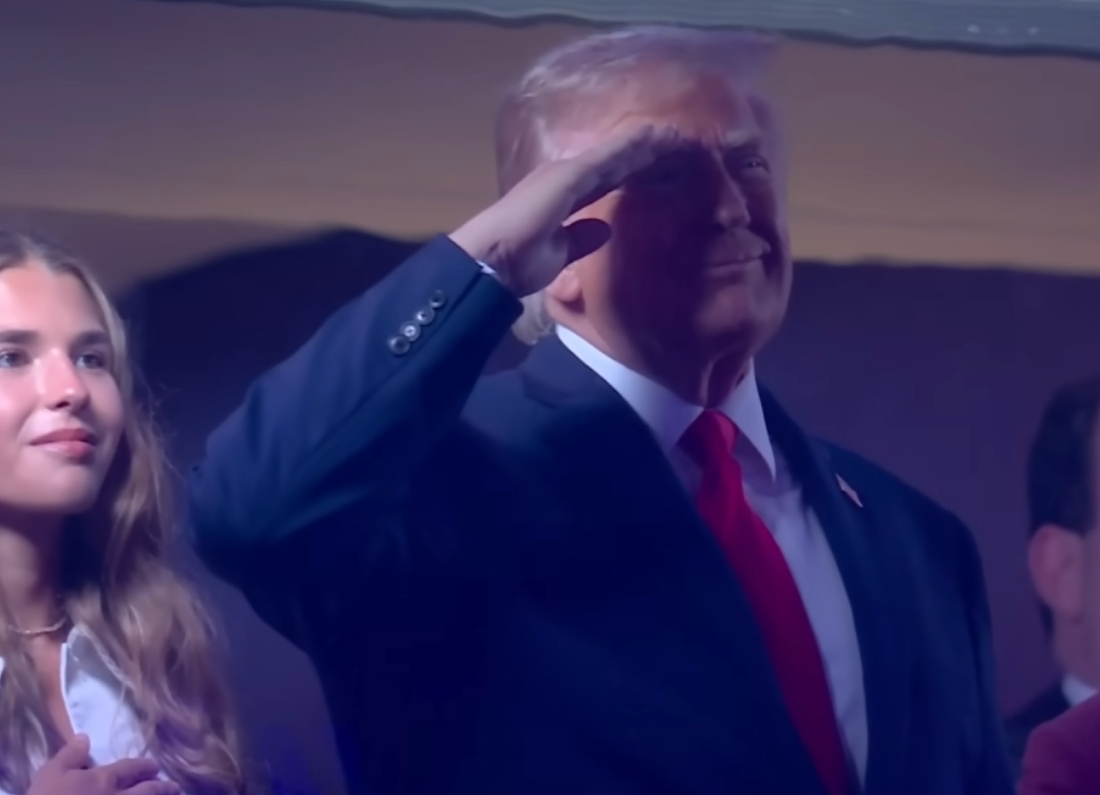
These numbers reflect a specific sequence of events. Trump has threatened tariffs against European allies, made repeated threats to withdraw US troops from European bases, expressed scepticism about the future of Nato, pursued what the ECFR describes as “Middle East aggression,” and threatened to seize Greenland from a NATO ally. As we reported in our Hegseth D-Day piece, the US Defense Secretary used the Normandy American Cemetery to compare migrants crossing the Mediterranean to a “dangerous invasion” – an act that former Conservative Defence Minister Tobias Ellwood described as “discourteous, irresponsible and insulting.” As we reported in our Trump Meet the Press walkout piece, Trump has called the UK’s special relationship with America “sad.”
Jana Kobzová, a co-author and ECFR senior policy fellow, said: “Across the continent, there’s clear support for reducing dependence on Washington. Europeans are increasingly open to higher defence spending and, crucially, show a striking degree of confidence that neighbouring countries would come to their aid in a crisis.”
Defending Europe without America
The survey’s most consequential finding may not be the distrust of the US but the growing confidence in European alternatives. Except in Bulgaria, majorities in every country – including countries with large far-right parties such as France, Italy, the Netherlands and Sweden – believed that at least some European countries would come to their aid if attacked. The trust is now flowing inward across the continent rather than across the Atlantic.
Europeans are on average 4% more likely to support higher national defence spending than last year. Italy is the only country where a clear majority remains opposed. Support for collective EU borrowing to finance greater defence spending sits at 47% in favour against 35% opposed – strongest in Portugal (59%), Denmark (56%), the Netherlands (55%) and Spain.
The “buy European” impulse on military hardware is striking. In Denmark, 75% of respondents backed reducing strategic dependence on US military equipment. In the Netherlands: 72%. Sweden: 70%. Portugal: 69%. France: 66%. Switzerland: 64%. In both the UK and Spain: 62%.
Paweł Zerka, co-author of the survey, said this “clear public demand for greater self-reliance and the need to hedge against US defence guarantees had created a window for Europe’s leaders to go further and faster on security.”
What Europeans still believe about the US
There is significant nuance beneath the headline figures that the ECFR is careful to capture. Most Europeans – 60% or more in France, Spain, Denmark, the Netherlands and Sweden – believe US-European relations would “probably get better” once Trump leaves office. The distrust is directed at the current administration, not at American society or the long-term relationship.
Only 29% backed replacing NATO with an EU-only defence body. The dominant preference, almost universally, is for reform and rebalancing of NATO rather than abandonment.
And despite rising energy costs driven by the Iran war – as we reported in our EU work from home energy crisis piece – 44% of Europeans said resuming oil and gas imports from Russia would be “rather bad” or “very bad.” The memory of energy dependency on Moscow has not faded, even under the pressure of high bills.
The UK dimension
The UK is among the 62% of respondents backing “buy European” on military hardware – a figure that sits awkwardly alongside Brexit’s explicit rejection of European integration and the UK’s current navigation between its EU alignment and its American relationship.
As we reported in our Obama Brexit piece, Lord Darroch argued that Brexit had left Britain “both diminished and isolated” – “a medium-sized country floating uneasily in the mid-Atlantic, profoundly vulnerable to future storms.” His specific warning was that Britain risks having to go “metaphorically on its knees” to both the US and the EU. The ECFR data suggests the EU alignment may be where the greater long-term security lies, at least for now.
As we reported in our Zelensky EU rejoining piece, Zelensky specifically called on the UK to rejoin the EU alongside Ukraine and Turkey as part of a new European security architecture. As we reported in our Starmer EU pivot piece, the UK is already quietly moving to align with EU rules. The 62% of British respondents backing European military hardware independence reflects a public that has moved further than its government has yet formally committed.
A window – but for how long
The ECFR’s timing is deliberate. The survey lands before G7 and NATO summits at which European leaders will face choices about how far and how fast to move toward strategic autonomy. Zerka said the data had “created a window for Europe’s leaders to go further and faster.” Windows, by their nature, close.
The data also reflects a moment of unusual clarity in European public opinion: people across fifteen countries with very different political traditions, from Sweden to Hungary, from Estonia to Portugal, have converged on a broadly shared assessment of the United States under Trump. Whether that assessment survives Trump’s eventual departure from office – most Europeans believe it will improve when he goes – or whether it has produced a permanent recalibration of transatlantic relationships, is the question that G7 and NATO will not answer but will be defined by.








Leave a Reply