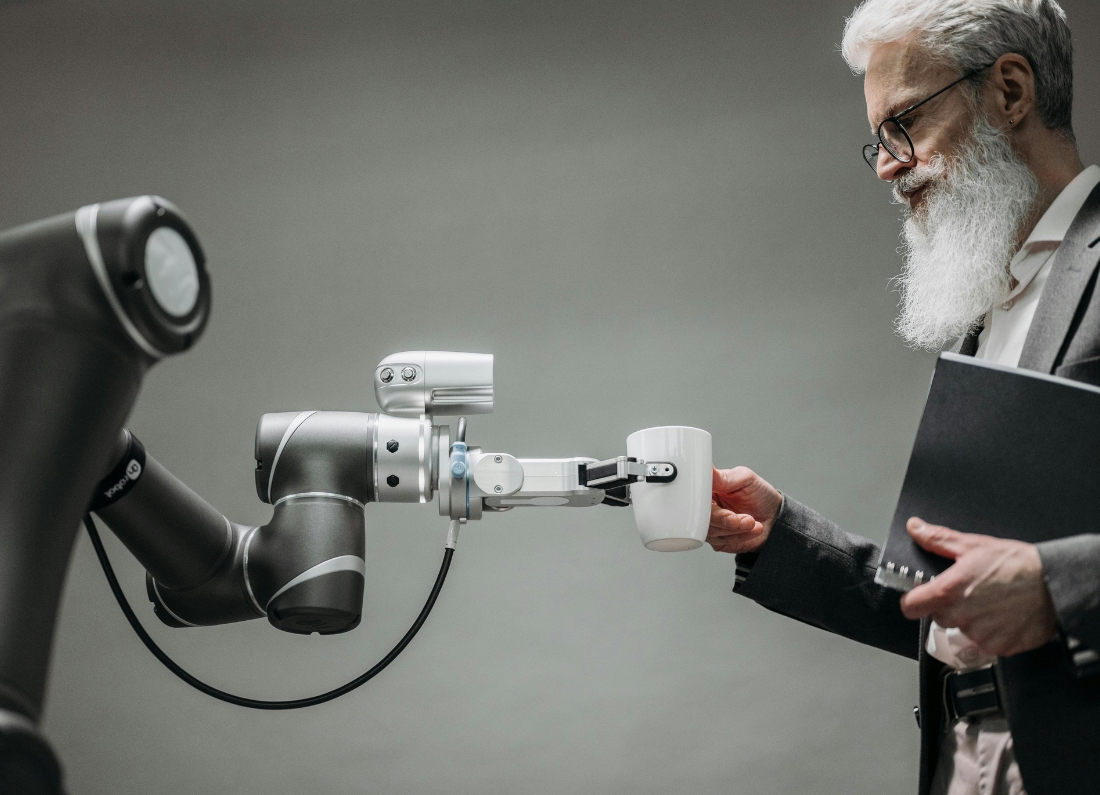
Two economists have published a peer-reviewed mathematical model arguing that competitive AI-driven automation contains a structural trap – one that rational, profit-maximising firms cannot escape on their own, and one that could ultimately destroy the consumer demand the entire economy depends on.
The paper, titled The AI Layoff Trap, was published on 2 March 2026 by Brett Hemenway Falk of the Wharton School at the University of Pennsylvania and Gerry Tsoukalas of Boston University. Its conclusion, stated plainly: if AI displaces workers faster than the economy can reabsorb them, firms risk automating their way to boundless productivity and zero demand.
It is not a warning about a distant hypothetical. The researchers argue the conditions for the trap are already forming.
The logic of the trap
The model begins with a straightforward observation. When a company fires workers and replaces them with AI, those workers lose income. Workers, unlike shareholders, spend a large proportion of their earnings on goods and services. When that spending disappears faster than new employment can replace it, the companies that automated – and all their competitors – face falling consumer demand.
The problem is not that any one company is behaving irrationally. The problem is that every company is behaving rationally at the same time.
When Firm A replaces 500 workers with AI, it captures the full cost saving. But the resulting drop in consumer spending is spread across the entire market – it falls on Firm A, Firm B, Firm C, and every other competitor proportionally. Each firm bears only a fraction of the damage it causes. Firm B, watching Firm A cut costs, faces pressure to do the same or lose market share. Firm C follows. The automation arms race accelerates even as the economic foundation underneath it erodes.
The researchers formalise this as a demand externality. Each automating firm privatises the gains from replacing workers but socialises the cost – the destruction of consumer spending that all firms depend on. In a competitive market, no individual company has the incentive to stop, because stopping unilaterally means absorbing all the competitive disadvantage while rivals continue.
At the theoretical limit, every firm replaces every human worker with AI. Productivity reaches its ceiling. Consumer spending collapses to nothing. The economy produces everything and sells it to nobody.
Why more competition makes it worse
One of the paper’s more counterintuitive findings concerns market structure. Conventional economic thinking holds that competition is good – it disciplines companies, drives efficiency, and benefits consumers.
In this model, more competition makes the trap worse, not better.
The reason is mathematical. In a market with two firms, each company absorbs half of the demand destruction it causes. In a market with ten firms, each company absorbs only a tenth. The more competitors there are, the smaller the share of damage any single firm internalises, and the stronger the incentive to automate beyond what is collectively rational.
A monopolist, by contrast, fully bears the consequences of its own automation decisions. If a monopoly fires its entire workforce and destroys consumer demand, it destroys its own revenue. That feedback loop is enough to make a monopolist exercise restraint. Competitive markets break that feedback, which is why the paper argues that fragmented industries deploying capable AI face the most acute version of this problem.
The numbers already in motion
The paper does not treat this as a theoretical exercise. It anchors its analysis in recent events.
In February 2026, Block – the payments company formerly known as Square – cut nearly 4,000 employees, almost half its workforce. Chief Executive Jack Dorsey stated publicly that AI had made many of those roles unnecessary, and went further: “Within the next year, the majority of companies will reach the same conclusion.”
More than 100,000 tech workers were laid off in 2025 alone, with AI cited as a primary driver in over half of cases. The sectors most affected – customer support, operations, and middle management – are precisely those where AI automation delivers the most immediate cost savings and the least technical friction. A widely cited study estimated that approximately 80 per cent of US workers hold jobs containing tasks susceptible to automation by large language models.
The paper notes that none of this is hidden. Every firm can see what is happening. Forward-looking companies with perfect information about the consequences are still, rationally, proceeding.
Every proposed solution fails
What makes the paper unusual – and uncomfortable – is not just its diagnosis. It is the systematic dismantling of the standard responses. The researchers tested six policy instruments against the model. All but one failed to correct the structural problem.
Universal basic income raises the floor on living standards and cushions the blow of displacement. It does not change a single firm’s incentive to automate. The decision to replace a human worker with AI is driven by per-task cost savings, and UBI does not alter that calculation. Ironically, by raising consumer spending and therefore corporate profits, UBI could attract more firms into competitive markets – which, in this model, widens the automation gap further.
Capital income taxes – taxing the profits generated by automation – scale the entire profit function by a constant. Because every option becomes proportionally less valuable by the same factor, the relative attractiveness of automation is unchanged. The tax collects revenue but does not touch the margin that drives the behaviour.
Worker equity participation – giving workers a stake in the companies automating them – narrows the problem but cannot eliminate it. Profit-sharing partially recycles capital income back through worker spending, reducing the automation gap. But closing the gap entirely would require workers to receive more than 100 per cent of company profits when their spending propensity is less than total, which is not feasible.
Upskilling and retraining address the consequences of displacement rather than its cause. Higher-quality reabsorption of displaced workers into better-paying roles can shrink the demand loss. But it cannot close it as long as any income replacement remains incomplete. As we have previously reported, the question of how AI interacts with existing legal and institutional frameworks remains largely unresolved.
Corporate coordination – voluntary agreements among firms to restrain automation – fails for the same structural reason as the original problem. Because automating is a dominant strategy, no non-binding agreement is self-enforcing. A firm that holds back while competitors proceed loses market share without reducing the aggregate demand destruction.
The one fix that works
The only intervention that fully corrects the distortion in the model is a Pigouvian automation tax – a per-task levy charged to firms each time they replace a human worker with AI.
The logic is direct. Each firm currently bears only a fraction of the demand it destroys. A correctly calibrated tax forces firms to price in the full cost of their automation decision before they take it. When the tax equals the uninternalised portion of the demand loss per task, the private incentive to automate aligns with the collectively optimal rate.
The revenue from the tax matters too. Directed toward retraining programmes, it can raise the rate at which displaced workers find comparable employment – which reduces the demand loss per displaced worker – which reduces the required tax rate in future periods. The researchers describe this as potentially self-limiting: effective retraining shrinks the problem the tax was designed to correct.
No government has implemented an automation tax of this kind. No major economy has a serious legislative proposal under active consideration.
What comes next
The paper explicitly acknowledges what it does not resolve. The model covers a single sector and a single time period. In a multi-sector economy, the demand effects would cascade across industries. The AI investments driving displacement are largely irreversible – once a company rebuilds its operations around automated systems, the human roles do not simply return if conditions change.
It also notes a deeper irony in the AI productivity story. More capable AI – tools that not only cut costs but also raise output per task – makes the problem worse, not better. When AI can do more, each firm has a stronger incentive to race ahead of competitors, seeking market share gains that cancel out at the industry level while the underlying demand destruction compounds.
The researchers’ conclusion is careful but unambiguous. The problem is not that firms are behaving badly. The problem is that they are behaving well, according to the incentives that currently exist, and that those incentives are collectively self-destructive in a way that no voluntary mechanism or redistributive policy can correct.
The mathematics works. The trap is real. The question is whether policy moves fast enough to matter before the numbers do.
Source: Falk, B.H. & Tsoukalas, G. (2026). The AI Layoff Trap. arXiv:2603.20617v1. University of Pennsylvania / Boston University.