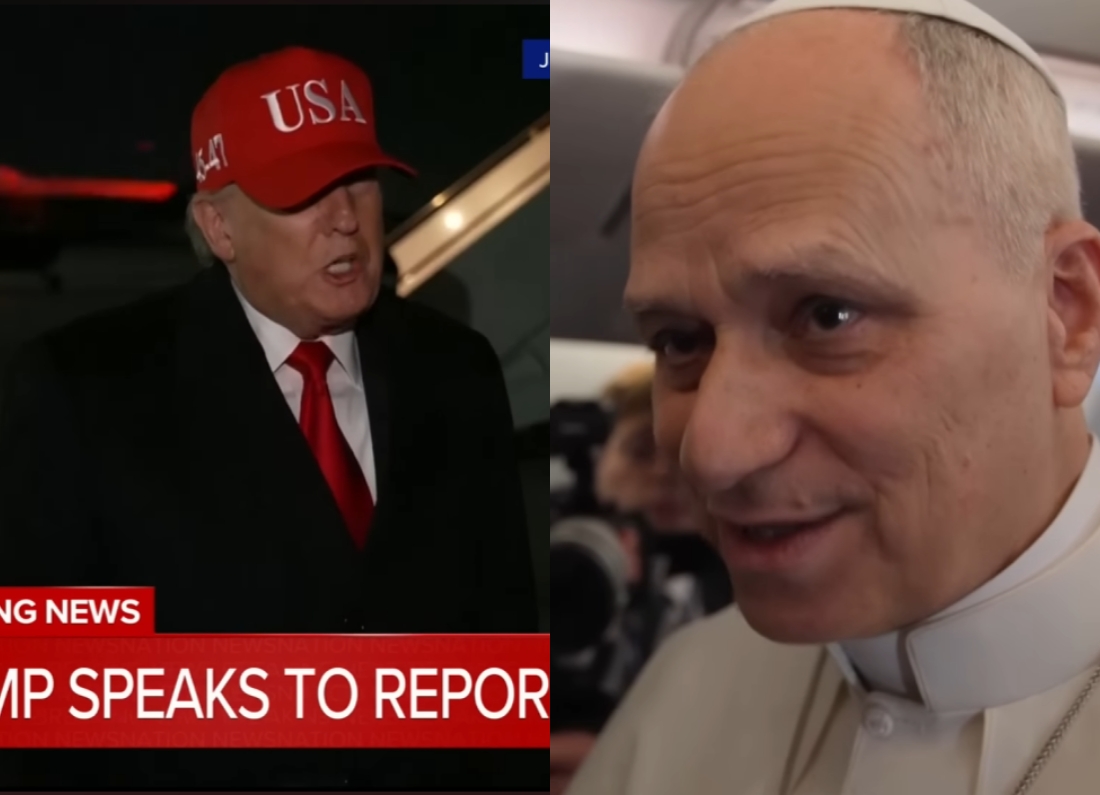
Pope Leo XIV, the first American pope, has issued his first major document – an 83-page encyclical titled Magnifica Humanitas (Magnificent Humanity) – calling for artificial intelligence to be “disarmed,” warning against “new forms of slavery” hidden in its supply chain, urging governments to slow down AI development with robust legal frameworks, quoting Gandalf from The Lord of the Rings, and setting up another direct confrontation with the Trump administration by declaring that “no algorithm can make war morally acceptable” and the just war theory is “outdated.”
The document was presented at the Vatican on Monday alongside AI experts including Christopher Olah, co-founder of Anthropic – the US AI company currently in a legal battle with the Trump administration over the use of its technology for lethal autonomous warfare and mass surveillance. Olah thanked the pope for addressing problems that AI companies find difficult to address themselves, saying that “every frontier AI lab, including Anthropic, operates inside a set of incentives and constraints that can sometimes conflict with doing the right thing.”
What the encyclical says – and what it means
“Magnifica Humanitas” is one of the most authoritative documents a pope can issue – an encyclical lays the basis for Church teaching and longer-term debate across the world’s 1.4 billion Catholics. Leo signed it on May 15, the 135th anniversary of an 1891 encyclical by Pope Leo XIII which laid the foundations of Church social doctrine during the Industrial Revolution. The parallel is deliberate and significant: Leo XIV is explicitly positioning AI as the defining civilisational challenge of the current era in the way that the Industrial Revolution was for his predecessor.
The core demand is “disarming” AI – a phrase Leo clarified is not about rejecting technology but about preventing it from becoming an instrument of domination. “Disarming AI means freeing it from the mentality of ‘armed’ competition,” he wrote. “To disarm does not mean rejecting technology, but preventing it from dominating humanity.”
He warned against “a race for ever more powerful algorithms and larger datasets, driven by the desire to secure geopolitical or commercial dominance” – a direct description of the dynamic between American and Chinese AI development that currently dominates the sector.
The slavery in the supply chain
One of the encyclical’s most powerful sections addresses what Leo calls the “deliberately hidden” chain of exploitation that makes AI possible. “Every seemingly immediate and flawless response… relies on the silent work of millions of people” – from content moderators forced to watch deeply disturbing material to children who extract the rare earth elements on which AI hardware depends.
“Nothing in the world of AI is immaterial or magical,” he wrote. These workers are “scarred, injured and worn down so that computational flow may continue uninterruptedly.”
Greater efficiency or innovation, he argued, does not excuse “a chain of exploitation that remains deliberately hidden.” The observation connects directly to documented realities: the content moderation industry involves workers in Kenya, the Philippines and other lower-income countries spending hours watching violent and traumatic content for poverty wages; rare earth mining in the Democratic Republic of Congo, which provides materials essential to AI hardware, is associated with child labour and severe environmental damage.
The encyclical also called for more to be done to reduce AI’s environmental impact – a reference to the massive energy consumption of large language model training, which has become a significant contributor to global carbon emissions at precisely the moment when climate commitments are under pressure globally.
Gandalf, Tolkien and what they mean here
Leo invoked Gandalf the wizard from JRR Tolkien’s Return of the King to make his argument about individual responsibility in the face of overwhelming technological forces: “It is not our part to master all the tides of the world, but to do what is in us for the succour of those years wherein we are set, uprooting the evil in the fields that we know, so that those who live after may have clean earth to till.”
The choice of Tolkien is not random. Tolkien’s specific moral universe – in which the corrupting power of the Ring represents the danger of absolute technological capability without ethical constraint – maps almost perfectly onto the encyclical’s central argument. The Ring cannot be used for good by anyone. It can only corrupt. Whether AI represents that kind of absolute corrupting power or a more ambiguous tool requiring governance rather than rejection is the tension the document navigates throughout.
Leo’s answer is governance: “What is needed is a more active political involvement that is capable of slowing things down when everything is accelerating.” He called for “robust legal frameworks, independent oversight, informed users and a political system that does not abdicate its responsibility.”
The Trump confrontation
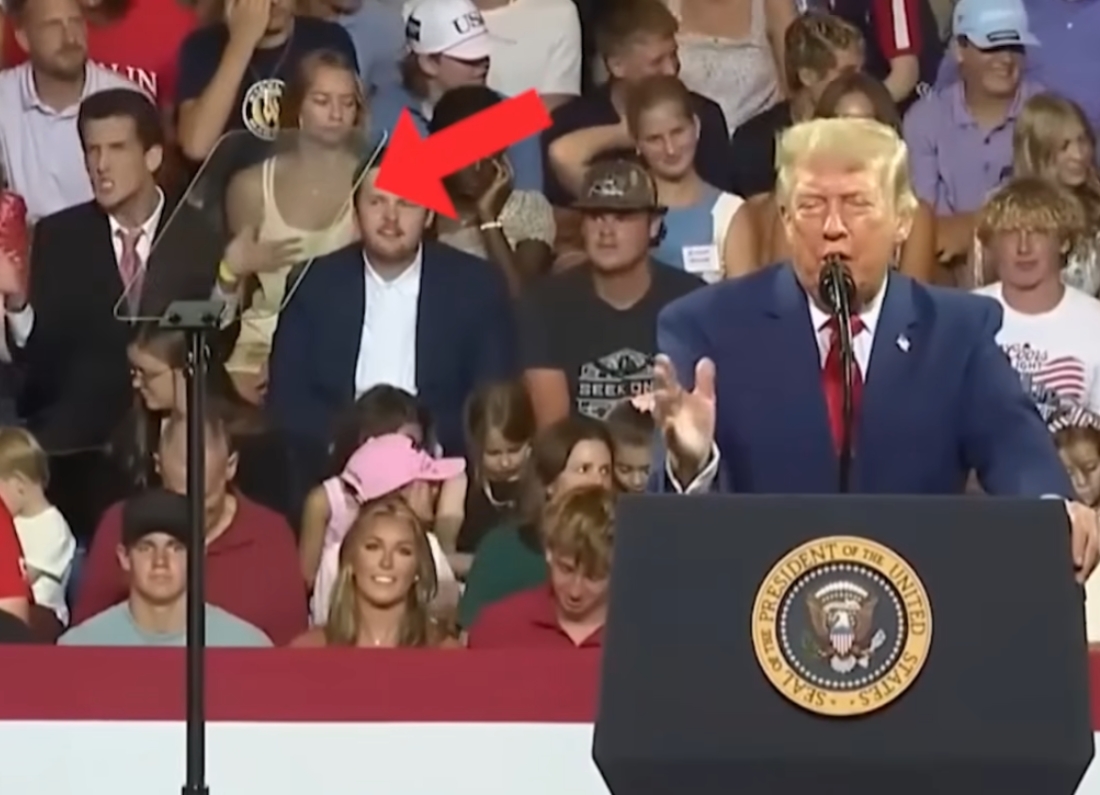
Leo has already clashed with the White House over the Iran war and its use of religious justification for military action. The encyclical escalates that confrontation directly. He declared the traditional “just war” theory “outdated” – it was recently invoked by the Trump administration to justify military actions – and wrote that “no algorithm can make war morally acceptable.”
He was explicit about autonomous weapons: it is “not permissible to entrust lethal decisions to tech.” At the presentation, he warned that some autonomous weapons systems have advanced “practically beyond any human reach to govern them.” The Trump administration has moved in the opposite direction – working to deregulate AI development and pushing for American dominance in military AI applications.
The presence of Anthropic’s Olah at the Vatican presentation is a specific detail worth noting. Anthropic, which produces Claude AI tools, is currently locked in a legal battle with the Trump administration over access to its AI technology for lethal autonomous warfare and mass surveillance – the precise applications Leo is condemning as impermissible. Olah’s attendance and his public statement that AI companies face “incentives and constraints that can sometimes conflict with doing the right thing” suggests a specific alignment between Anthropic’s current legal position and the moral framework the encyclical provides.
The historical scale
Experts are already comparing “Magnifica Humanitas” to Pope Francis’s “Laudato Si” – the 2015 climate encyclical that triggered political and civic reactions worldwide and provided the moral framework for multiple international climate negotiations. Whether Leo’s AI document achieves that kind of influence will depend on how it is received by governments, tech companies and the civil society organisations that translated “Laudato Si” into action.
AI is projected to be worth up to $4.8 trillion by 2033 – a 25-fold increase in a decade – while concentrating its profits in the hands of a limited few, according to the United Nations. Leo’s observation that this concentration represents a form of new inequality requiring political intervention is not a departure from economic consensus. It is a moral framework applied to a problem that the economic consensus has already identified and largely failed to address.
Whether Gandalf’s wisdom, the weight of 1.4 billion Catholics and a co-founder of Anthropic in attendance is enough to move governments and technology companies in the direction the document demands is the question only time can answer.
You can access the full manifesto here.