

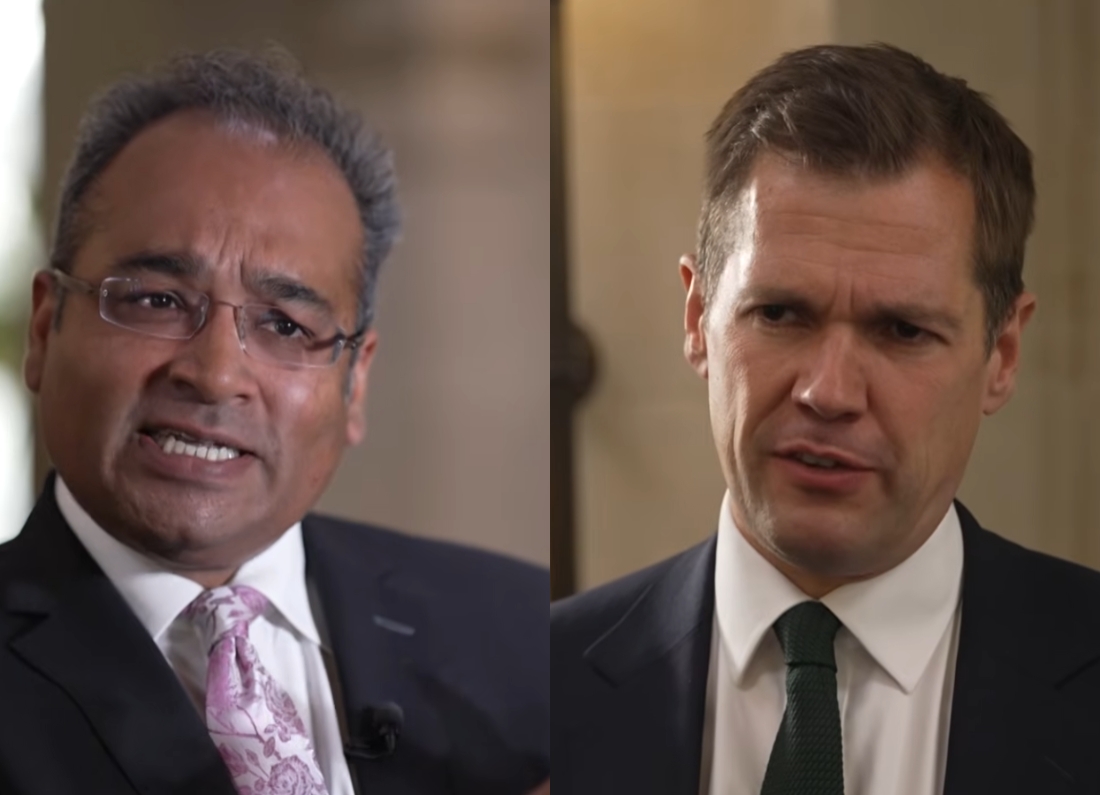
Robert Jenrick went on Channel 4 News planning to explain why Andy Burnham was already failing as prime minister, roughly four hours into the job. By the end of the interview he was defending Nigel Farage’s finances, Reform’s donors, and a £37,500 donation to his own failed Tory leadership bid that’s currently sitting with the Metropolitan Police.
Jenrick’s core pitch was that Reform had become the target of a coordinated campaign to stop Farage changing British politics. The media, the authorities, the established parties, all of it, in his telling, was really just fear of what Farage represents dressed up as scrutiny.
Krishnan Guru-Murthy spotted the obvious flaw straight away. These weren’t pieces of one campaign. They were separate investigations, run by separate authorities, into separate payments and separate alleged offences. Once he actually said that out loud, Jenrick’s whole conspiracy framing started coming apart fairly quickly.
Burnham written off within hours
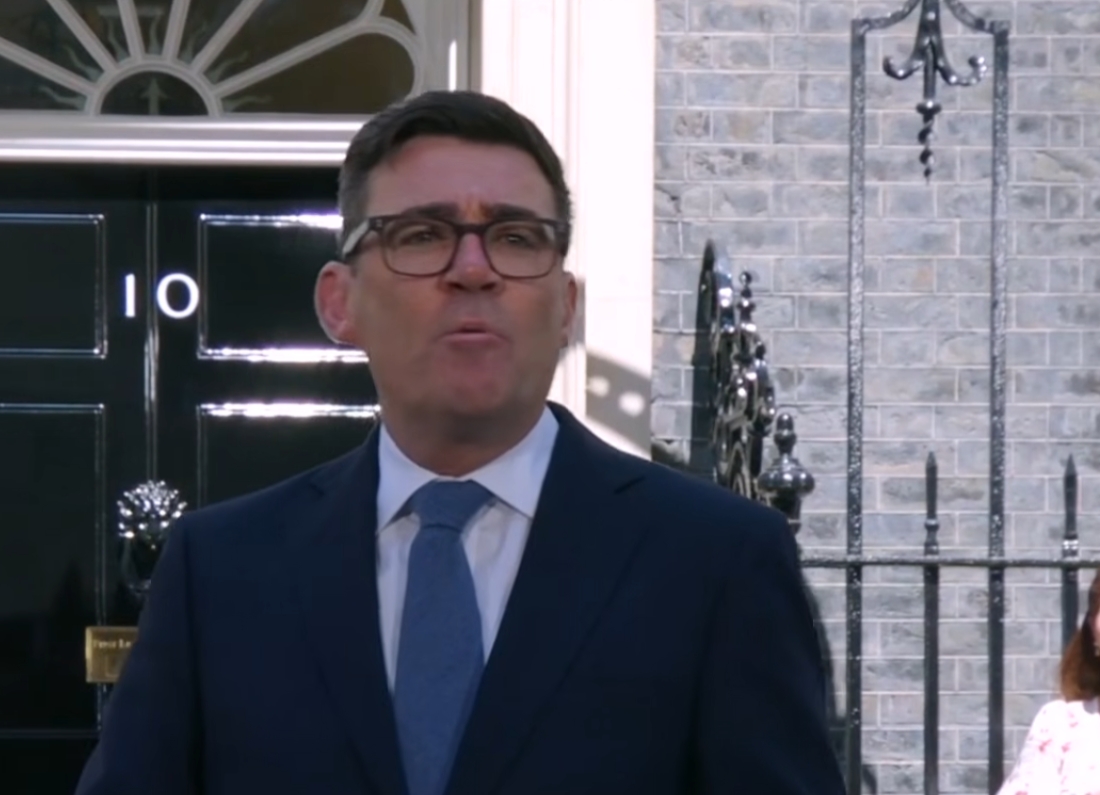
The interview opened with Jenrick going after Burnham following his first speech outside Downing Street. He called the new prime minister “a more human version” of Keir Starmer and predicted the public would see through him soon enough.
Jenrick’s complaint was that Burnham had offered “slogans and platitudes” with no detailed programme, despite the fact he’d formally taken office that same day.
Guru-Murthy asked whether Jenrick would actually respond to Burnham’s appeal for cross-party cooperation, particularly on rough sleeping, an area Jenrick knows well from his time as housing secretary. Jenrick said Reform would “put our shoulder to the wheel” if asked, then went straight back to criticising Burnham for not arriving with a fully formed plan already in hand.
“I do actually expect my prime minister to come into Downing Street with a clear plan as to what they’re going to do,” he said.
Guru-Murthy pointed out that Burnham had, at that stage, been prime minister for a matter of hours. Jenrick pushed on regardless, accusing the government of looking confused and chaotic, and demanding radical change inside its first 100 days.
Nothing wrong, in principle, with an opposition figure challenging a brand-new PM. But writing Burnham off before his first day was even over made Jenrick’s earlier promise to give him “the benefit of the doubt” sound fairly empty.
Then it moved to Reform’s own money
Guru-Murthy shifted to the considerably more awkward subject of Reform’s finances. The party has faced a run of questions about donations, financial support to Farage personally, and whether the people publicly listed as donors were actually the true source of the money.
The Metropolitan Police is investigating two £250,000 donations Reform received from Fiona Cottrell, mother of Farage associate George Cottrell, made before the 2024 election. The inquiry concerns potential offences under laws banning arrangements designed to conceal or disguise a donation’s true source. Two people have been interviewed under caution. No arrests. Being interviewed under caution isn’t the same as being charged or found responsible for anything.
Fiona Cottrell was a legally permissible donor because she was on the electoral register. What’s actually under investigation is whether the money was genuinely hers, or whether she was simply a conduit for funds that came from somewhere else entirely. Reform says the donations were lawful, properly vetted and correctly reported.
When Guru-Murthy asked whether Reform should hand the money back while police were still looking into it, Jenrick pushed back on the presenter describing the donations as looking “dodgy.” He said nobody yet knew what police or the Electoral Commission would conclude, and he was confident Reform would be cleared.
Fair enough, on its own. An investigation isn’t proof of guilt, and Reform is entitled to defend how it handled the payments.
Then Jenrick kept going.
Apparently everyone’s out to get Nigel Farage
Rather than sticking to defending the donations specifically, Jenrick claimed the whole thing was part of a broader effort to damage Farage and Reform. “You’ve got to ask yourself, why are people chucking all this stuff at Reform?” he said, suggesting opponents and their “friends in the media” were going after the party because Farage represented the only genuine change on offer.
Guru-Murthy pushed straight back. “You say people are chucking everything. This is a police investigation.”
Jenrick kept insisting Reform was being attacked from every direction because opponents were scared of it. “But this argument that people are throwing everything at you doesn’t really stick, does it?” Guru-Murthy said. “Because it’s a series of different authorities who are investigating a series of different allegations.”
That’s really the whole weakness of Jenrick’s position. You don’t have to assume Reform’s done anything wrong to accept that separate concerns about separate payments genuinely deserve looking into. The Electoral Commission handing evidence to the police isn’t the same thing as a newspaper being critical of Farage, and neither of those is the same as Labour attacking Reform during an election. Treating every single question, every referral, every article, as one giant establishment plot is a convenient way to avoid engaging with any of them individually.
It’s an even harder sell when the person making the argument has his own campaign finances under investigation.
Jenrick’s £37,500 problem
Guru-Murthy reminded him of exactly that: police are investigating donations linked to his 2024 Conservative leadership bid.
Jenrick ran to replace Rishi Sunak, lost to Kemi Badenoch, and later defected to Reform, becoming its Treasury spokesperson. His campaign took £100,000 from a UK company called The Spott Fitness. It’s since been alleged that £37,500 of that ultimately came from Innovyz USA, a company set up by American businessman Gary Klopfenstein. Foreign individuals and overseas companies who don’t meet the relevant UK requirements generally can’t fund British political campaigns at all.
The Electoral Commission referred the leadership campaign donations to the Met, which opened an investigation. The force hasn’t said publicly whether any specific individual is a suspect.
Jenrick denies any wrongdoing. He says his team followed electoral law, the Conservative Party checked the donation was permissible, and he had no knowledge of any Klopfenstein connection at the time. He also says he’s never met, spoken to, or had any contact with Klopfenstein at all.
Guru-Murthy also raised the role of Jenrick’s wife, corporate lawyer Michal Berkner, whose work for a company linked to the donor has drawn its own scrutiny. Jenrick accused critics of smearing politicians’ wives and said she’d had no involvement in the donations. Pressed further on whether she’d actually acted as a lawyer for the company, Jenrick confirmed she had, but repeated she’d played no part in the payments themselves.
The Financial Times has reported claims from an American lawyer that Berkner knew about foreign payments into The Spott Fitness’s wider corporate group earlier than previously stated. Both Berkner and Jenrick deny any wrongdoing.
None of that proves Jenrick knowingly took an impermissible donation. The investigation is ongoing and its exact scope hasn’t been made public. But it did rather undercut his attempt to frame scrutiny of Reform as an establishment stitch-up.
Guru-Murthy kept coming back to the actual questions
Jenrick tried steering things towards cancelled elections, proposed changes to donation law, and Labour’s own funding. He accused the government of trying to deny millions of people a vote and said journalists had improperly targeted Farage’s family.
Guru-Murthy called part of that response “a slight deflection” and kept returning to the donations.
He then raised the £5m personal gift Farage received from crypto billionaire Christopher Harborne shortly before the 2024 election. Farage didn’t declare it in his parliamentary register once elected, maintaining it was personal, unconditional, and didn’t need registering. He initially said it was for his own and his family’s security, later called it a reward for decades of Brexit campaigning, and said he could spend it however he liked.
A parliamentary inquiry into whether the gift should have been declared was opened, then paused when Farage resigned as Clacton’s MP to trigger a byelection, and can resume once that contest concludes.
Guru-Murthy asked whether Farage should hand the money back, particularly if the government now provides him proper security. Jenrick said Farage still faces serious threats and that the state has failed to protect him adequately, citing Ann Widdecombe’s murder and arguing politicians shouldn’t have to lean on private donors to keep themselves and their families safe.
Genuinely serious concerns, those. They just don’t answer the separate question of whether the gift should have been declared under parliamentary rules. Guru-Murthy pointed out Farage himself had stressed the money was unconditional, and could even go on a Ferrari if he fancied it. Jenrick’s response was that security remained one of the main reasons for the gift, as far as Farage understood it.
Reform’s answer is starting to sound very familiar
Jenrick kept saying Reform had nothing to hide and would be cleared. If that turns out to be true, the party’s entitled to say so, loudly. Until it is, journalists are equally entitled to keep asking about unusually large gifts, contested donations, and money whose actual source is being examined by police.
Guru-Murthy never said Reform was guilty of anything. He just wouldn’t let Jenrick fold every separate investigation into one tidy story where Farage is simply the victim of a frightened establishment.
That’s exactly why the interview worked. Jenrick wanted a grand political conspiracy. Guru-Murthy kept bringing it back down to specific facts, including the one sitting on Jenrick’s own doorstep.
Reform says it wants to overturn the current political order and potentially form the next government. A party making that claim should expect real scrutiny of its finances. Calling every hard question an attack might satisfy the party’s own supporters. It isn’t the same thing as actually answering it.
You can watch the full interview below:
2 responses to “Robert Jenrick said the whole world was ganging up on Nigel Farage. Krishnan Guru-Murthy wasn’t having any of it.”
-
Robert Jenrick comes across as a horrible slimey individual with specious arguments and a variety of deflection strategies. Let’s hope people see through him and he disappears from the political scene. Along with Farrage. Another blatantly horrible character. Everything about the Reform party stinks of corruption.
-
By security, does Farage and Jenrick mean financial security which has now come to light. It’s taxable, so why hasn’t Farage, if he’s honest, paid his dues to the Inland Revenue? We still do not know the original provenance of the £5 million. not forgetting all the rest. Crypto currency is how Putin funds his agents. It is also how criminal gangs launder their money, particularly Channel people smugglers. So come on Reform tell us, but bet you dare not, as it will all end in tears.







Leave a Reply