

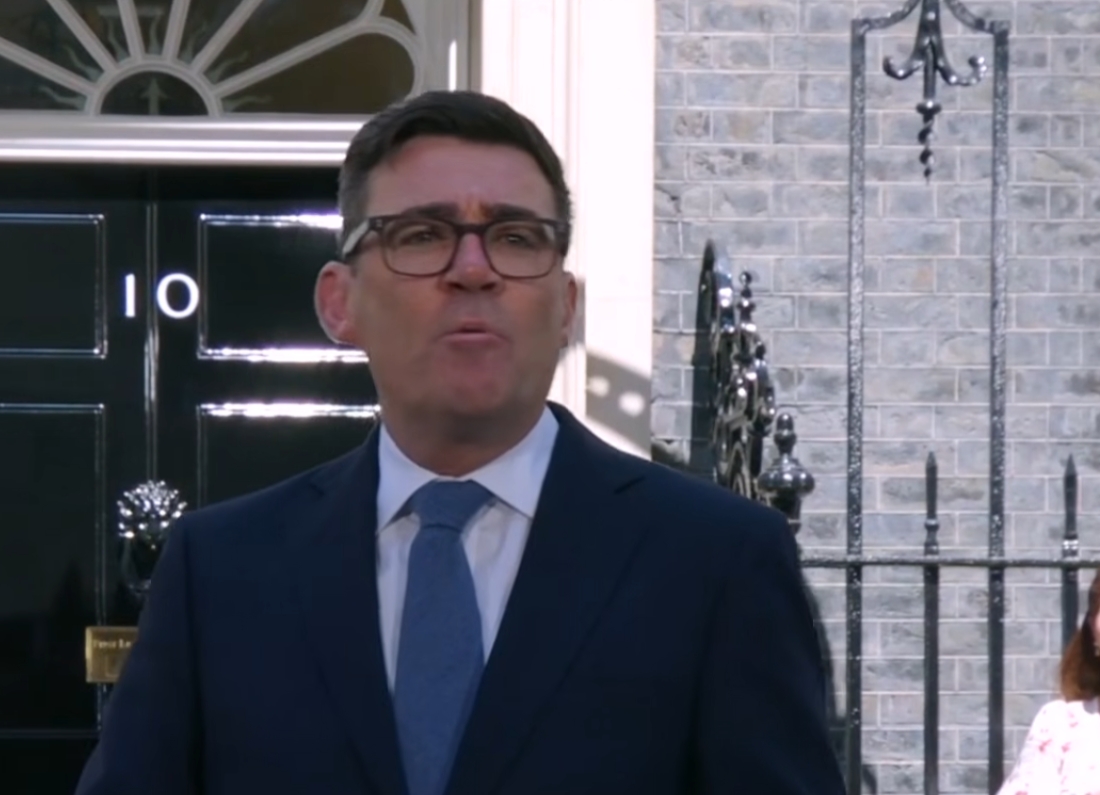
Prime Minister Andy Burnham has announced a further £432 million to tackle rough sleeping in England, almost doubling government investment to £874 million as he presses ahead with an ambitious promise to ensure everyone sleeping on the streets is offered a route into accommodation before Christmas.
The additional money will be confirmed in Wednesday’s Budget and is intended to extend support beyond the winter months, allowing councils, charities and housing providers to help people secure more permanent homes rather than simply offering emergency shelter.
Burnham made ending rough sleeping one of his first priorities after entering Downing Street in July, arguing that Britain had accepted the sight of people sleeping in shop doorways and on pavements for far too long.
The latest announcement comes ahead of a major summit at Downing Street on Monday, where businesses, homelessness charities, housing associations and local leaders will be asked to contribute to a national effort to tackle the problem.
“Rough sleeping isn’t a fact of life. It’s a thing governments either choose to accept or don’t,” Burnham said.
“Well I don’t accept it.”
Another £432 million to keep people off the streets
The new investment builds on the £442 million package announced in August, which was designed to expand emergency accommodation, outreach teams and practical support ahead of winter.
That initial funding was focused on helping people who are currently sleeping rough, particularly in areas where homelessness has become an entrenched problem.
The additional £432 million will take overall investment in the programme to £874 million, with funding continuing beyond March 2027 and through to the end of the current Parliament.
The longer-term commitment is significant because emergency accommodation alone does not necessarily prevent someone from returning to the streets.
People experiencing homelessness may also need help with mental health problems, addiction, employment, benefits or securing a tenancy they can afford to maintain.
Without those services, moving someone into temporary accommodation can become little more than a short interruption in a much longer period of homelessness.
Burnham said the government wanted to avoid precisely that outcome.
“That’s why we’re doubling funding so that people aren’t just offered a safe route off the streets this winter but have that same support right through the rest of this Parliament too,” he explained.
The Prime Minister also acknowledged that central government would not be able to deliver the programme alone, calling for businesses, charities and local communities to help provide accommodation and employment opportunities.
Every rough sleeper to be offered help before Christmas
The government’s immediate ambition is to ensure that everyone sleeping rough in England has been offered a safe route off the streets or wider support before Christmas.
That does not necessarily mean every person experiencing homelessness will have moved into permanent accommodation by 25 December.
Some people may initially enter hostels, temporary housing or other forms of supported accommodation, while others may require more intensive intervention before they are able to move into a settled home.
Ministers say the programme is intended to provide a route towards greater stability, with local outreach teams identifying people sleeping rough and working with them to find suitable support.
Work is already under way in Coventry, where specialist outreach teams and additional accommodation spaces have begun operating.
Further provision is being rolled out in Plymouth and Camden, with other areas expected to follow as local authorities expand their winter arrangements.
The programme is designed to prioritise people facing the greatest difficulties, including those who have spent long periods on the streets and may have complex health or support needs.
The government believes that getting people into accommodation earlier can also reduce pressure on hospitals, emergency services and the criminal justice system, which frequently deal with the consequences of long-term homelessness.
Housing associations pledge 2,000 potential homes and bedspaces
The Downing Street summit will bring together organisations that can contribute accommodation, funding, practical support and employment opportunities.
One of the largest commitments comes from the National Housing Federation, which will work with housing associations to identify at least 2,000 potential homes and bedspaces for people moving off the streets.
That could include empty properties being brought back into use alongside accommodation already available through housing providers.
The properties have not all been secured or made available yet, but the commitment is intended to help local authorities expand the range of options beyond emergency hostels.
Housing charity Social Bite is also working with the government to develop supported accommodation using modular homes, combining a stable place to live with intensive community-based assistance.
The Salvation Army will collaborate with public-sector partners to develop social housing, modular accommodation and other options for people whose needs make conventional housing difficult to access.
Meanwhile, Virgin Media O2 will help frontline organisations provide digital access and connectivity, including support for women and children affected by domestic abuse who may be facing homelessness.
IKEA will contribute funding, employment programmes and community partnerships, while L’Oréal is launching a project with St Mungo’s and Haircuts4Homeless to provide wellbeing services.
The range of commitments reflects the government’s attempt to tackle some of the barriers that can prevent people from rebuilding their lives after leaving the streets.
Having somewhere safe to sleep is the immediate priority, but maintaining accommodation can also depend on access to work, healthcare, financial support and social connections.
Burnham wants to build on his Greater Manchester experience
The national programme draws heavily on Burnham’s experience as mayor of Greater Manchester, where he made tackling rough sleeping one of his most recognisable priorities.
His A Bed Every Night initiative provided emergency accommodation and support to people who would otherwise have been sleeping on the streets.
The programme helped reduce rough sleeping during its earlier years, although the number of people sleeping outside subsequently began to increase again.
Burnham has argued that Manchester’s approach demonstrated both the potential and the limitations of local action.
He previously suggested that people travelled to Greater Manchester to access support because other parts of the country were not providing accommodation on the same scale.
That created additional pressure on local services and made it more difficult to sustain improvements.
The Prime Minister now believes that a coordinated national approach will allow councils and housing organisations to work towards the same objective, rather than leaving individual cities to address the problem largely on their own.
The latest investment is intended to support that wider effort, with funding reaching areas experiencing particularly severe homelessness pressures.
Shelter welcomes the funding as Conservatives criticise costs
Housing charities have broadly welcomed the additional investment, while emphasising the need to ensure people are helped into secure accommodation.
Shelter’s acting chief executive, Mairi MacRae, said the announcement demonstrated that ministers recognised safe housing as a necessity rather than a privilege.
The charity has long argued that the shortage of affordable homes, insecure private renting and rising housing costs are major contributors to homelessness.
While emergency accommodation can protect people from the immediate dangers of sleeping rough, charities have consistently called for longer-term solutions that prevent people losing their homes in the first place.
Housing Secretary Angela Rayner acknowledged that the government was setting itself a demanding target.
She said the administration would not abandon its commitment to ensuring everyone had an offer of a route off the streets before Christmas.
“The first step is giving people a roof over their head and freedom from the nightly struggle to find somewhere safe to sleep,” Rayner said.
The Conservatives, however, criticised the spending commitment.
Shadow housing secretary Katie Lam accused Burnham of allocating more money to a problem he had failed to solve during his time as mayor of Greater Manchester.
She argued that rough sleeping had reached record levels under Labour and questioned whether additional spending would deliver lasting improvements.
The opposition also called on Chancellor John Healey to concentrate on cutting taxes, reducing welfare spending and easing household energy bills in Wednesday’s Budget.
The government insists that investment in accommodation and prevention can reduce the costs associated with homelessness over time.
Healey to confirm funding in Wednesday’s Budget
The additional £432 million will be formally included in Chancellor John Healey’s Budget on Wednesday 28 October, alongside other measures addressing public spending and household finances.
Healey said the government was determined to give people experiencing homelessness an opportunity to rebuild their lives rather than simply move them temporarily out of sight.
The funding commitment represents one of the most visible social policy priorities of Burnham’s premiership, coming just three months after he entered Downing Street.
His government has also placed greater emphasis on council housebuilding, public services and the role of local authorities in addressing poverty and housing insecurity.
Whether the rough sleeping programme delivers its promised results will depend on the availability of suitable accommodation, the effectiveness of outreach services and the ability of councils and charities to provide continuing support.
For the immediate Christmas commitment, the government will need to demonstrate that people sleeping on the streets have genuinely been offered safe and accessible alternatives, rather than merely recording the number of places or services made available.
The first phase of the programme is already operating in Coventry, with additional accommodation being prepared elsewhere.
On Monday, Burnham will bring together housing providers, charities and businesses at Downing Street to secure further commitments, including the National Housing Federation’s offer to identify at least 2,000 potential homes and bedspaces.










Leave a Reply