

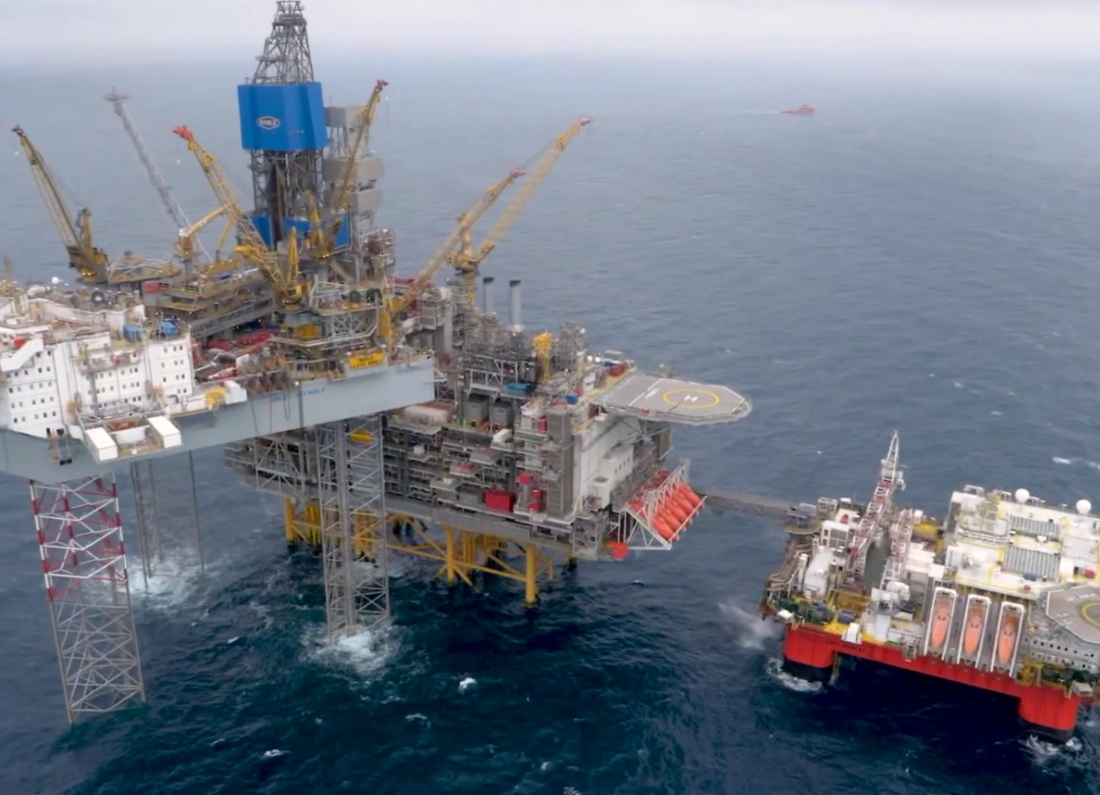
A major split has emerged within Andy Burnham’s Cabinet over whether to approve one of Britain’s largest proposed oilfields, with senior ministers divided over the future of North Sea drilling and the government’s climate commitments.
Chancellor John Healey is understood to support giving the controversial Rosebank development the go-ahead, arguing that revenues from oil and gas production could help finance Labour’s plans for a new energy wealth fund.
But Energy Secretary Miatta Fahnbulleh, who is responsible for assessing the project, is reportedly leaning towards rejecting it because of its environmental impact and the limited contribution it would make to Britain’s energy security.
The disagreement has placed Burnham under pressure to choose between ministers who believe North Sea investment is essential for jobs, tax revenues and economic growth, and those concerned that approving another major oilfield would undermine the government’s climate commitments.
Business Secretary Jonathan Reynolds is understood to support Healey’s position, while Foreign Secretary Ed Miliband, who previously held the energy brief, is reportedly opposed to Rosebank proceeding.
The Prime Minister may ultimately have to intervene if the disagreement cannot be resolved, although Downing Street has insisted that the decision remains a matter for the Energy Secretary.
Healey wants Rosebank approved
The Chancellor’s reported support for Rosebank reflects a growing argument within the government that Britain’s remaining North Sea resources should help finance the transition towards cleaner energy.
Healey has been developing plans for an energy wealth fund, through which money associated with oil and gas production could be directed towards renewable electricity, nuclear power and other energy projects.
During a visit to Aberdeen last week, he indicated that future revenues from the industry would contribute to the fund, which is expected to receive an initial £2 billion allocation in Wednesday’s Budget.
The suggestion has been interpreted as an indication that the Treasury expects continued North Sea production to provide revenue for the government’s wider energy strategy.
Supporters of Rosebank argue that approving the project would help protect employment in Scotland’s oil and gas sector, maintain investment in British infrastructure and generate tax receipts at a time when ministers face difficult spending decisions.
The industry has warned that refusing permission could damage Britain’s reputation as a place to invest, particularly after companies have already committed substantial resources to developing North Sea projects.
Equinor, which is involved in the development through its North Sea operations, has argued that rejecting Rosebank would send a damaging signal to energy investors.
The company’s chief executive, Anders Opedal, warned earlier this month that failure to secure approvals for major developments could represent a serious setback for investment in Britain.
Unions including Unite and GMB have also supported continued North Sea production, arguing that workers and their communities need a managed transition rather than an abrupt withdrawal of investment.
However, the Treasury’s calculations are complicated by uncertainty over future oil prices, operating costs, tax arrangements and the eventual profitability of the field.
The amount of money Rosebank might generate for the public finances remains uncertain, and the proposed energy wealth fund is not exclusively dependent on the project receiving approval.
Fahnbulleh says Rosebank is very different from Jackdaw
The dispute has intensified following the government’s decision last Wednesday to approve the Jackdaw gasfield, another controversial North Sea development.
Fahnbulleh defended that decision on the grounds that Britain will continue to require natural gas during its transition towards a cleaner energy system.
She argued that domestic gas production could reduce reliance on imported supplies, particularly during periods of international instability and rising energy prices.
But the Energy Secretary has drawn a clear distinction between Jackdaw and Rosebank.
The former is a gas development intended to supply the domestic market, while Rosebank is primarily an oilfield whose production would largely be sold internationally.
That difference matters because oil extracted from British waters does not necessarily remain in Britain or lead directly to lower household energy bills.
Prices are largely determined through international markets, meaning increased North Sea oil production would not automatically insulate British consumers from global price movements.
Fahnbulleh has insisted that the two applications must be assessed separately, with decisions taking account of their contribution to energy security and compatibility with Britain’s climate commitments.
“One is a gasfield that caters for the domestic market, while the other is an oilfield that is mainly for export,” she explained.
She also stressed the importance of ensuring that any decision is consistent with the country’s carbon budgets and the longer-term transition away from fossil fuels.
Officials familiar with her thinking say she remains inclined to refuse approval for Rosebank, although a final decision has not been taken.
Rosebank could produce seven times Jackdaw’s emissions
The environmental consequences of the two projects are central to the disagreement.
Rosebank, located west of Shetland, is among the largest undeveloped oilfields in the UK North Sea and would produce substantially more greenhouse gas emissions than Jackdaw.
Estimates suggest the emissions associated with Rosebank could be approximately seven times greater than those from the recently approved gas development.
Jackdaw itself is expected to contribute around 36 million tonnes of carbon emissions over its operating life, according to estimates discussed during the approval process.
Campaigners argue that adding a much larger oil project would be difficult to reconcile with Britain’s legally binding climate targets, particularly when international scientific assessments have repeatedly warned about the risks associated with expanding fossil fuel production.
The government is required to consider environmental assessments, carbon budgets and the likely emissions associated with proposed developments.
That includes emissions produced when extracted oil and gas are eventually burned, rather than only those generated during drilling and production.
Rosebank’s original approval, granted under the Conservatives in 2023, was successfully challenged in court alongside the earlier consent for Jackdaw.
The legal challenges centred on the failure to properly consider the climate impact of emissions arising from the eventual use of the fossil fuels being extracted.
Both developments subsequently required fresh consideration through the regulatory process.
Jackdaw has now received approval, but Rosebank remains under review.
Labour MPs warn of a backlash if drilling goes ahead
The prospect of approving Rosebank has caused unease among Labour MPs, some of whom accepted the government’s case for Jackdaw but believe the larger oilfield presents a fundamentally different question.
Several MPs have warned that approving another major fossil fuel development would be difficult to defend while the government continues to promise progress towards net zero.
Some are understood to have discussed ways of securing a parliamentary vote if ministers decide to allow Rosebank to proceed, potentially creating an embarrassing rebellion against the Prime Minister.
Former minister Catherine West has argued that climate change is already producing serious consequences and that the answer to employment concerns in the North Sea should not simply be further investment in oil and gas extraction.
Afzal Khan, the Labour MP for Manchester Rusholme and chair of the all-party parliamentary group on climate change, has also criticised the prospect of approving Rosebank.
He argued that a development on such a scale could not be justified alongside the decision to proceed with Jackdaw.
The concerns reflect a wider disagreement within Labour over how quickly Britain should reduce its dependence on fossil fuels and what role the state should play in protecting workers during the transition.
For MPs representing communities with strong environmental movements, approval could prove particularly difficult to defend.
For those concerned about jobs in Scotland and the future of the energy industry, rejection carries its own political and economic risks.
Burnham may have to make the final call
The disagreement has placed the Prime Minister in an increasingly difficult position ahead of Wednesday’s Budget.
Reports over the weekend suggested that Burnham and Healey were both inclined to approve Rosebank, believing the economic and energy security arguments outweighed concerns about further North Sea development.
However, Downing Street declined to confirm that account and maintained that the decision was for the Energy Secretary.
That distinction is important because Fahnbulleh is responsible for a regulatory assessment which must take account of environmental evidence and the legal requirements governing consent.
Ministers have not announced a final decision, and the process cannot simply be treated as an ordinary political vote within Cabinet.
Nevertheless, the views of the Prime Minister and Chancellor will inevitably carry weight as the government attempts to balance its economic priorities with its climate commitments.
Burnham has sought to present Labour as a government willing to invest in Britain’s industrial future while accelerating the move towards cleaner and more affordable energy.
His administration has already announced measures intended to reduce household energy costs and expand public investment in energy infrastructure.
But Rosebank presents a particularly difficult test because the political benefits claimed by supporters of the project are contested by those who question how much additional oil production would actually contribute to domestic energy security.
If Burnham supports approval, he risks a confrontation with climate campaigners and MPs who regard the development as incompatible with Labour’s environmental ambitions.
If he backs rejection, he faces criticism from the North Sea industry, trade unions and ministers concerned about investment and employment.
A £2 billion energy wealth fund complicates the argument
The proposed energy wealth fund has become an important part of the government’s attempt to reconcile continued oil and gas production with its climate strategy.
Fahnbulleh has confirmed that the fund is expected to receive £2 billion in Wednesday’s Budget, with the money intended to support renewable energy, nuclear power and other clean energy projects.
The government argues that revenues from existing fossil fuel production should help finance the technologies and infrastructure needed to reduce Britain’s dependence on oil and gas.
But questions remain about precisely which tax revenues would be directed into the fund and how much additional income future North Sea developments might provide.
Fahnbulleh has said that Healey will set out further details when he delivers the Budget on 28 October.
There is also a broader question about whether approving new fossil fuel projects is necessary to generate the money required for clean energy investment.
Climate campaigners argue that a transition fund should not become a justification for expanding extraction when the government has committed to reducing emissions.
Industry representatives counter that withdrawing investment too quickly could undermine employment, reduce domestic production and increase Britain’s reliance on imports.
The disagreement is particularly significant in Scotland, where North Sea employment remains important to regional economies and where the future of oil and gas has become a prominent political issue.
A decision is expected before the end of the year
Rosebank’s future remains uncertain, with the government expected to reach a decision before the end of 2026.
The development is still moving through the regulatory process, and ministers have insisted that all relevant environmental assessments and consultation responses must be considered.
A spokesperson for the Department for Energy Security and Net Zero said the government would not comment on speculation about the outcome.
The department maintained that the North Sea would remain an important part of Britain’s energy system for decades while the country continued its transition towards clean power.
The final decision will determine whether one of the country’s largest proposed oil developments proceeds, with significant consequences for the energy industry and the government’s environmental credibility.
For Burnham, it may also become the first major public test of whether his Cabinet can agree on the balance between economic development and climate policy.
Fahnbulleh has not yet reached her decision. Healey is understood to favour approval, while Labour MPs have warned of a substantial backlash if Rosebank goes ahead.
The government expects to announce the outcome before the end of the year.











Leave a Reply