

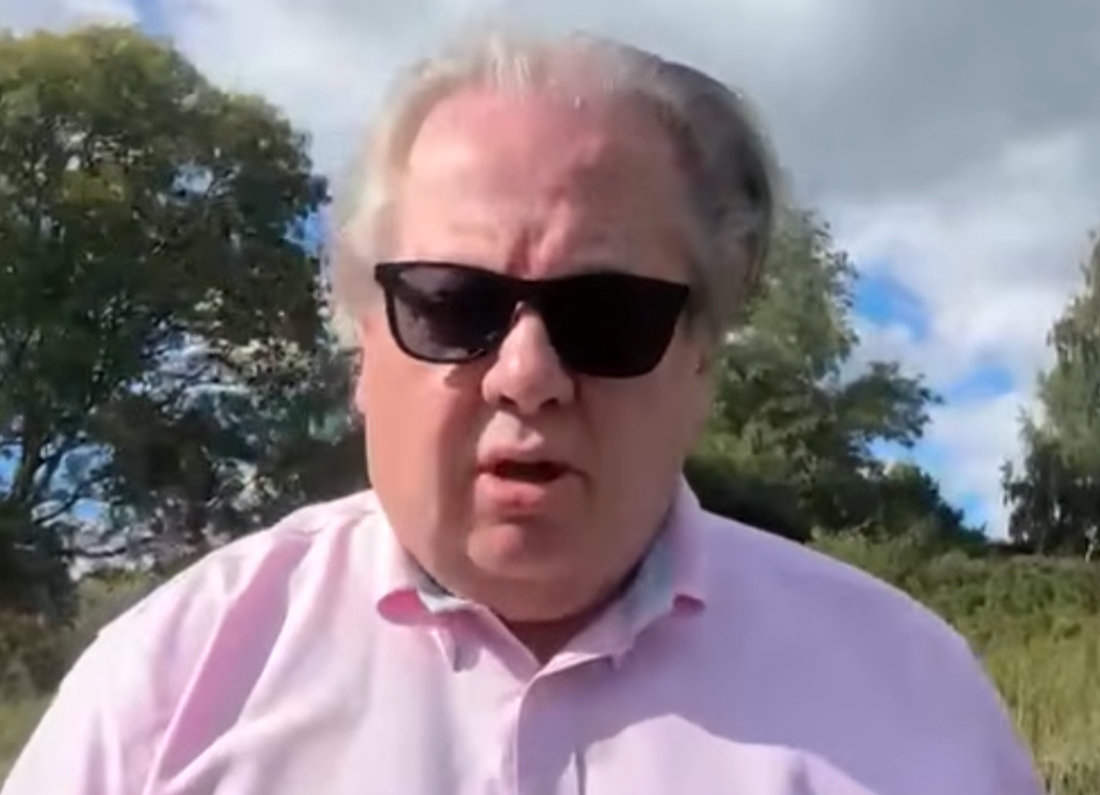
Former Scotland Yard detective Peter Bleksley has delivered a furious on-air dressing-down to GB News presenter Alex Armstrong after the broadcaster admitted he no longer believed he could fight for Britain.
In an extraordinary confrontation about patriotism, military service and the treatment of younger generations, Bleksley accused Armstrong of “rampant pathetic cowardice” and claimed his refusal to fight put him on the same side as Britain’s enemies.
The exchange erupted after Armstrong delivered a lengthy opening monologue questioning why young people should be expected to risk their lives for a country where many cannot afford a home, struggle with rising living costs and feel increasingly disconnected from British identity.
Armstrong insisted he loved Britain but believed successive governments had failed the generation that might one day be asked to defend it.
Bleksley was having none of it.
“I am utterly disgusted by your rampant pathetic cowardice, and there’s no hint of a smile on my face,” he told the presenter.
The confrontation became increasingly personal as Armstrong attempted to defend his position, with Bleksley accusing him of putting his own grievances ahead of his responsibilities to the country.
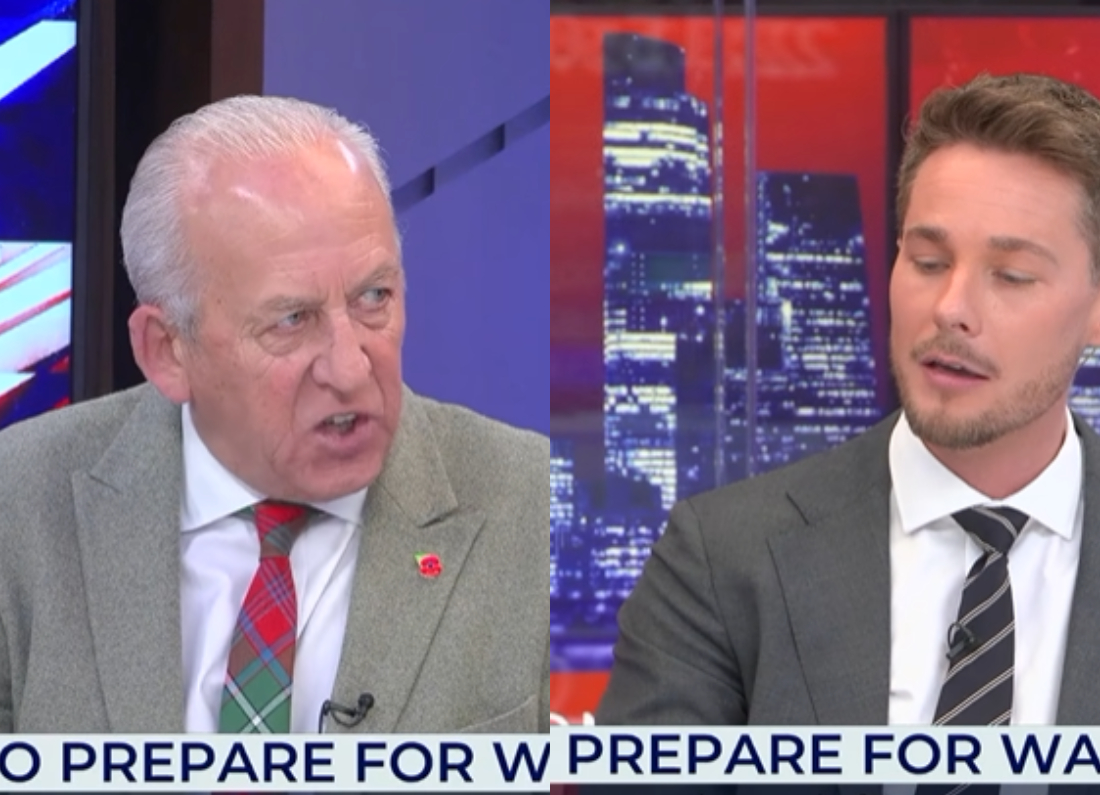
You can watch the full video at the bottom of the article via YouTube.
Armstrong questions what young Britons would be fighting for
The row began when Armstrong opened his GB News programme with an unusually personal admission.
“This is hard to say, but I really don’t think I could fight for this country anymore,” he told viewers.
The presenter said he had been reflecting on the sacrifices of Britain’s wartime generations after hearing a veteran question whether those who had died for the country would recognise what it had become.
Armstrong argued that young people were being asked to consider the possibility of defending a nation that had become increasingly difficult for them to build a future in.
He pointed to unaffordable housing, stagnant wages, expensive energy, university debt and a perceived loss of opportunity, asking whether it was reasonable to expect young Britons to make the ultimate sacrifice while feeling they had received so little in return.
He also raised concerns about immigration, multiculturalism and national identity, claiming British culture was being eroded and that people who objected were too readily dismissed as racist.
Those claims were presented as Armstrong’s own political assessment rather than established explanations for the economic difficulties facing younger generations.
The presenter was particularly critical of governments that had overseen rising housing costs and worsening financial pressures while now expecting the public to prepare for greater national sacrifice.
“I am a patriot. I love my country, but I love what Britain was and what it could be, not what it’s become,” he said.
Armstrong insisted that he wanted to feel differently, arguing that politicians needed to give people a reason to believe their country was worth fighting for.
Bleksley launches furious attack
After hearing from former Conservative MP Anna Firth and former Labour minister Bill Rammell, Armstrong turned to Bleksley to explain his concerns about the attitudes of younger people.
He argued that many in their twenties and thirties felt locked out of the opportunities enjoyed by previous generations, particularly homeownership and financial security.
“They’re looking at a bleak future where they can’t own a home,” he said, describing young people who believed their freedoms were diminishing while the cost of living continued to rise.
Bleksley interrupted with an extraordinarily direct response.
“I am utterly disgusted by your rampant pathetic cowardice, and there’s no hint of a smile on my face.”
Armstrong acknowledged that Bleksley was serious, but the former detective continued.
“You have just firmly put yourself in the camp of Iran, Russia,” Bleksley declared.
When Armstrong tried to respond, Bleksley ordered him to listen.
“You’ve had your speech. Hear me out. It’s my turn.”
He accused the presenter of being motivated by personal resentment rather than an understanding of what national defence required.
“You have shown through your rampant cowardice that you’re all about me, me. You would not put your nation first. You’re too wrapped up, you’re too involved in yourself to put your nation first.”
Armstrong rejected the suggestion that questioning his willingness to fight meant supporting Britain’s adversaries.
“I’m not in the camp of our enemies. Absolutely not,” he replied.
But Bleksley repeated the accusation, insisting that Armstrong had a responsibility to the country irrespective of his complaints about the government.
“You wouldn’t go for this country. You are firmly in the camp of our enemies.”
‘I want to fight for my country’
Armstrong defended his position by drawing a distinction between opposing hostile foreign governments and volunteering to fight on Britain’s behalf.
He insisted that he remained strongly opposed to Russia’s invasion of Ukraine and had previously supported military action against Iran.
His frustration, he argued, was directed at British governments that expected younger citizens to defend the country without addressing their concerns at home.
“I want to fight for my country,” he told the panel.
He said he would welcome a future in which the government had made enough progress on housing, living standards and national cohesion to restore that confidence.
“We need to fix Britain. We have got a duty to our people first.”
Armstrong repeatedly emphasised that he was expressing an honest personal view rather than attempting to discourage serving military personnel.
He said he had consulted veterans before delivering the monologue and believed that some shared his frustration about the way Britain treated people who had served.
Earlier in the programme, the presenter had also argued that veterans could face legal proceedings and financial hardship after returning from service.
His remarks came against a wider debate about Britain’s defence readiness following warnings from senior military figures that the public may need to accept greater sacrifices in response to growing international threats.
However, no general conscription scheme has been introduced, and ministers have previously said they have no current plans to restore compulsory military service.
‘You are taking your own freedom completely for granted’
Bleksley was not the only panellist to challenge Armstrong’s position.
Former Conservative MP Anna Firth said she was disappointed by his admission and urged him to reconsider what living in Britain meant.
Drawing on a recent parliamentary visit by schoolchildren, she argued that Britain’s democratic institutions and civil liberties remained achievements worth defending.
She compared the freedoms enjoyed in Britain with the treatment of women in Iran, where restrictions imposed by the authorities can carry severe consequences.
“You’re taking your own freedom completely for granted,” she told Armstrong.
Firth argued that whatever criticisms people had of Britain, they should recognise the rights they enjoyed and the sacrifices made by previous generations.
Bleksley later returned to that argument, accusing Armstrong of displaying a sense of entitlement about the benefits of living in Britain.
He cited education, healthcare and clean water as examples of things people in the country could too easily overlook.
Armstrong pushed back, insisting that those services were supported by the taxes paid by working people, including himself.
“I work my backside off in this country,” he replied, explaining that he had been raised by a single mother and understood what it meant to struggle financially.
Bleksley then made the discussion still more personal.
“You have the right to live in this country as an openly gay man. And I know how incredibly important that is to you,” he told Armstrong.
The presenter acknowledged the point, but Bleksley continued to accuse him of using the government’s failures to justify refusing to defend the country.
Former Labour minister says the argument is more complicated
Former Labour minister Bill Rammell offered a noticeably different response.
While disagreeing with Armstrong’s conclusion, he argued that the presenter was expressing frustrations shared by significant numbers of younger people.
Rammell maintained that national defence was not about protecting a particular political party or government, but defending institutions, liberties and the wider population.
“When you fight for your country, you’re not fighting for a political agenda. You’re not fighting for political parties,” he said.
He also argued that the threat posed by Russia provided a powerful reason for Britain to maintain the ability to defend itself.
But unlike Bleksley, Rammell acknowledged that there were legitimate political grievances behind Armstrong’s position.
“I think the debate is more nuanced than that,” he said as the confrontation continued.
Rammell argued that people were less willing to accept instructions from authority without question than previous generations, and that governments needed to explain the threats Britain faced rather than simply demand obedience.
He also accepted that younger people had suffered from an imbalance in government policy.
“Under successive governments, there has been intergenerational unfairness because elderly people like me have been protected by the state and young people have been thrown to the wall,” he said.
For Rammell, the answer was not to abandon national defence, but for politicians to address the economic problems contributing to younger people’s alienation.
A divided panel and a wider debate about patriotism
The confrontation exposed sharply different interpretations of what patriotism requires.
For Bleksley, Britain’s democratic freedoms create responsibilities that cannot be set aside because of dissatisfaction with living standards or immigration policy.
Armstrong’s position was that a government asking its citizens to risk their lives must first convince them that the country is offering them a future worth defending.
Rammell, meanwhile, argued that both questions mattered. Britain needed to confront the threat posed by hostile states, but ministers also had to take seriously the economic and social problems affecting younger generations.
It was a distinction Armstrong appeared grateful to hear after the increasingly personal exchanges.
As the programme drew to a close, he acknowledged that the debate had divided viewers and thanked the panellists for challenging his views.
He also made clear that his remarks were not intended as criticism of serving military personnel or veterans.
“I just want to say to our servicemen and women, I’m greatly appreciative of what you’ve done,” he told viewers.
Armstrong said he intended to attend a Remembrance Sunday service in the coming weeks.
Bleksley, however, showed no sign of softening his assessment of the presenter’s position.
“It’s appalling, Alex. I cannot begin to tell you how deep my disappointment,” he said.





Leave a Reply