

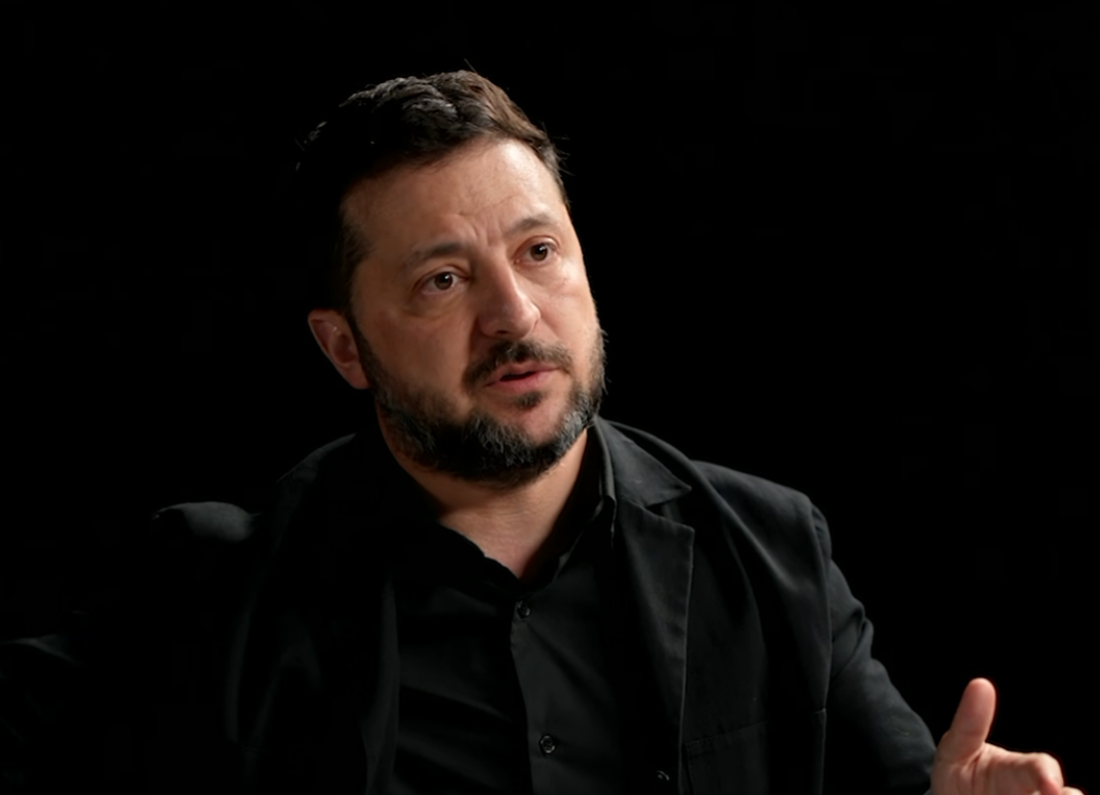
Ukrainian President Volodymyr Zelenskyy has delivered a blistering response to Donald Trump’s special envoy after he described Vladimir Putin as a “humanitarian”, just hours before Russian forces launched another devastating barrage of missiles and drones against Ukrainian cities.
Steve Witkoff, who has been leading Washington’s efforts to negotiate an end to Russia’s invasion, praised Putin during a meeting in St Petersburg on Wednesday after the Russian president agreed to release an American citizen who had been held in custody for more than four years.
But the remark provoked anger in Ukraine, where civilians continue to face deadly Russian attacks and entire communities have been left without reliable electricity, heating and essential infrastructure.
Zelenskyy responded on Thursday with a pointed reference to the overnight bombardment of Kyiv, using Witkoff’s own description of the Russian leadership against him.
“Three waves of ballistic missiles have been launched at Kyiv by Russian ‘humanitarians’ since yesterday evening,” he wrote.
The Ukrainian president said Russian forces had fired 21 missiles towards the capital, damaging residential buildings, energy infrastructure, transport facilities and businesses.
‘You are a humanitarian also, sir’
Witkoff made the controversial remarks during talks with Putin on 21 October, as the Trump administration attempted to restart negotiations over the war in Ukraine.
The American envoy had travelled to St Petersburg following discussions with Zelenskyy and European leaders in Oslo the previous day.
During the meeting, Putin agreed to release Stephen James Hubbard, a 74-year-old American who had been detained by Russia since 2022 after being accused of serving as a mercenary for Ukraine.
Hubbard’s release was a significant development for his family and American officials, who had been seeking his freedom.
Witkoff responded by praising the Russian president personally.
“You talk so much about my president, President Trump, being a humanitarian. You are a humanitarian also, sir, and I salute that, I commend you, and I thank you again.”
The compliment was captured on video and circulated internationally, attracting immediate criticism from politicians and observers who questioned how a representative of the United States could use such language about the leader responsible for launching Russia’s full-scale invasion.
Putin is also subject to an arrest warrant issued by the International Criminal Court in March 2023 over allegations concerning the unlawful deportation and transfer of Ukrainian children.
Russia rejects the court’s jurisdiction and denies the allegations. The warrant does not amount to a criminal conviction.
Nevertheless, Witkoff’s decision to describe Putin as a humanitarian was particularly controversial given the continuing attacks on Ukrainian civilians.
Zelenskyy points to 21 Russian missiles
Less than a day after the St Petersburg meeting, Russian forces launched another major assault on Ukraine, with Kyiv among the principal targets.
Missiles and drones struck civilian and infrastructure sites across the capital, while emergency workers responded to fires, damaged buildings and injuries.
The attacks also affected transport and energy facilities, raising further concerns about Ukraine’s ability to maintain essential services as winter approaches.
Zelenskyy drew attention to the timing in a statement published on Thursday morning.
“Three waves of ballistic missiles have been launched at Kyiv by Russian ‘humanitarians’ since yesterday evening. They used 21 missiles.”
He said ordinary residential buildings, energy facilities, railway infrastructure, the metro, shopping centres and businesses had been among the sites damaged.
His remarks were an unmistakable reference to Witkoff’s praise of Putin, highlighting the contrast between the American envoy’s diplomatic language and the actions of Russian forces.
Russian officials have maintained that their military operations are directed at legitimate targets connected to Ukraine’s defence and infrastructure capabilities.
However, repeated strikes have caused extensive civilian casualties and damage to residential areas, hospitals and essential public services throughout the conflict.
Ukraine has also continued launching drone attacks against targets in Russia, particularly military installations and energy facilities, arguing that such operations are necessary to weaken Moscow’s ability to sustain the invasion.
Even Republican politicians condemned the remark
Witkoff’s description of Putin did not simply attract criticism from Ukrainian officials and Democratic opponents of the Trump administration.
Republican senator Thom Tillis also expressed disbelief at the envoy’s language.
“WTF Steve. Look up the definition of ‘humanitarian.’ What an embarrassing and outrageous thing to say.”
The reaction illustrated the discomfort within parts of Trump’s own party over the administration’s increasingly conciliatory approach to the Russian president.
Trump has repeatedly presented himself as the politician capable of negotiating an end to the conflict, arguing that his relationships with international leaders could achieve a settlement where previous diplomatic efforts have failed.
But his approach has increasingly placed him at odds with Zelenskyy, particularly over Ukraine’s attacks on Russian energy infrastructure and the terms of any future peace agreement.
When questioned about Witkoff’s remark, Trump pointed to Hubbard’s release and suggested that the envoy had been acknowledging a specific humanitarian gesture rather than offering a wider endorsement of Putin’s conduct.
The president declined to adopt the description himself.
While securing the freedom of a detained American was welcomed in Washington, critics argued that doing so did not justify overlooking Russia’s broader record in Ukraine.
Britain rejects the description of Putin
The British government has also made clear that it does not share Witkoff’s assessment.
Speaking to LBC on Thursday, Scotland Secretary Douglas Alexander was asked whether ministers agreed that Putin could be described as a humanitarian.
“No, we don’t,” he replied.
Alexander pointed to Russia’s invasion of Ukraine and previous hostile operations linked to the Kremlin, including attempted assassinations on British soil.
“We simply do not recognise the description of Vladimir Putin as a humanitarian,” he said.
He added that Britain continued to support Zelenskyy and the Ukrainian people in their struggle against Russia’s invasion.
The intervention demonstrated the growing differences between Washington’s diplomatic approach and the position of European governments that have remained committed to supporting Ukraine’s sovereignty.
For Britain and several other European countries, a negotiated settlement must include credible protections against further Russian aggression.
There is concern that an agreement focused primarily on ending the immediate fighting, without resolving questions of territory and security, could leave Ukraine vulnerable to another invasion.
Trump has increased pressure on Ukraine over energy strikes
The dispute over Witkoff’s remarks comes amid a wider deterioration in relations between Trump and Zelenskyy.
Washington has urged Ukraine to stop attacking Russian oil facilities, arguing that the strikes are contributing to rising international energy prices and economic instability.
The Trump administration has also eased certain restrictions on Russian diesel exports, a decision criticised by those who believe Moscow should face greater economic pressure rather than receive new opportunities to sell energy abroad.
Ukraine has resisted demands to halt its strikes, arguing that Russian energy revenues help finance the war and that Moscow continues to target Ukraine’s own power infrastructure.
The disagreement has added another obstacle to peace negotiations, particularly as the Trump administration attempts to present itself as an impartial mediator between the two countries.
Zelenskyy has raised concerns about threats to American intelligence assistance if Ukraine continues attacks on Russian energy targets, although an American official has disputed his account.
Kyiv is heavily dependent on Western intelligence, military equipment and financial support, making any deterioration in its relationship with Washington potentially serious.
The dispute also comes ahead of the US midterm elections on 3 November, with Trump under pressure over rising energy prices and the economic consequences of international conflicts.
Putin agrees to more talks but refuses an immediate ceasefire
Despite the worsening relationship between Washington and Kyiv, efforts to restart peace negotiations have continued.
Following Witkoff’s meeting in St Petersburg, Russian officials indicated that Moscow was prepared to participate in another round of discussions involving the United States and Ukraine, potentially in Abu Dhabi during November.
However, the fundamental disagreements remain unresolved.
Russia continues to demand control over territory it claims to have annexed, including parts of Donetsk, Luhansk, Zaporizhzhia and Kherson that its forces do not fully occupy.
Ukraine rejects surrendering those regions and insists that any settlement must include binding security guarantees to prevent another Russian invasion.
Putin has also rejected proposals for an immediate ceasefire without a wider political settlement, while Ukraine has argued that stopping the fighting should be an essential first step.
The diplomatic discussions have so far produced limited humanitarian progress rather than a breakthrough on the central issues of the war.
On Friday, a local ceasefire was agreed to allow humanitarian assistance into Oleshky, a devastated town in the Russian-occupied part of the Kherson region, following negotiations involving representatives of Ukraine, Russia and US First Lady Melania Trump.
The arrangement is intended to permit aid deliveries and civilian evacuations, but it does not amount to a wider cessation of hostilities.
Both governments have indicated a willingness to continue negotiations while remaining deeply divided over territory and Ukraine’s future security.
For Zelenskyy, the continuing missile attacks have reinforced his argument that Moscow must face greater pressure if the talks are to deliver anything lasting.
Witkoff’s description of Putin as a humanitarian came during an effort to secure progress towards peace. Within hours, Russian missiles were striking residential neighbourhoods and critical infrastructure in Kyiv.
Zelenskyy’s response was to count the missiles: 21 in three waves, launched by the very people the American envoy had praised.






Leave a Reply