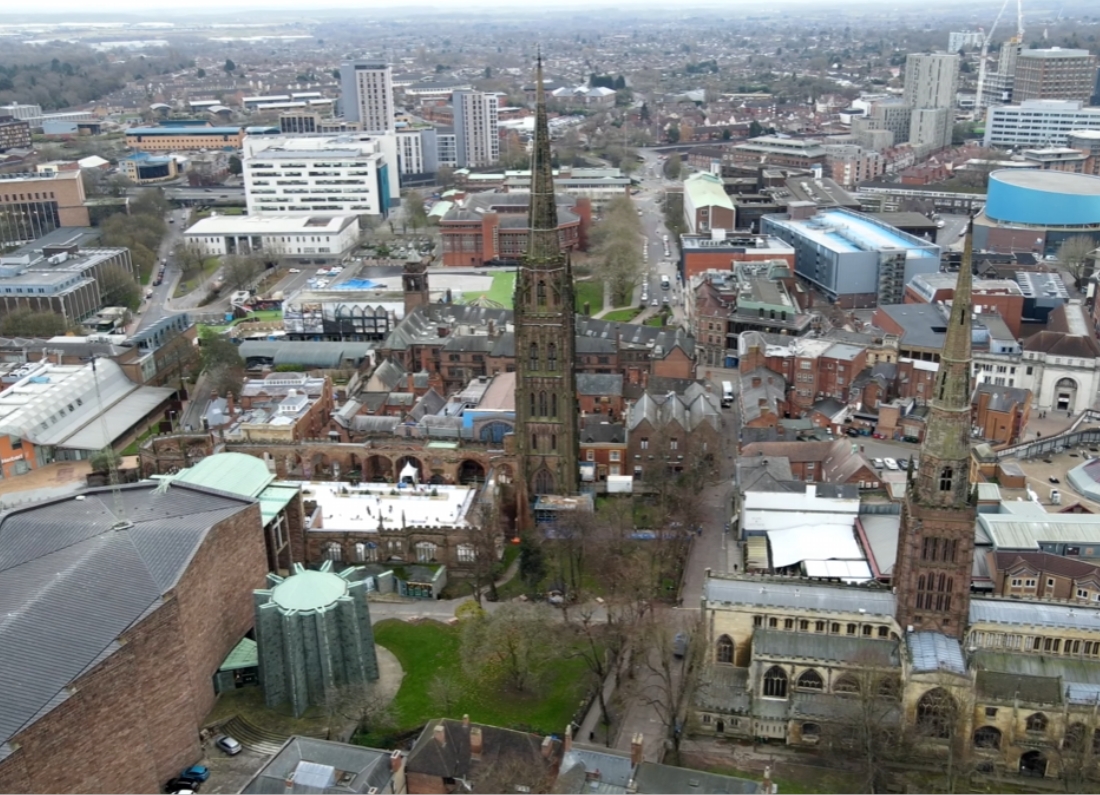
Every single seat on Coventry City Council is being contested on Thursday for the first time since 2004 – making this the most significant local vote the city has seen in more than two decades and potentially the most consequential single day in Coventry’s political history since Labour regained control of the council in 2010.
The reason is a major boundary review by the Local Government Boundary Commission for England, which has redrawn all 18 of Coventry’s wards to address population changes that had created significant electoral inequality across the city. All 54 seats – three for each ward – are being elected simultaneously, resetting the political map of Coventry entirely.
Here is everything you need to know.
Why all 54 seats are being contested
Under normal circumstances, Coventry follows an “election by thirds” system – each ward elects one of its three councillors per year, with a fallow year every fourth year. This means under normal conditions, only around 18 seats would be contested in any given year.
This year is different because the boundary changes require a complete reset.
The Local Government Boundary Commission for England – an independent body established by Parliament – reviewed Coventry’s ward boundaries because significant population growth since the last review in 2003 had created electoral inequality. Some areas of the city had grown substantially while others had not, meaning the number of voters each councillor represented varied considerably across wards. The commission’s job is to ensure that, as far as possible, each ward has broadly equal numbers of electors.
All existing wards were abolished. Eighteen new ones have been established in their place. The commission’s recommendations were approved by the government in 2024 and came into force through the Coventry (Electoral Changes) Order 2024, which took effect in October 2025.
The city’s outer boundary and all household postcodes remain unchanged – but the revisions mean your ward name may have changed, the communities you share a ward with may be different and the parish council ward that applies to you may be new.
The 18 new Coventry wards
The 18 new wards are: Bablake, Binley and Willenhall, Cheylesmore, Earlsdon, Foleshill, Henley, Holbrooks, Longford, Lower Stoke, Radford, Sherbourne, St Michaels, Tile Hill and Canley, Upper Stoke, Wainbody, Whoberley, Woodlands and Wyken.
Most retain the names of their predecessor wards, though boundaries have been redrawn. The most significant change is the creation of a new Tile Hill and Canley ward, which replaces the former Westwood ward. Styvechale Grange, originally set to fall within Earlsdon ward, was moved into the Wainbody ward following a public consultation. The boundaries of eleven wards were modified from initial proposals following that consultation: Binley and Willenhall, Cheylesmore, Earlsdon, Holbrooks, Lower Stoke, Radford, St Michael’s, Sherbourne, Upper Stoke, Wainbody and Whoberley.
The current political picture
Labour has governed Coventry since regaining control of the council in 2010, when the party won 30 seats. The party currently holds 39 of the council’s 54 seats – one fewer than it held following the 2024 elections, after a councillor stepped down in August 2025 to sit as an Independent.
The Conservatives hold 10 seats, having lost two councillors to Reform in June 2025. The Green Party and Independent Alliance group hold the remaining three seats.
The last time all 54 seats were contested simultaneously was in 2004 – and the outcome then was dramatic. Labour lost control of the council that year. No single party secured an overall majority, with the Conservatives holding the upper hand with 27 seats compared to Labour’s 22.
Thursday’s election could produce a result equally dramatic. Reform is polling strongly nationally at 27% and has been making significant gains across England. The Green Party is expected to make gains in urban areas. Labour goes into the vote defending a commanding majority at a moment when its national polling is at a historic low.
How the new system works
With three councillors elected per ward simultaneously, the voting and tenure system in this first election is unique.
The candidate with the most votes in their ward will retain their seat for four years. The candidate finishing second will serve two years. The candidate finishing third will serve just one year before their seat goes to the polls again.
Following this year’s reset election, the system returns to the standard “election by thirds” model. The councillor elected with the fewest votes will see their seat contested in 2027. The second-placed councillor’s seat will be contested in 2028. The top-placed councillor’s seat will come up in 2030 after a four-year term.
This means that within three years of Thursday’s result, every ward in Coventry will effectively be re-contested at least once more, making the political landscape considerably more fluid than under the previous system.
What to look for on Thursday night
For Coventry, the questions on Thursday night are specific. Can Labour hold its substantial majority against a national picture that is deeply unfavourable? Will Reform – which has taken two seats from the Conservatives in Coventry since 2025 – make further gains in the city’s more deprived wards? Will the Greens, who are polling strongly in urban areas and are expected to take major London boroughs, make inroads in a city where they currently hold minimal council representation?
The last time Coventry experienced an all-seats election, Labour went from controlling the council to sitting in opposition. Whether Thursday produces a comparable shift depends on whether the national mood translates into local results in the specific wards where Labour’s margins are narrowest.
All 54 seats. Eighteen new wards. The most important day in Coventry’s political life in 22 years. Polls open at 7am and close at 10pm.
You may also like: ‘Go for It’: Doreen, 93, leads her own Sky Blues parade as Coventry celebrates the greatest day in a generation