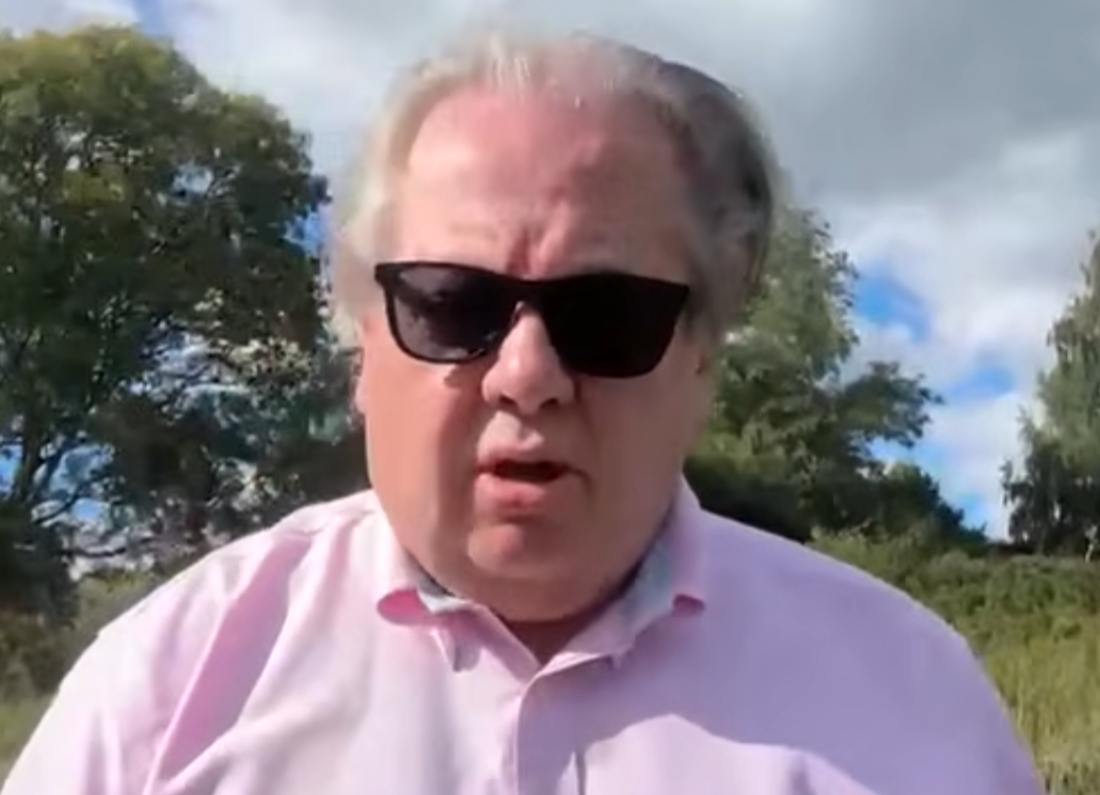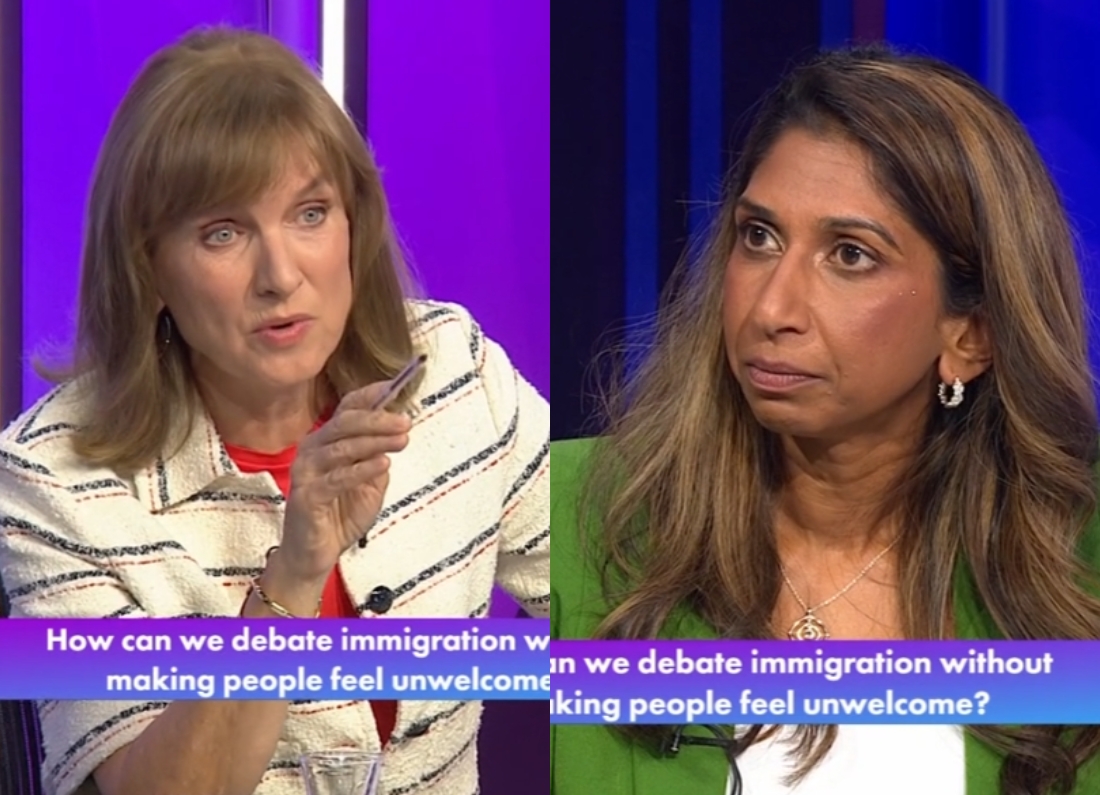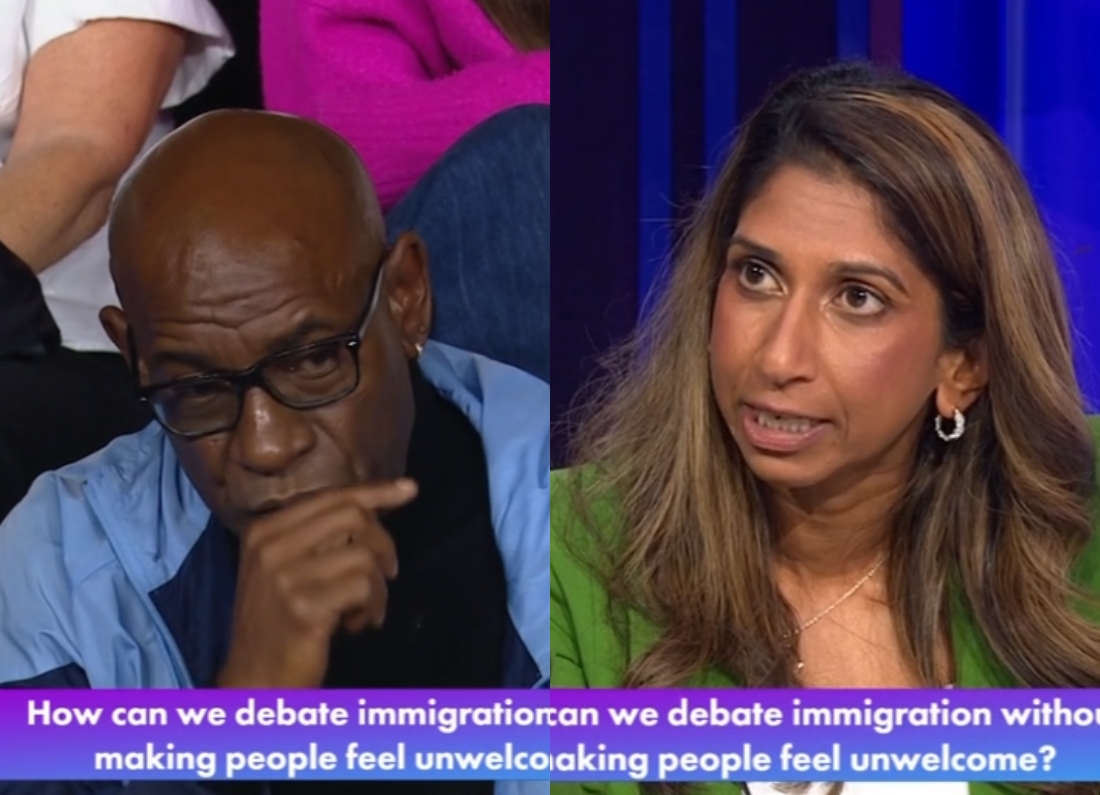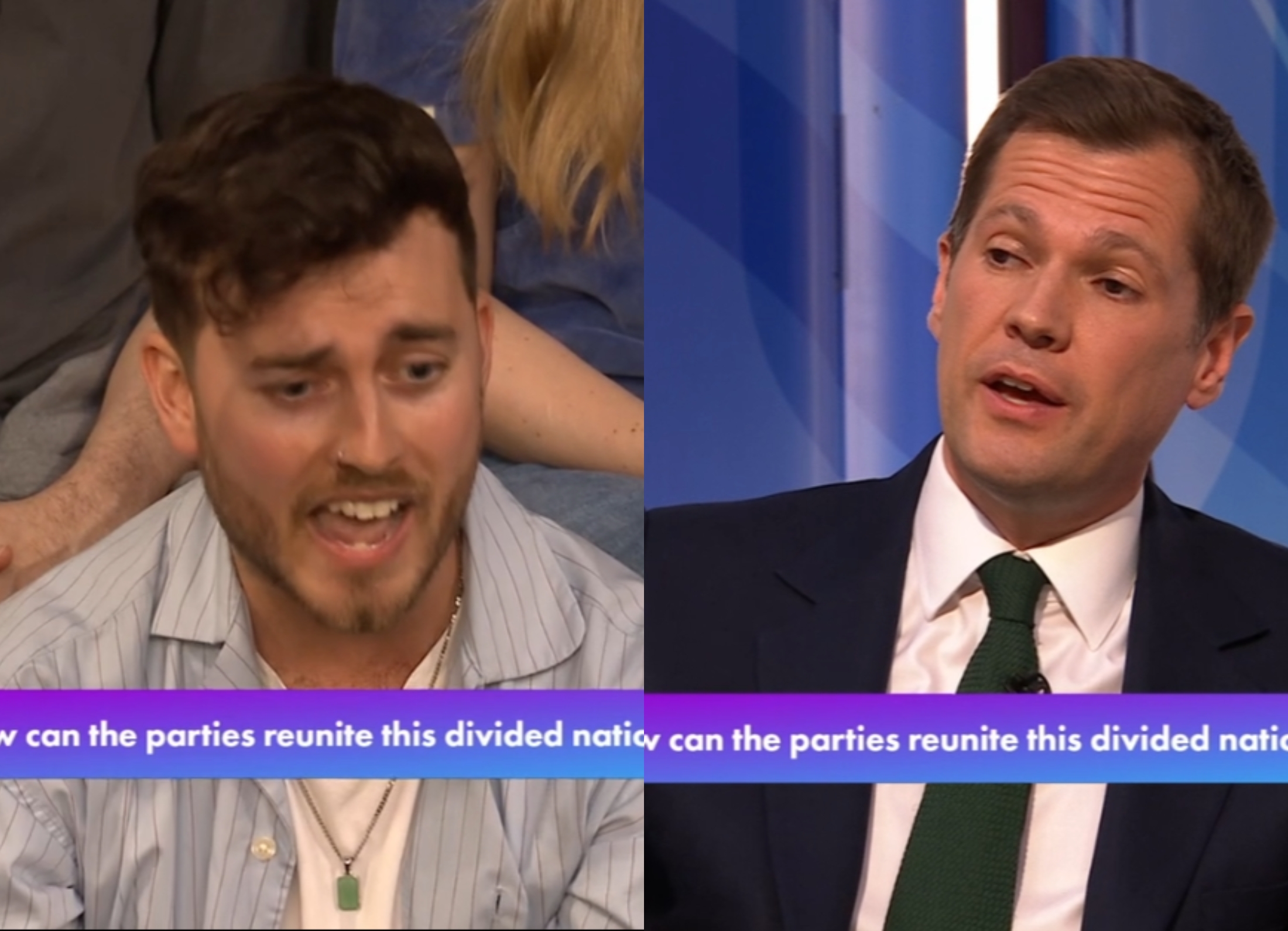
A young voter delivered one of the most watched Question Time exchanges in recent memory on Friday evening, dismantling Reform UK’s Robert Jenrick over the unlawful Westferry Printworks housing deal, Nadhim Zahawi’s £5 million HMRC settlement and Richard Tice’s tax affairs – before asking, to widespread applause, how long it would be “before people realise that grifters like you and your colleagues are the problem.”
Jenrick had arrived at the Question Time special in an expectant mood. Reform had just won more than 1,400 council seats in its most historic local election night, as we reported in our full coverage of the results. Instead of a victory lap, he found himself on the end of a forensic public dismantling that has since been shared hundreds of thousands of times online.
How it started – the immigration deflection
The audience member opened by addressing Jenrick’s immigration rhetoric directly. He noted that his partner is an immigrant who pays taxes and NHS surcharges – the fees charged to migrants before they can access NHS services, which run into thousands of pounds over a typical visa period. This was an inconvenient foundation for Jenrick’s standard messaging, given that Reform’s pitch often implies immigrants are a drain on public services rather than contributors to them.
Having established that personal context, the audience member then moved to the scandals.
The Westferry Printworks – what Jenrick actually did
The first scandal cited was Jenrick’s involvement in the Westferry Printworks development – a housing scheme on the Isle of Dogs in east London that remains one of the most documented examples of ministerial misconduct in recent British political history.
In January 2020, Jenrick – then housing secretary – approved a £1 billion development proposed by Richard Desmond, the former Daily Express owner and Conservative party donor. The approval was notable for two things. First, it overruled both Tower Hamlets Council and a planning inspector who had rejected the scheme on grounds including insufficient affordable housing. Second – and this is the detail that proved fatal – it was deliberately timed to fall one day before a new Community Infrastructure Levy came into force, a levy that would have required Desmond to pay between £30 million and £50 million to Tower Hamlets Council for local infrastructure and public services.
The texts between Jenrick and Desmond, subsequently released under pressure, told the story plainly. Desmond had messaged Jenrick about the development, calling Tower Hamlets Council “Marxists” and explicitly referencing the £45 million figure: “We appreciate the speed as we don’t want to give Marxists loads of doe for nothing!” Internal government documents confirmed that Jenrick was “insistent” the decision be issued before the new levy took effect. The document stated his concern was that “the viability of the scheme” would be affected if the levy came into force.
Jenrick was forced to quash his own approval, conceding the decision was “unlawful by reason of apparent bias.” The £30-50 million that would have gone to one of London’s poorest boroughs for schools, healthcare and infrastructure was, as a result, never paid.
He now sits on Question Time as a Reform MP, representing a party that campaigns against corruption and for working people.
Nadhim Zahawi – the £5m HMRC tax settlement
The second scandal the audience member raised was Nadhim Zahawi’s HMRC settlement – now a Reform MP, having followed Jenrick in defecting from the Conservatives earlier this year.
Zahawi co-founded YouGov in 2000. Shares in the company were held by Balshore Investments, a company registered in Gibraltar linked to his family. When YouGov’s value increased substantially, HMRC investigated whether using the offshore Gibraltar structure meant Zahawi had failed to pay tax properly on the proceeds.
The Guardian reported that Zahawi paid HMRC approximately £3.7 million in tax that should have been paid, plus a 30% penalty – the maximum available under HMRC rules for a finding of “careless” rather than deliberate behaviour – plus interest, bringing the total bill to more than £5 million. The settlement was reached in 2021. When it became public in January 2023, Zahawi initially denied any wrongdoing, saying his taxes were “properly declared and paid in the UK” – a statement that, as tax experts noted, was only true at the moment he said it, after he had already settled the liability.
What made the affair particularly extraordinary, as ITV political editor Robert Peston noted at the time, was that Zahawi had negotiated his multimillion-pound tax settlement with HMRC while serving as Chancellor of the Exchequer – the minister responsible for the UK’s tax authority. Rishi Sunak was forced to refer the matter to the independent ethics adviser, who found Zahawi had been “clearly aware” of the investigation for some time before it became public. Zahawi was subsequently sacked from the Cabinet.
Zahawi now sits in the House of Commons as a Reform MP.
Richard Tice and the tax questions
The third target was Richard Tice, Reform’s deputy leader, whose financial affairs have generated two separate sets of questions as we have previously documented.
As we reported in our investigation into Tice’s company allegedly failing to pay £91,000 in tax on dividends, Tice’s property investment company Quidnet appears to have distributed dividends to him from a REIT structure in a way that broke the rules on how such dividends must be paid – resulting in an estimated £91,000 in tax not being paid. In a separate matter, as we reported in our investigation into Tice’s corporation tax affairs involving shell companies, companies associated with Tice and used to channel donations to Reform UK appear to have been structured in ways that minimised their corporation tax liability.
Tice is the man who campaigns alongside Farage on a platform of ending what Reform calls the “corrupt establishment.” He is also the man with two documented tax compliance questions who has not provided public explanations for either.
The question Jenrick couldn’t answer
The audience member brought all three together in a single question: “How long will this go on for before people realise that grifters like you and your colleagues are the problem?”
Jenrick, visibly rattled, defaulted to immigration rhetoric – the universal Reform safe harbour when any other question becomes too uncomfortable. Host Fiona Bruce redirected him. He dismissed the specific allegations as “nonsense.”
He did not engage with the facts of the Westferry Printworks. He did not address Zahawi’s £5 million HMRC settlement. He did not explain Tice’s tax questions. He said “nonsense” and moved on, which is a choice that itself tells you something.
As Piers Morgan, also on the panel, noted in the same programme: “If we discovered last week that Keir Starmer had taken £5,000,000 without declaring it from a crypto billionaire in Thailand, Reform UK would have gone absolutely berserk.” As we reported in our full piece on Morgan’s Question Time intervention, he went on to describe Labour as a “shambles” in the same breath – making clear the argument was about consistency, not tribal loyalty.
The audience member had made a simple and devastating point. The people asking voters to trust them with the country’s finances include a man who unlawfully rushed through a planning decision to save a Tory donor £50 million, a man who settled a £5 million HMRC bill while serving as Chancellor, and a deputy leader with two separate documented tax compliance questions. They campaign against corruption. They ask you to believe they are different.
The audience member was asking how long that takes to see through.