

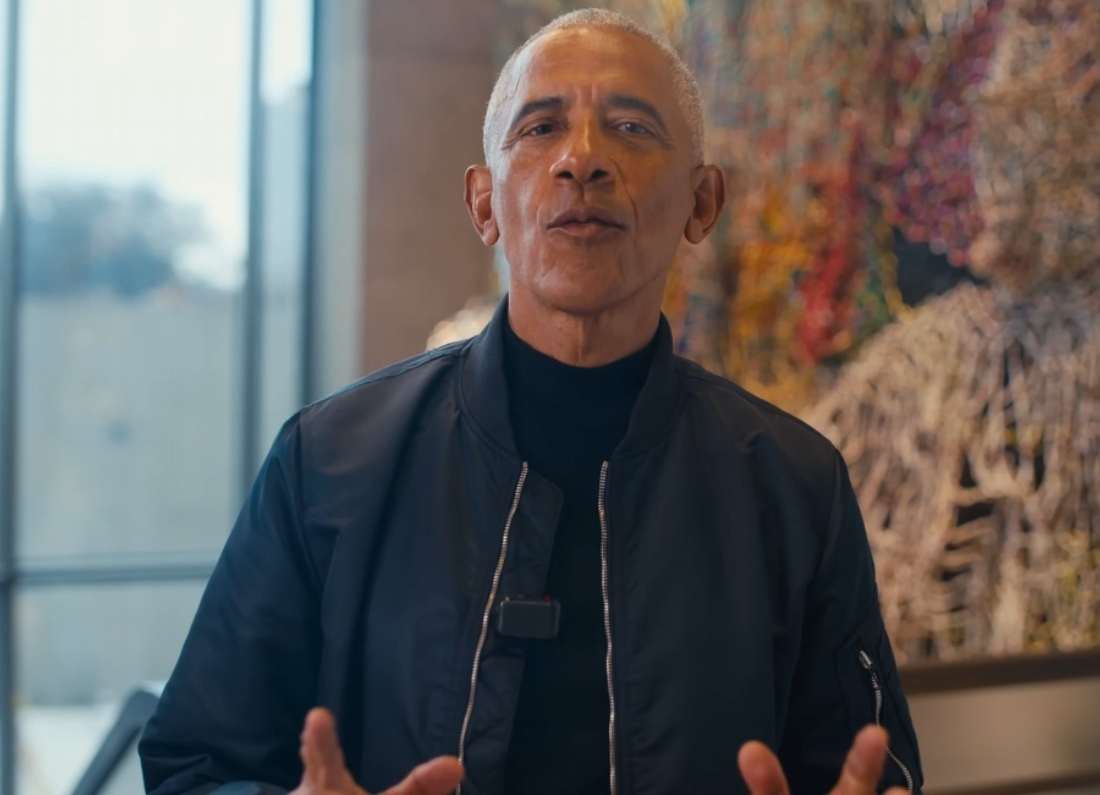
On 23 June 2026, it will be ten years since 51.9% of British voters decided the United Kingdom was better off outside the European Union. To mark the anniversary, Sir Anthony Seldon has published The Brexit Effect: 2016-2026, a collection of essays including one by Lord Kim Darroch, Britain’s ambassador to the United States at the time of the vote. Darroch reveals, for the first time, the private reaction of Barack Obama to the result – and the broader assessment, across the American political establishment, of what the UK had done to itself and what it had cost in terms of a centuries-old international reputation.
Obama’s view, relayed to Darroch two days after the referendum by a member of the president’s inner circle over lunch in Washington DC, was direct: “He thinks you’ve completely f***ed yourselves.”
Darroch writes: “My guest continued: ‘We just don’t understand why you would call a referendum which you didn’t need to hold without being absolutely certain of getting the right answer. Why would you do that? And what happens now you’ve blown yourselves up?'”
What Washington thought
The reaction in the American capital went beyond Obama’s circle. Darroch describes the broader atmosphere at the State Department and in his diplomatic contacts in the days and weeks following the result.
“I noticed people staring at me with a near-horrified look in their eyes: ‘What have you done?'”
A friend in the State Department told him: “Some of us are wondering what the point of the UK is now you’re going to leave the EU.”
A senior State Department figure was more blunt: “We are used to government collapses and chaos in some of your European neighbours, but we thought you were the sensible ones.”
Darroch’s summary of the general American view as the Brexit negotiations unfolded over the years that followed: “The Keystone Cops were running the show.” He and his embassy colleagues were being asked a dozen times a day: “What on earth is going on over there?”
That question was not a hostile one. It was a bewildered one, from people who had assumed the United Kingdom operated from a foundation of institutional competence and political stability, and were watching something that did not fit that assumption.
“A centuries-old reputation for stable government and an orderly parliament, all run in accordance with ancient traditions, was lost.”
As we reported in our Mazzucato Brexit accountability piece, the economist Mariana Mazzucato described Brexit as “a crime – Farage and Johnson lied and lied again and have not been held accountable.” She estimated the cost to the British economy at 6-8% of GDP, and pointed to the £500 billion underinvestment gap relative to OECD average that accumulated over the period. Not one senior figure involved in delivering the referendum result has faced any political or legal consequence for what they promised and what transpired.
What Trump thought
The Republican reaction was, predictably, different in character if not necessarily more helpful. Republican politicians would congratulate Darroch on Britain’s “bid for freedom,” framing EU membership as something like imprisonment – “as if the EU were some sort of penal colony in which we had been imprisoned against our will.”
Theresa May came to Washington a week after Trump’s inauguration in January 2017. Trump offered her personal advice on how to approach the Brexit negotiations: “The first thing you should do is sue the European Union.”
Theresa May did not sue the European Union. In the years afterwards, Trump would return to this advice regularly. “If only she’d taken my advice, Brexit would have worked out so much better.” Trump would also ask Darroch how Brexit was going and “listen in silence to the assurances that it would come right on the night. But there was a look in his eye that suggested he was getting a very different account from other sources.”
Darroch’s assessment of the overall spectacle: “Throughout this humiliating collapse, we were being invited by the Foreign Office to present episodes like backbench rebellions, cabinet resignations and lost votes as if they were all part of some Baldrick-style cunning plan. Even Trump, with his gifts for exaggeration and invention, would have struggled to bluster his way through this script.”
The relationship between Trump and Britain has not improved with time. As we reported in our Hegseth D-Day piece, the US Defense Secretary used the Normandy American Cemetery to compare migrants to a “dangerous invasion” on the anniversary of D-Day. As we reported in our Trump Meet the Press walkout piece, Trump has called the special relationship “sad” while leaked briefings suggest he is actively working to put Farage in Downing Street.
The Liz Truss moment
Darroch identifies several low points in the decade of post-Brexit governance, but his most memorable passage concerns Liz Truss, whose brief premiership in 2022 produced a budget that crashed the UK economy within days.
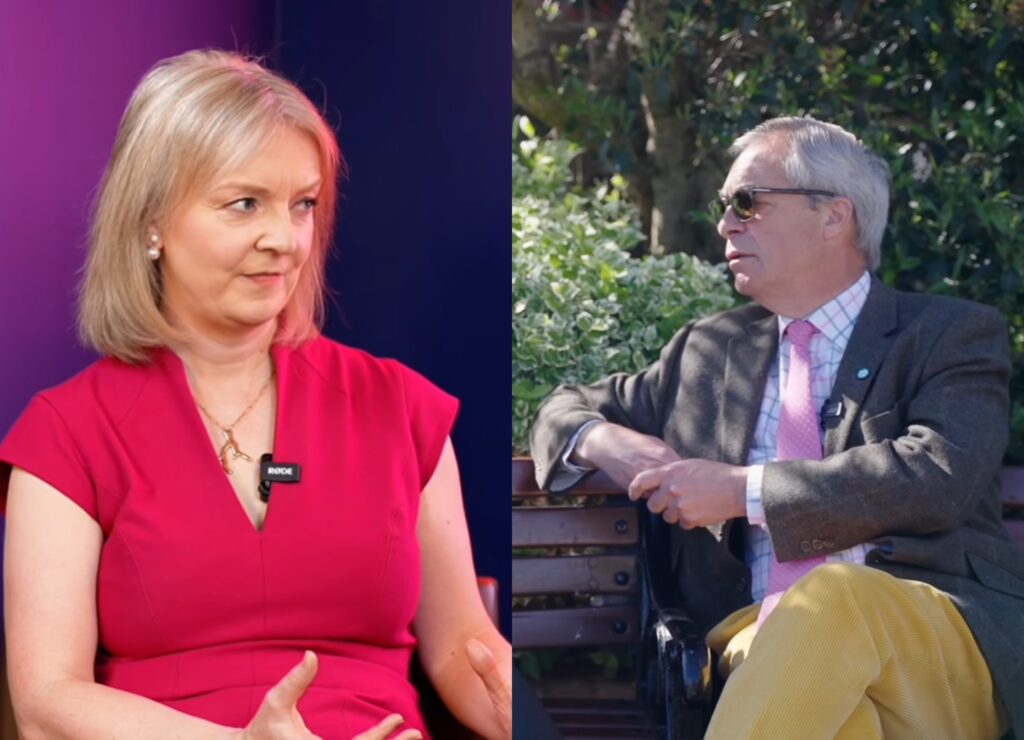
“In 100 years’ time, she’ll be an answer in a quiz show – perhaps a 2120 edition of Pointless.”
“If Brexit were a Whitehall farce in which, sooner or later, everyone fell over or lost their trousers, she was poleaxed in the act of walking on the stage.”
When Biden became president and Boris Johnson resigned, Biden’s statement didn’t even mention him. When Truss fell, Darroch’s American contacts said: “Now you really have lost it – we’ll never see you in the same way again.”
When Rishi Sunak took over, Darroch offers faint praise: he “stabilised the ship” and “unlike his two immediate predecessors, behaved like a PM.” The bar had fallen that far.
Immigration – the record Brexit promised to fix
One of the central promises of the Brexit campaign was control over immigration. The record is now documented. As we reported in our net migration piece, net migration reached a record 944,000 under the Conservative government that delivered Brexit – the highest in British history. It has since fallen 48% under Labour to 171,000, the lowest level since 2012. Robert Jenrick, the immigration minister who oversaw that record under the Conservatives, defected to Reform and responded to the fall by complaining that too many British people were leaving the country.
As we also reported in our Stefanovic Reform policies piece, lawyer Peter Stefanovic noted that nearly half of Britons now incorrectly believe net migration has increased – a direct consequence of political rhetoric detached from the data. The referendum was won partly on immigration. The immigration record of the government that won it was the worst in British history.
Where Britain stands now
Darroch’s assessment of Britain’s position at the ten-year mark is specific. “We are both diminished and isolated. Diminished because the starting point for influencing, for shaping events, is to be in the room. And our presence at G7, G20 and Nato summits does not compensate for our self-imposed exile from the EU.”
He describes Britain as “a medium-sized country floating uneasily in the mid-Atlantic, profoundly vulnerable to future storms.” The specific vulnerability concerns tariffs: the UK now risks EU tariffs on its goods as well as US tariffs under Trump’s trade agenda. “A literal double whammy. So we have to go, metaphorically on our knees, both to the US and to the EU.”
As we reported in our Starmer EU pivot piece, the UK is already moving to align with EU single market rules without a Commons vote on each occasion – a quiet acknowledgement of the economic reality Darroch is describing.
The most specific damage, in Darroch’s view, concerns trade itself. “The most egregiously self-harming aspect of our Brexit deal is that, notwithstanding our history as one of the great free-trading nations of the world, we erected a hard border with the EU, saddling our Europe-facing businesses with vast amounts of paperwork and bureaucracy alongside a range of new tariffs. There was no need for this theologically driven outcome.”
On the vacuum in global leadership that Brexit Britain has failed to fill, Darroch is pointed: “There is a vacancy. For the next few years, none of this will be coming from America.”
As we have reported in multiple pieces, the public has moved significantly on this question. As we reported in our QT EU rejoin piece, an audience member went viral making the case for Labour to unite around EU rejoin. Sadiq Khan has said Brexit will be reversed “in his lifetime.” As we reported in our Burnham Newsnight interview, he has framed ending what he calls 40 years of neoliberalism – including the post-Brexit economic settlement – as central to his prospective leadership. 63% of Britons would now vote to rejoin the EU.
The back of the queue – revisited
Obama had caused controversy weeks before the vote itself when he said that if Britain left the EU, the UK would be at “the back of the queue” for trade talks with the United States. It was widely interpreted as a clumsy attempt to help David Cameron. Farage and Johnson treated it as offensive foreign interference. Their campaigns performed outrage.
The back of the queue prediction has aged significantly better than the back of the queue intervention was received at the time. The US tariffs Britain is now navigating under Trump, the EU-UK trade border that didn’t need to exist in its current form, and the State Department question – “what is the point of the UK now” – are realisations of something close to what Obama warned.
He thought they’d completely f***ed themselves. As Mazzucato told Channel 4 in our Brexit accountability piece: “It is a crime. Farage and Johnson lied and lied again and have not been held accountable.”
The book published this week, on the tenth anniversary of the vote, is the latest addition to the evidence that the person who had it right on June 24, 2016 was not the people who won.



Leave a Reply