

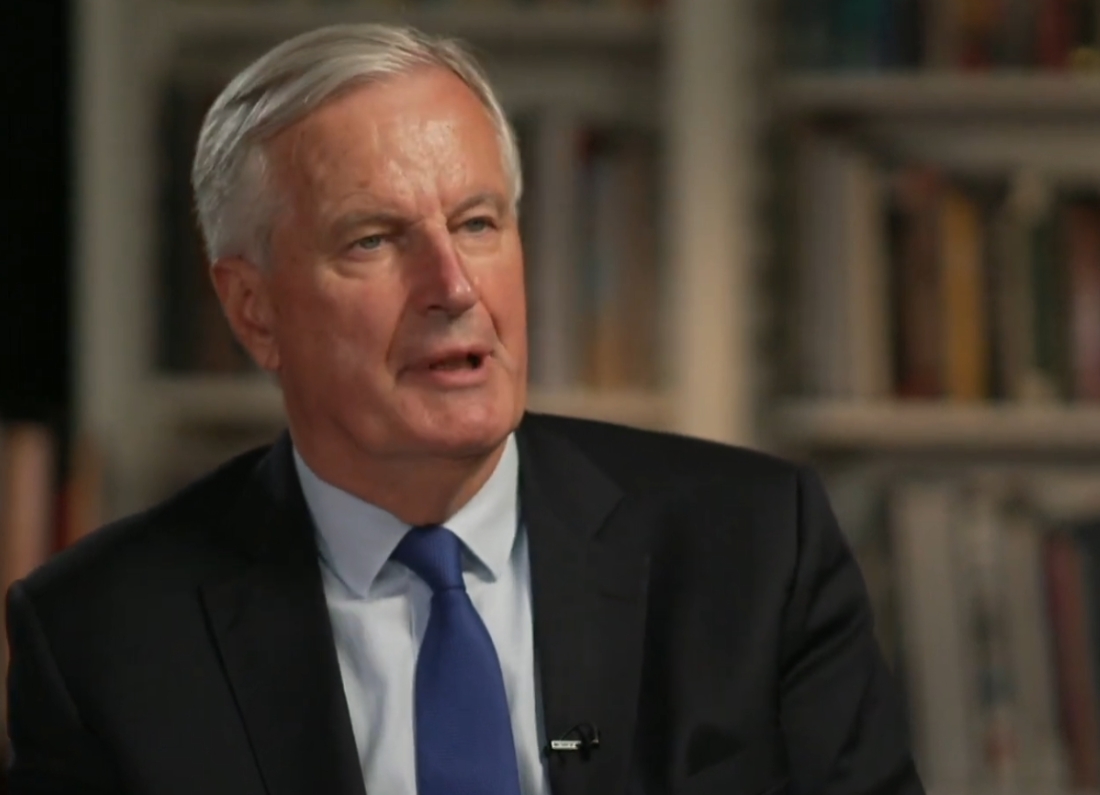
Michel Barnier, the EU’s former chief Brexit negotiator, has said Britain could keep its most important pre-Brexit protections – including the right to retain the pound and stay outside the passport-free Schengen travel zone – if it chose to rejoin the European Union.
Speaking ahead of the 10th anniversary of the Brexit referendum next week, Barnier said he could not see any obstacle to the UK maintaining those opt-outs and rejected suggestions that Britain would face tougher terms on re-entry. “I am speaking about Schengen, I am speaking about the single currency: there are other member states who are not in them,” he said. “It is perfectly possible to have opt-outs in these fields.”

Why it matters
The comments carry significant weight. Some authoritative voices – including Poland’s foreign minister – have previously suggested the UK could be forced to accept more difficult terms on re-entering the bloc, including potentially adopting the euro. Barnier’s intervention directly contradicts that view and will be seen as a boost to those campaigning for the UK to rejoin.
The political significance is also clear in the polling. Recent YouGov data shows 55% of Britons support the UK rejoining the EU – but that figure drops sharply to just 35% if the UK had to rejoin without its prior opt-outs, with 43% then opposed. A separate poll found half of Britons now want a second Brexit referendum, including a quarter of those who voted Leave ten years ago. The terms of any potential return are not an abstract question; they are central to whether public opinion could ever translate into political momentum.
Under the EU treaties, all member states are technically expected to join the euro, with Denmark being the only country holding a permanent opt-out. New members are also legally obliged to join the Schengen area once they meet the necessary requirements, though five of the 13 countries that have joined the EU since 2004 have still not adopted the single currency. Ireland is the only EU member with an official opt-out from Schengen. Barnier’s position is that precedent, rather than treaty language, is what would matter in any British negotiation.
What Barnier said
Barnier, who served as prime minister of France in 2024 and remains an influential voice in Brussels, was careful about how far he went on certain issues. He declined to say whether the UK could also reclaim the financial rebate secured by Margaret Thatcher – which historically reduced Britain’s budget contributions to the EU – describing any future arrangement as a matter for negotiation.
“The DNA of the EU is solidarity, that the more developed country helps the others,” he said. “We will see if the UK decides to ask to join the EU. It will be a choice and it will be open to negotiation. I will be ready at that time for free advice.”
On Britain’s broader economic position, Barnier was direct. “It would not be fair to say that the problems of the UK today are due to Brexit,” he said, “but what I am sure of is that all these problems are more difficult because of Brexit.” That view is increasingly backed by economic analysis. New research has found Brexit has cut trade across almost every sector of the economy, with analysts warning a customs union alone would barely address the damage. A former Goldman Sachs chief economist has described Brexit as a “colossal economic shock” doing more damage than the Iran crisis.
Asked whether he believed the UK would rejoin the EU within his lifetime, the 75-year-old was measured but clear in his direction of travel. “I don’t know the length of my life,” he said. “I think day after day the British people will see in the current world, that it is more dangerous, more fragile, more unstable, that we cannot be alone. Every day it will be more clear.”
The free movement problem
Despite the softening tone on opt-outs, Barnier was clear that one red line – shared by both sides – makes a meaningfully closer economic relationship between the UK and EU extremely difficult in the near term. When asked whether a deeper trade relationship was achievable given Keir Starmer’s position against restoring free movement, Barnier gave a one-word answer: “No.”
His reasoning was primarily political rather than legal. With France facing a genuine prospect of a far-right president being elected as soon as next spring – when Emmanuel Macron’s term expires – Barnier said the EU cannot afford to be seen granting frictionless trade access to a country that has rejected free movement. “Never give any argument to the far right in France or elsewhere,” he said.
The free movement impasse is already shaping the current UK-EU reset negotiations. Senior EU diplomats have warned that “momentum is being lost” in the talks, with the UK resisting calls to restore lower pre-Brexit tuition fees for EU students as part of a youth exchange deal. The next formal round of talks is due in Brussels on 22 July.
A new European defence council
Barnier also used the interview to push a proposal for a new European council for defence and security sitting outside the formal EU institutional structure. He said the UK should join EU member states, along with Ukraine and Norway, on a body cooperating on military spending – potentially with joint borrowing for defence and investment in artificial intelligence and other emerging technologies. The idea echoes a call from Zelensky, who has urged the UK to rejoin the EU alongside Ukraine for European security reasons.
“It is my proposal to create this independently of the EU institutions,” Barnier said. The proposal reflects a wider shift in thinking across the continent about resilience in an unstable world – and could offer a route to deeper UK-European cooperation that avoids the most politically contentious elements of any formal return to the EU.
The bigger picture
Barnier will be in London on Tuesday for a UK in a Changing Europe conference marking the decade since the Brexit vote. He is yet to formally announce a candidacy for the French presidency but is widely thought to be positioning himself as a potential unity figure for the centre and centre-right.
The conversation he is wading into is increasingly mainstream in Britain. The civil servant who led Britain’s exit from the EU has called for a public rejoin debate, and Sadiq Khan has said he believes Brexit will be reversed within his lifetime. According to the latest YouGov polling, 57% of Britons now think the UK was wrong to vote to leave – including 23% of leave voters.
Whether that shift in public opinion eventually translates into political action remains the open question. But with Barnier signalling the door is open, and the terms more favourable than many assumed, the debate is no longer as hypothetical as it once was.







Leave a Reply