

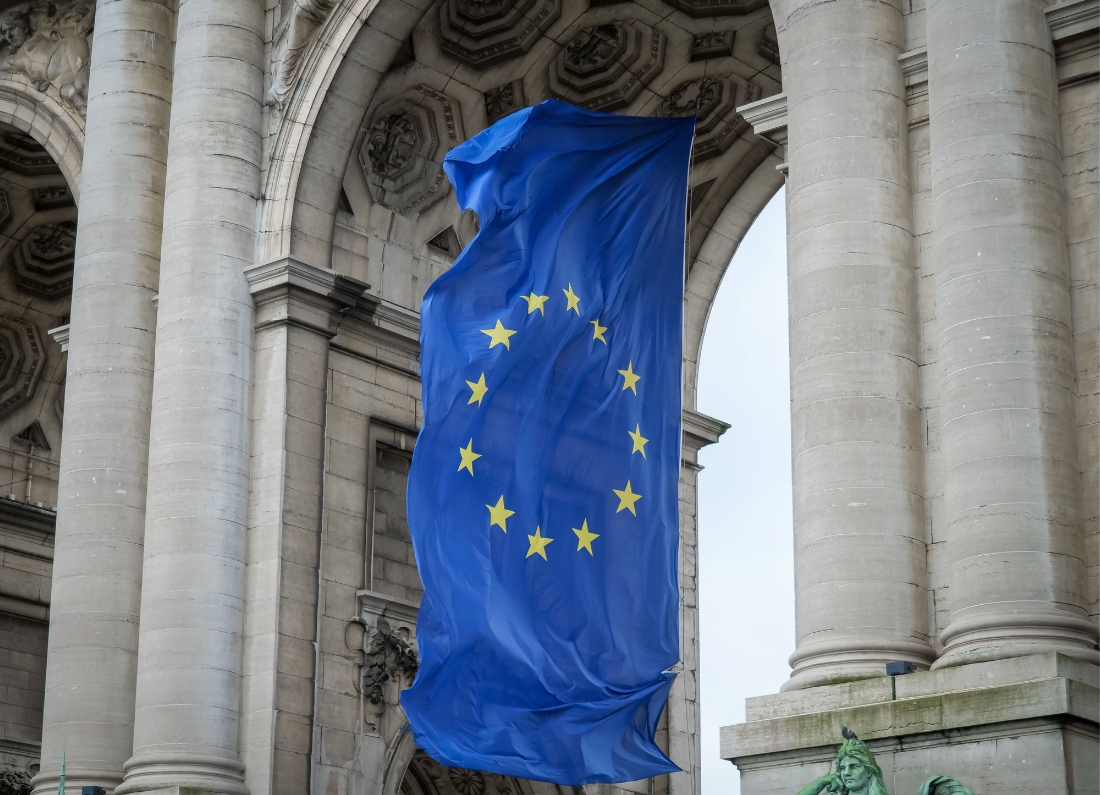
New polling by Ipsos, King’s College London and think tank UK in a Changing Europe, published to mark the tenth anniversary of the Brexit vote, has found that 48% of Britons would support a second referendum on EU membership, compared with just 27% who would oppose one. A quarter of those who voted Leave in 2016 now back a second vote. A fifth of Reform UK voters do too. Separately, a YouGov poll found that 55% of Britons now support rejoining the EU outright. And the number who believe Brexit is going worse than they predicted has almost doubled since 2021 – from 27% to 48%.
The key numbers
The Ipsos polling paints a comprehensive picture of how public opinion has shifted in the decade since the referendum.
On a second vote: 48% in favour, 27% opposed. The question is not about the outcome of such a referendum – it is simply about whether one should be held. The fact that a quarter of 2016 Leave voters now support holding one again does not mean they would vote differently. It means they believe the question should be put to the British people again.
On Brexit’s trajectory: 48% now say Brexit is going worse than they predicted. In 2021, that figure was 27%. In five years, it has nearly doubled. Just 9% say Brexit is going better than expected. Ninety-one percent of Britons, on this measure, believe Brexit is either meeting or falling short of their expectations – and nearly half believe it is actively underperforming them.
On the EU relationship: 47% want closer trading ties with the EU. Just 16% want a more distant relationship. Twenty-two percent want to keep things as they are.
On rejoining: a separate YouGov poll found 55% of Britons now support rejoining the EU.
The Leave voter finding
The most striking single data point in the Ipsos survey is that a quarter of 2016 Leave voters now support a second referendum. This requires careful handling: it does not mean they have changed their minds about EU membership. It means they believe the decision should be revisited. The motivations for that view will be varied – some may have changed their position entirely, some may be confident they would vote Leave again and believe a fresh mandate would settle the argument, some may simply believe that a decision of this magnitude should be periodically reaffirmed.
But the number is significant regardless of the underlying motivation. The Leave coalition of 2016 is no longer monolithic on the question of whether the vote should be held again. A quarter of its members have moved to the position that it should.
Similarly, one in five Reform UK voters – the party whose entire political identity is built on Brexit having been the right decision – believes there should be a second referendum. This is, as a data point, extraordinary. It suggests that even within the most Brexit-committed section of the electorate, there is a meaningful minority who believe the question should be reopened.
The political implications for Labour
The poll contains a specific finding that will be noticed inside Labour. Currently, 31% of respondents say they would be likely to consider voting Labour at the next general election. That figure rises to 45% if Labour were to include a second referendum in their manifesto.
A fourteen percentage point increase in electoral consideration is not a small number. It suggests that a Labour manifesto commitment to a second referendum could be a significant electoral asset – not a liability, as the party’s current leadership has consistently treated it.
The current Labour position is broadly one of making Brexit work rather than revisiting it – closer ties with the EU, alignment where possible, but no second referendum and no rejoining. As we reported in our Obama Brexit piece, the tenth anniversary of the vote has produced significant public reflection on what Brexit has meant, including Obama’s private assessment that Britain had “completely f***ed” itself. Lord Darroch’s warning – that Britain risks being “diminished and isolated” in the mid-Atlantic – has a different resonance in a political environment where 48% of Britons believe Brexit is going worse than they expected.
Andy Burnham, as we reported in our Burnham electoral reform piece, has backed proportional representation as part of his prospectus for a changed Labour Party. The Ipsos polling suggests that a more open position on Brexit could be an electoral asset for whoever leads Labour next.
The ten-year context
The survey was published to mark the tenth anniversary of the 2016 referendum. The trajectory it captures is consistent across multiple data points: Britain has not become more settled on Brexit over time. It has become more critical of it.
The 2021 baseline – 27% saying Brexit was going worse than expected – was itself a post-pandemic figure, taken at a moment when Britain’s relationship with the EU was still being defined through the Trade and Cooperation Agreement. The near-doubling of that figure to 48% in five years reflects the accumulated experience of a decade: the Northern Ireland Protocol disputes, the trade frictions, the net migration paradox – as we reported in our net migration piece, net migration hit a record 944,000 under the government that delivered Brexit – and the broader sense, captured in the 47% who want closer EU ties, that the balance struck has not served the country well.
As we reported in our ECFR European survey piece, only 11% of Europeans see the US as an ally, and 62% of Britons support buying European military hardware instead of American. The geopolitical context in which Brexit was negotiated – a reliable American security guarantee, a predictable transatlantic relationship – has shifted dramatically. The argument for European alignment has strengthened in ways that could not have been anticipated in 2016.
The question the polling cannot answer is what would happen in a second referendum. What it can answer is that a majority of Britons believe it should be held.










Adam
who said You Remoaner clowns