

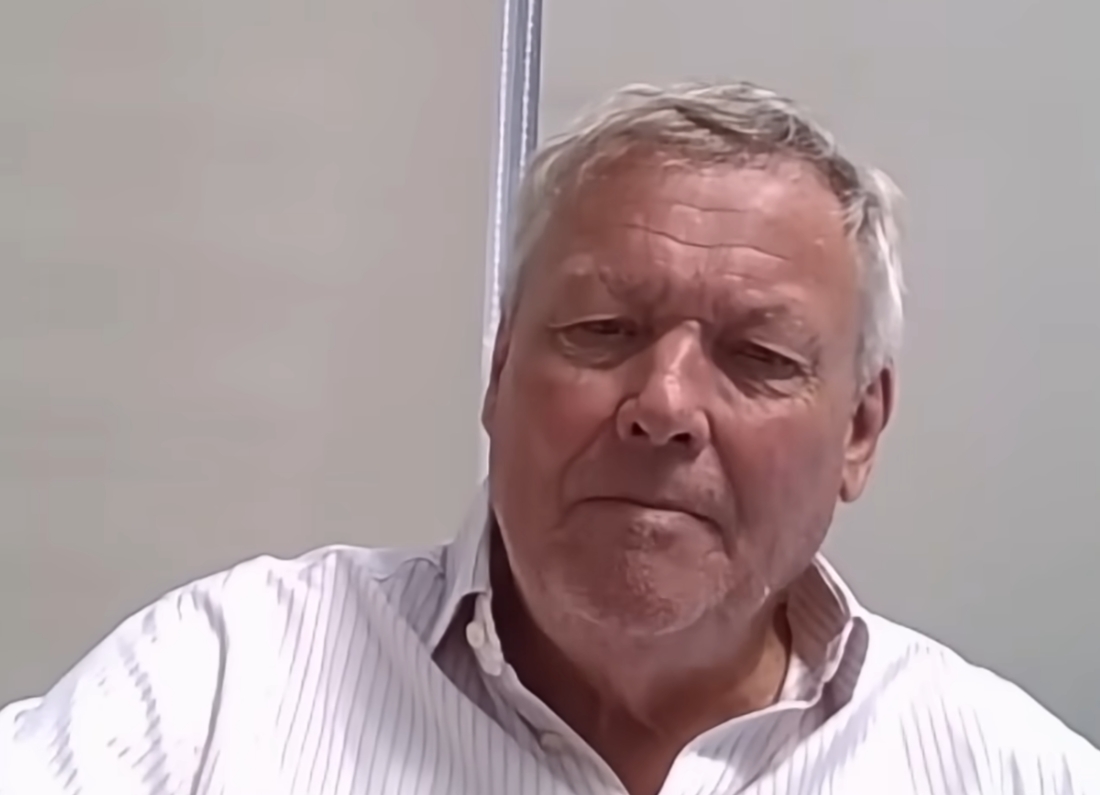
Giles Watling, Clacton’s Conservative MP from 2017 to 2024, has accused his successor of helping create the small-boats crisis Reform now campaigns on.
Speaking shortly before Farage won the Clacton byelection, Watling called him “the most dangerous man in British politics” and blamed him for deepening political division, before turning to Brexit specifically: “He spent all those years in Europe calling for Brexit. Then he succeeded in that, thereby taking us out of the Dublin Regulation.” He argued that leaving the system fed the rise in Channel crossings while handing Farage another issue to campaign on: “That gave us the small-boats problem, which gives him succour. It is the most extraordinary and, if you look at it in one way, quite brilliant policy.”
Farage won, but Binface still took a quarter of the vote
Watling made these comments before the result, but his prediction held up broadly. Farage received 22,239 votes, 62.8%, a 12,784 majority. Binface came second with 9,455, 26.7%. Turnout was 44.37%. Comfortable, but in a contest Labour, the Conservatives, the Lib Dems and the Greens had all sat out. Farage got just 1,014 more votes than at the 2024 general election, his percentage only jumped because the established parties weren’t on the ballot, leaving Binface as his only opponent with real public recognition.

The comparison to Watling’s own result isn’t quite like-for-like, but it’s still striking. In 2019, Watling won Clacton with 31,438 votes and 72.3%, facing Labour, the Lib Dems and four others, per official parliamentary records. Farage still beat all 33 opponents combined, but Binface taking more than one vote in four fell well short of the overwhelming display Reform was hoping to project.
The Dublin claim needs correcting
Watling’s underlying argument rests on a real Brexit consequence. His description of the actual system was too loose, though. He referred to “the Dublin Regulation of 1992.” The original Dublin Convention was actually signed in 1990; the later Dublin III Regulation came into force in 2014.
Dublin III never let Britain automatically send every asylum seeker back to the first safe European country they’d passed through. It established a process for deciding which participating country was responsible for examining an asylum claim, with family connections given particular weight, though irregular EU entry was frequently used in those determinations. Britain could ask another country to take responsibility for someone’s claim where the criteria matched, and other countries could make equivalent requests of Britain.
It was also far from an efficient deportation machine in practice. Between 2015 and 2018, Britain made 18,953 requests to transfer people to other participating countries. Only 1,395 people were actually transferred. Over the same period, 2,365 people were transferred into Britain. Those House of Commons Library figures show why calling Dublin III a straightforward power to just send everyone back to France doesn’t hold up.
What Brexit actually removed
Watling’s on firmer ground saying Brexit removed a legal mechanism the government previously had. Britain stopped participating in Dublin III at the end of the transition period on 31 December 2020, without securing an equivalent replacement agreement with the EU. The Commons Library confirmed at the time Britain would no longer be able to use the regulation to return asylum seekers who’d travelled from EU member states.
That didn’t stop the Home Office declaring some claims inadmissible where someone had passed through a safe country. It did leave ministers needing another country to actually agree to take that person back, and without a returns agreement, an inadmissibility decision didn’t necessarily produce a real removal. So Brexit made returns to Europe genuinely harder. It didn’t, on its own, start the small-boats route.
Crossings were already climbing while Britain was still inside Dublin. Home Office figures record 299 arrivals in 2018, 1,843 in 2019, 8,466 in 2020, then a jump to 28,526 in 2021, the first full year after the transition period ended. Organised smuggling networks, tighter security around lorries and ports, political instability, weather, and the lack of enough safe routes have all shaped that growth too. Watling’s claim that Farage simply “created” the problem is too tidy. His broader charge is harder to wave away: the Brexit settlement Farage championed removed a working returns process without replacing it with anything comparable.
Back in Westminster, back under investigation
Farage returns to Parliament with small boats still central to Reform’s programme, including the promise to use military assets intercepting boats and returning them to France under Operation Fortress. France has already said it won’t accept returned vessels without its consent, and former Royal Navy commanders have questioned whether the service even has suitable ships for it.
He also returns to the parliamentary investigation that stopped the moment he resigned, reopened by the commissioner shortly after the byelection result, examining whether Farage should have declared the £5m gift from Christopher Harborne and other financial support received before 2024. Farage denies wrongdoing and maintains the Harborne payment was a private gift.
The Clacton result has restored his seat. It hasn’t settled whether he complied with parliamentary rules, and it hasn’t answered Watling’s charge over Brexit either. Farage built his political career campaigning to take Britain out of the EU. He now campaigns against a Channel crisis that got substantially worse after Britain left a European returns system without ever securing a full replacement for it. That doesn’t make him solely responsible for the crossings. It does leave him with real questions about the consequences of the policy that made him famous in the first place.







Leave a Reply