

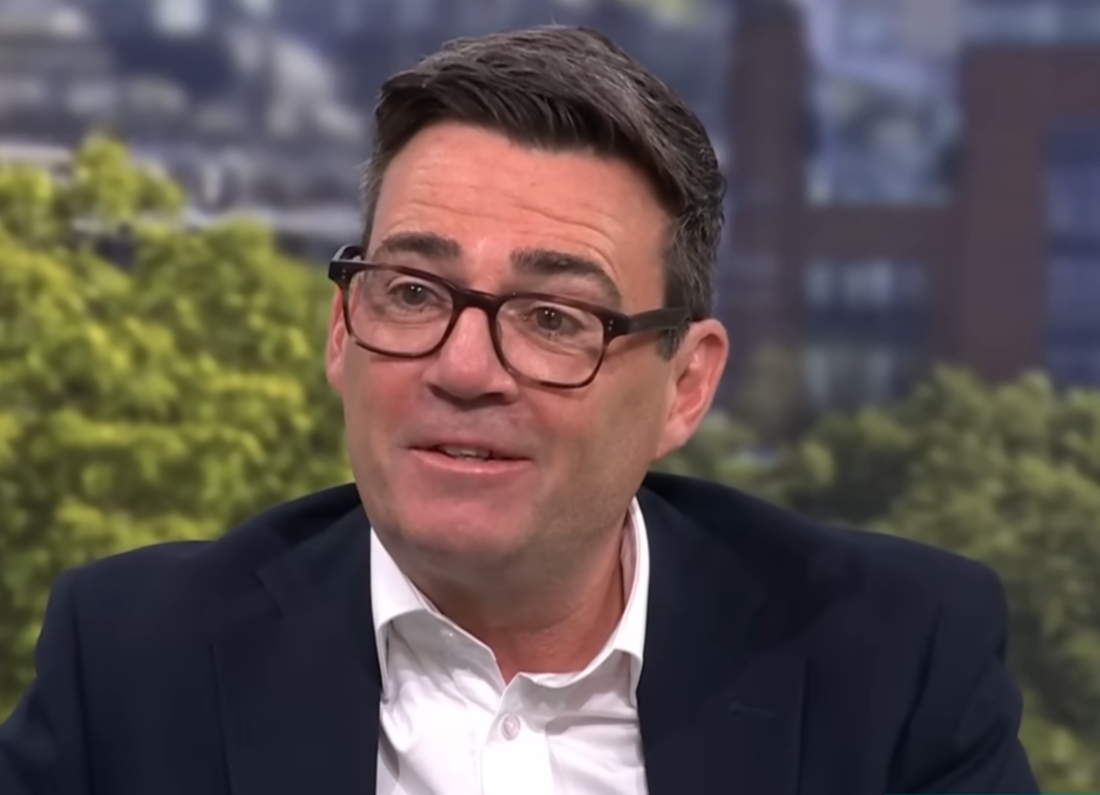
Andy Burnham has refused to rule out putting a pledge to rejoin the European Union in Labour’s next general election manifesto.
Asked directly whether he could exclude reversing Brexit from the party’s programme, the prime minister said the issue was “for another day”.
Burnham insisted his immediate priority was securing a practical agreement with Brussels and rebuilding the relationship damaged during the years following the referendum.
But he did not repeat Labour’s previous promise to keep EU membership off the table.
The answer leaves open the possibility that Labour could seek a democratic mandate to rejoin at the next election, although no decision has been announced and the government’s policy during the current parliament remains unchanged.
‘Those issues are for another day’
Burnham was questioned while travelling to New York for his first United Nations General Assembly as prime minister.
He told reporters his government was preparing for a UK-EU summit expected later this year and wanted to build on the work started by his predecessor, Keir Starmer.
“My immediate priority is to build on the good work that Keir did in rebuilding bridges,” Burnham said.
He said the relationship had been badly damaged earlier in the decade and that the next stage should produce agreements capable of improving Britain’s economy.
Asked again about rejoining, he replied: “The other issues you discuss, they are for another day.”
It is a carefully chosen answer. Burnham has not announced a plan to return Britain to the EU, but neither has he closed down the discussion about what Labour could offer at the next election.
His minister for European relations, Hamish Falconer, has taken a similar position. As The Daily Britain previously reported, Falconer repeatedly declined to rule out a rejoin pledge when questioned in the Commons.
The difference now is that the prime minister himself has been given the opportunity to exclude it and chose not to.
Burnham has already said he wants Britain to rejoin
Burnham’s long-term preference is not a secret.
Before entering Downing Street, he said he wanted Britain to rejoin the EU during his lifetime. During the Labour leadership contest, however, he argued that reopening the referendum debate immediately would leave the country trapped in arguments about the past.
That distinction has shaped his position ever since: closer ties now, possible membership later.
Burnham has said he will continue to observe Labour’s existing Brexit restrictions during this parliament. Those rule out returning to the single market, customs union or freedom of movement.
He is facing growing pressure to go further.
London mayor Sadiq Khan has urged Burnham to fight the next election on an explicit promise to rejoin. Khan wants the government to seek customs union and single market membership before then, followed by a public mandate for full membership.
Burnham has not accepted that timetable. His refusal to reject a manifesto pledge, however, will encourage Labour figures who believe the party should begin preparing the case.
The immediate dispute is about trade
Before Labour reaches any decision about membership, Burnham has a more immediate argument to settle with Brussels.
He is expected to raise concerns about the EU’s proposed “Made in Europe” policy during talks with European Commission president Ursula von der Leyen.
The policy is intended to reduce Europe’s dependence on Chinese components by giving preference to goods manufactured within the bloc. British companies fear they could be excluded despite operating across supply chains closely integrated with EU businesses.
The automotive trade between Britain and the EU is worth around €80 billion a year, according to the Society of Motor Manufacturers and Traders. The organisation has warned that shutting British manufacturers out could damage companies on both sides of the Channel.
Burnham said Britain should be treated as a trusted partner rather than an economic opponent.
“We are not your enemies here,” he said, arguing that the UK and EU face the same industrial pressures from China.
He warned that British and Irish supply chains could become “collateral damage” if new barriers were imposed.
The planned UK-EU summit is also expected to cover youth mobility, reduced checks on food exports and closer cooperation on emissions trading.
These are practical negotiations rather than preparations for membership. Their success or failure could still shape the larger argument.
Public opinion has moved sharply since 2016
Burnham’s answer comes as support for rejoining reaches its strongest sustained level since the referendum.
Polling analysed by Sir John Curtice found that 61 per cent of people expressing a preference would vote to rejoin, compared with 39 per cent who would remain outside.
Curtice warned that the margin could narrow if a campaign forced voters to consider the conditions attached to membership. Questions about freedom of movement, financial contributions, the euro and the Schengen area would all return.
Even so, the change since the 52 to 48 Leave victory is substantial. The full polling is examined here.
Separate constituency modelling found EU membership was the most popular option for Britain’s future relationship with Europe in 628 of 632 constituencies.
That does not mean 628 seats would vote to rejoin in a referendum. Respondents were choosing between several different relationships, splitting the vote among those who wanted to remain outside. It does show how far the political mood has moved.
A decision Labour can postpone, but not avoid
Rejoining the EU would require more than a line in a manifesto. Britain would have to apply, secure the agreement of every member state and negotiate the terms of its return.
Those terms could become difficult. The UK would not be guaranteed the opt-outs and rebate it held before Brexit, while freedom of movement and budget contributions would return to the centre of the argument.
Burnham is not committing Labour to that fight yet.
For now, he wants agreements that reduce trade barriers and bring Britain closer to its European neighbours without reopening the membership question.
But “for another day” is not the same as “never”.
Labour ministers have now been asked repeatedly whether rejoining could appear in the next manifesto. None has ruled it out.



Leave a Reply