

A Labour minister has declined to rule out a promise to rejoin the European Union in the party’s next general election manifesto, while insisting that its existing Brexit commitments remain unchanged.
Hamish Falconer was pressed twice in the Commons on whether Labour would exclude EU membership from its next election programme. He said responsibility for writing that document did not rest with him and defended the Government’s current approach to negotiations with Brussels.
The exchange took place on Thursday 10 September. It did not announce a rejoin policy or a referendum, but left unanswered a direct question about what Labour could offer voters at the next election. Hansard records the exchange here.
Minister challenged over next election
Conservative MP Alex Burghart asked Falconer whether Labour would rule out including rejoin in its next manifesto.
Falconer, the minister for intergovernmental relations and European relations, replied:
“I have many responsibilities, but writing the next Labour party manifesto is not one of them.”
He reaffirmed Labour’s red lines and said his task was to improve the agreement Britain had inherited.
Burghart challenged that answer, arguing that a government could exclude policies before drafting its election programme. Falconer again defended the existing mandate, rejecting a rerun of the arguments surrounding the 2016 referendum.
He also said legislation arising from negotiations would be scrutinised by MPs.
What Labour promised in 2024
Labour’s 2024 manifesto explicitly committed Britain to remaining outside the EU. It also excluded a return to the single market or customs union, and the restoration of freedom of movement.
Those commitments accompanied a promise to improve relations with European neighbours and remove unnecessary obstacles to trade. The party proposed a veterinary agreement to reduce border checks, better arrangements for touring performers and recognition of professional qualifications to support service exporters.
It also pledged a UK-EU security pact and closer defence cooperation with European allies.
The manifesto therefore distinguished between working more closely with Brussels and returning to membership. Its stated objective was a better relationship from outside the bloc.
A future manifesto could seek a different mandate. However, Falconer’s answer did not establish that Labour had decided to change those commitments, or indicate what any replacement policy would involve.
Burnham’s longer-term position
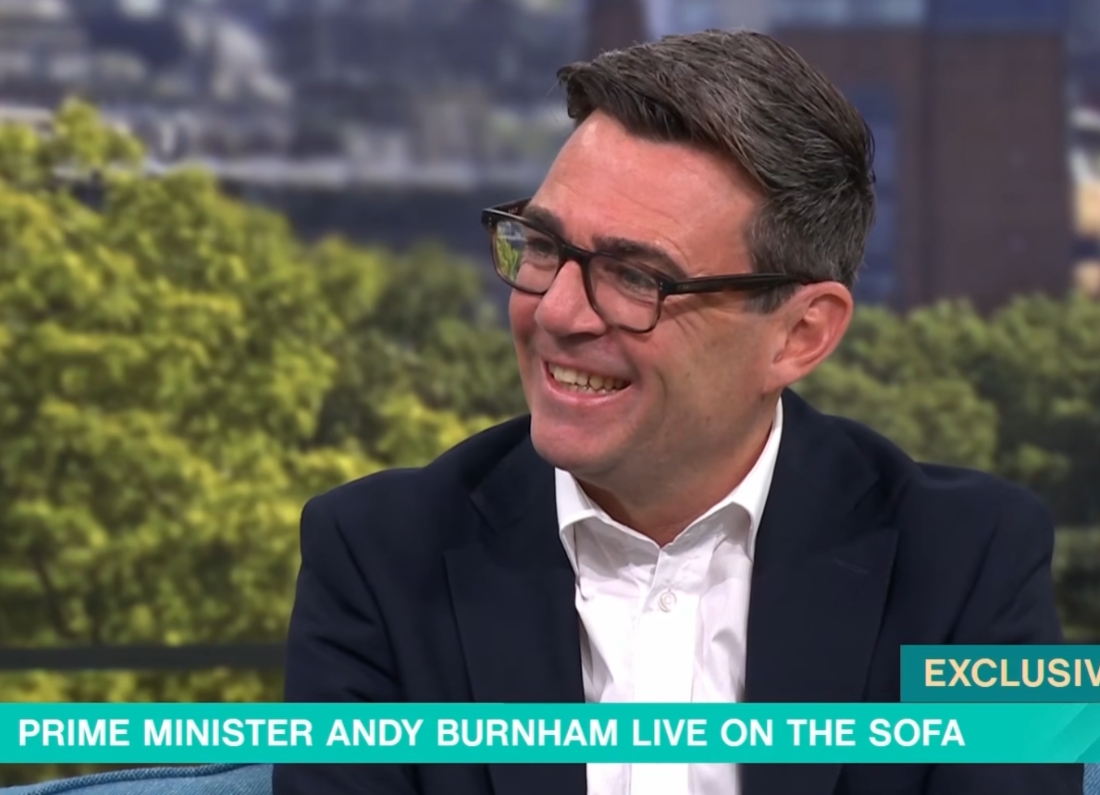
Andy Burnham has expressed a desire to see Britain rejoin the EU during his lifetime, while opposing an immediate rerun of the referendum. The Guardian reported his position in June.
London mayor Sadiq Khan has gone further, urging Labour to contest the next election with an explicit commitment to EU membership. His intervention was reported in March.
Voters favour closer ties, but remain divided on a referendum
Research published by British Future on 9 September found that 46 per cent would vote to rejoin, compared with 29 per cent who would remain outside. A quarter were undecided.
The study combined a nationally representative survey of 3,007 UK adults with focus groups across England and Wales.
It found that 56 per cent supported a closer relationship going beyond Labour’s existing red lines. However, support for another referendum was less settled: 34 per cent wanted one as soon as possible, while 28 per cent preferred one further in the future and 21 per cent did not want one.
A reciprocal youth mobility scheme attracted 57 per cent support, with 12 per cent opposed.
British Future cautioned that dissatisfaction with Brexit should not be treated as a settled mandate for membership. Its findings point to public support for practical cooperation alongside uncertainty about how far Britain should go.
A manifesto pledge would not itself restore membership
Even if a future government sought a mandate to rejoin, Britain could not return through a domestic political decision alone.
The EU’s membership process involves negotiations and approval by existing member states and the European Parliament. An accession treaty must then be ratified under the relevant constitutional procedures.
For now, the Government has reaffirmed its current position. Falconer declined to exclude a different election offer, but announced neither the terms of one nor a timetable for pursuing it.





Leave a Reply