

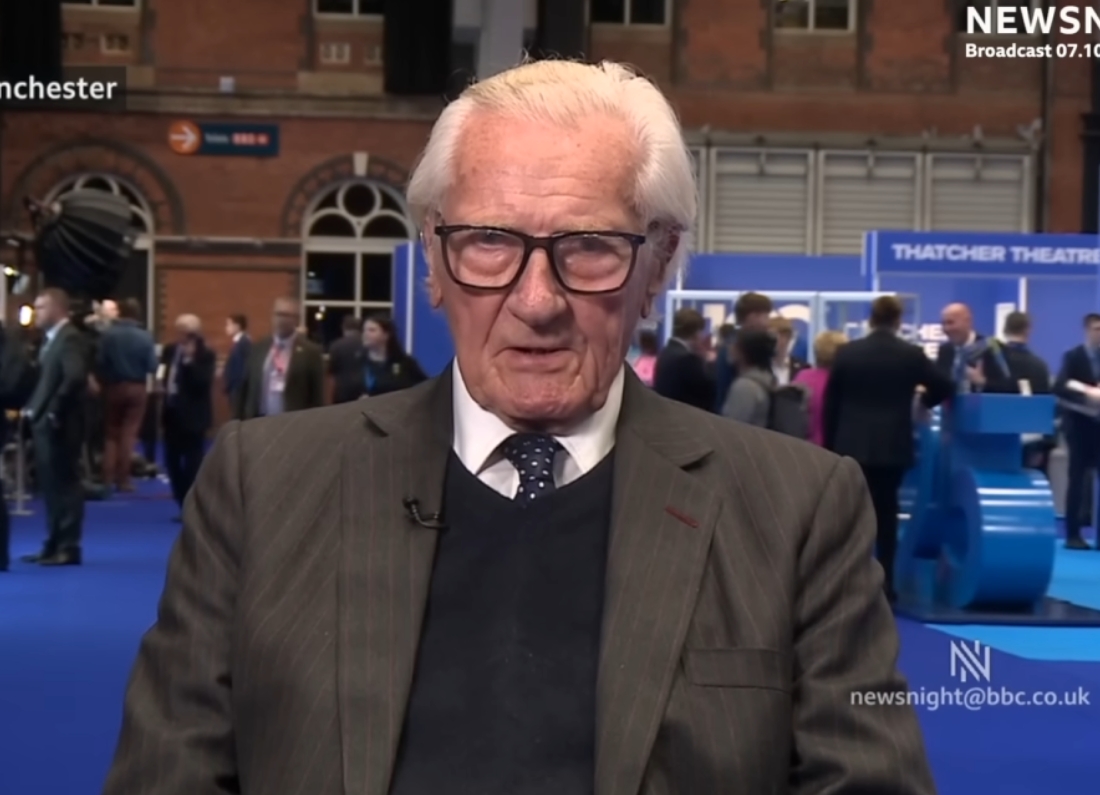
Lord Michael Heseltine, the former Deputy Prime Minister who served under both Margaret Thatcher and John Major, has written for The Independent calling Brexit “a heinous crime,” demanding Boris Johnson, Nigel Farage, Michael Gove and Dominic Cummings answer for what he describes as a “scandalously false prospectus” that has “turned to dust and ashes.” Heseltine asks: “Where are the paeans of praise to Brexit from Boris Johnson, Michael Gove, Nigel Farage, Dominic Cummings and their accomplices for the land of milk and honey they told us it would deliver?” He answers his own question: “Never have so few done so much damage to so many with so little ability to execute what they lied about.”
The piece was published by The Independent as part of its Europe – The Way Back campaign, ten years after the Brexit referendum, and alongside new polling showing 48% of Britons support a second referendum – including a quarter of those who voted Leave.
The central charge
Heseltine’s argument is not primarily an economic one, though the economics are present. It is a charge of deliberate deception. “Brexit was a self-imposed disaster for this country. It erected barriers between our manufacturing and service industries and our largest market. In a range of cultural, artistic, environmental and academic policies. The public has been lied to, in a heinous crime.”
The phrase “heinous crime” is chosen deliberately. Heseltine is not saying Brexit was a mistake or a miscalculation. He is saying that the people who led the Leave campaign knew or should have known that their promises were false, made them anyway, and that the country has paid the price.
His evidence for the deception is the silence of the deceivers: “They don’t normally hold back from giving their opinions. The reason is obvious I would suggest: their scandalously false prospectus has turned to dust and ashes. They are the guilty men and should hang their heads in shame. It has all proved to be a con.”
This is, as political interventions go, scorched earth. Heseltine is not calling for dialogue. He is issuing an indictment.
Project Fear has become Project Here
The specific rebuttal Heseltine makes of the 2016 Leave campaign’s most used rhetorical weapon is surgical. “Project Fear” was the Leave campaign’s label for every economic warning issued before the vote – Treasury forecasts, Bank of England projections, academic modelling of the trade effects. The phrase was designed to dismiss evidence without engaging with it.
“Those warnings turned out to be true,” Heseltine writes. “Now ‘Project Fear’ has become ‘Project Here’.”
As we reported in our Brexit referendum polling piece, 48% of Britons now say Brexit is going worse than they predicted – almost double the 27% who said so in 2021. Just 9% say it is going better than expected. The Ipsos, King’s College London and UK in a Changing Europe polling that sits alongside Heseltine’s article shows a public that has moved dramatically in its assessment of Brexit’s consequences.
As we reported in our Obama Brexit piece, Barack Obama’s private reaction to the result was that Britain had “completely f***ed” itself. Lord Darroch’s summary a decade on: “diminished and isolated.” Heseltine is making the same assessment from within the Conservative tradition that delivered Brexit.
Where are the paeans of praise?
Heseltine’s challenge to the Brexit architects is specific and unanswerable. Johnson has largely retreated from public Brexit advocacy. Gove is absent from the political scene. Farage, who has built his career on Brexit, increasingly avoids the word – as we noted in our Makerfield byelection coverage, Aaron Bastani observed that Reform campaigns on immigration and national decline without prominently invoking Brexit as its cause. Cummings blogs.
“They are walking away from their heinous political crime,” Heseltine writes. “Instead they offer feeble excuses as to why all their bold promises of more jobs, more trade, more power for Britain have all proved to be a con. Naturally they blame everyone but themselves.”
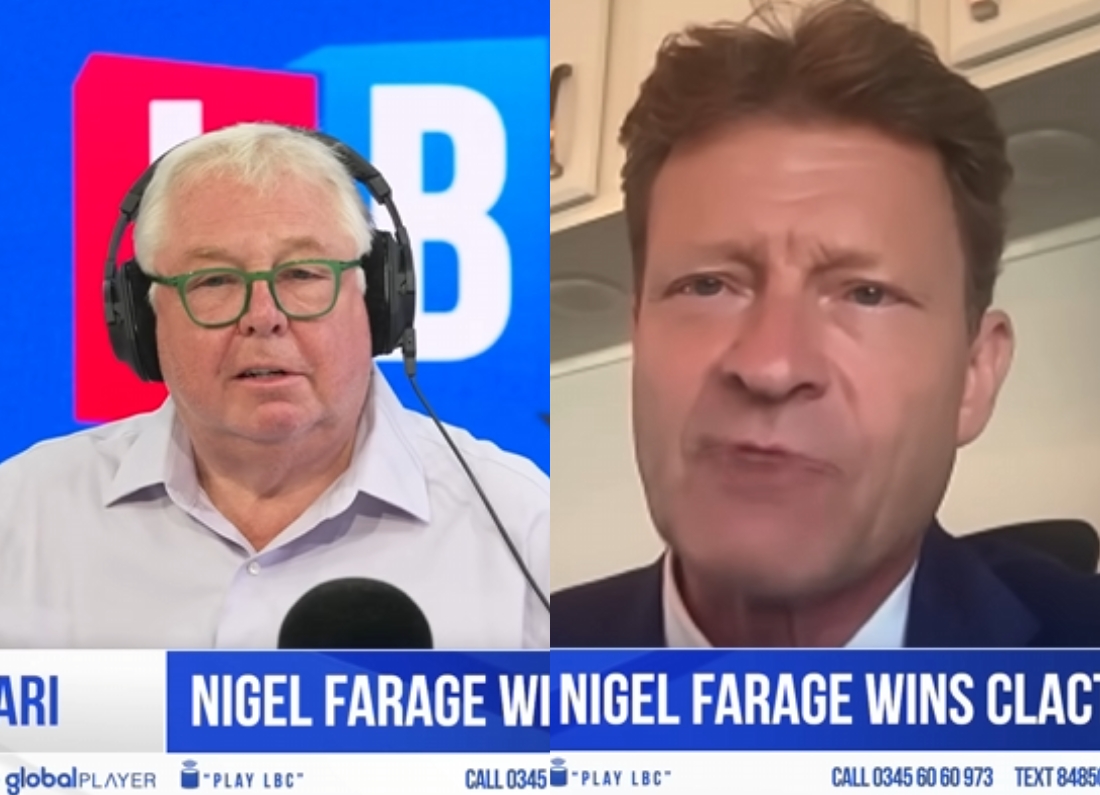
The absence he is pointing to is real. In Farage’s LBC interview this week – as we reported in our Farage LBC piece – he defended Brexit by saying “we’re not living in caves, are we?” and blamed the Conservative Party for failing to implement it properly. This is not a paean to the land of milk and honey. It is a defence of the principle while conceding the delivery. Heseltine is right that the celebrations are notably absent.
The fear of the extreme right
Heseltine’s most pointed structural observation is about the current Government’s paralysis: “The present government is making hesitant approaches to move in that direction but the fear of the extreme right is acting like a ball and chain on our political classes.”
This is the same observation Zack Polanski made about Reform – as we reported in our Polanski Yusuf piece – that “Reform are playing with fire right now trying to stop themselves being outflanked by the extremists of Restore.” The extreme right does not only constrain Reform. It constrains the Government that fears the political cost of being seen to move toward Europe.
Heseltine’s solution is clear: “We should reclaim our traditional role as a major European nation. We should do so in the interests of growing generations of our young people. We should do it in our interests as a nation state with limited resources. As a European partner we can compete with the world’s largest economies.”
As we reported in our ECFR European survey piece, only 11% of Europeans see the US as an ally, 62% of Britons support buying European military hardware, and majorities in every European country believe the US would not come to their aid if attacked. The geopolitical argument for European partnership has not been stronger since before 2016. Heseltine’s timing is not accidental.
The political context
Heseltine is not a Labour peer. He served under Thatcher until resigning over Westland in 1986, returned under Major, and was made a life peer in 2001. His pro-European convictions predate the 2016 referendum by decades. This is not a conversion: it is the position he has held consistently, and the intervention of someone who has watched the country spend ten years demonstrating he was right.
The Ipsos polling published alongside his article shows 55% of Britons now support rejoining the EU. A quarter of 2016 Leave voters support a second referendum. A fifth of Reform UK voters do too. The paeans of praise for Brexit that Heseltine is asking for have not come – because the people who promised milk and honey have, as he puts it, watched their prospectus turn to dust and ashes.
They are, he concludes, the guilty men.
You may also like: ‘It is a crime’: Mazzucato’s viral Brexit verdict, £500bn underinvestment and why nobody asks where the money is when it’s war






Leave a Reply