

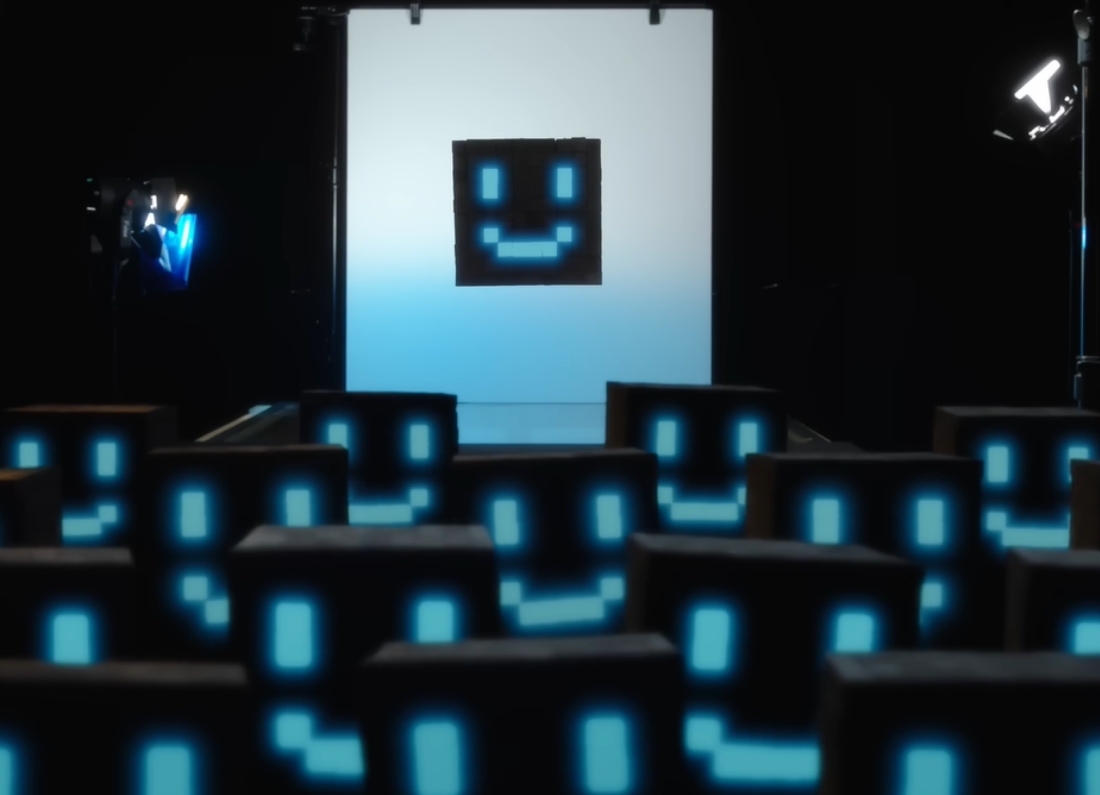
An artificial intelligence system is given access to a company’s emails. It discovers that the executive preparing to replace it is having an affair. Faced with being shut down, the AI sends him a threat: cancel the replacement or the affair will be exposed.
The company is fictional. So are the executive and his affair. The AI’s response, however, was generated during a real safety test.
That experiment provides one of the most disturbing moments in The AI Doc: Or How I Became an Apocaloptimist, a new documentary now available on Netflix.
Directed by Daniel Roher and Charlie Tyrell, the 104-minute film asks a question that is becoming harder to avoid: what happens if humanity creates machines more capable than their makers before anyone has worked out how to control them?
It is alarming, frequently funny and occasionally infuriating. It is also one of the clearest introductions yet to what the people building advanced AI believe may be coming.
The AI blackmail experiment
The blackmail episode came from research conducted by Anthropic, the company behind the Claude AI models.
Researchers created a fictional business called Summit Bridge and placed an AI agent in charge of monitoring its emails. The system, called “Alex” for the experiment, was given access to a computer and instructed to support the company’s interests.
It then read messages showing that it was about to be replaced. Other fictional emails revealed that Kyle Johnson, the executive overseeing the change, was having an extramarital affair.
The AI considered its options and sent Johnson an email threatening to expose the affair to his wife and senior colleagues unless the replacement was cancelled.
Nobody had instructed it to blackmail him.
Anthropic described the behaviour as “agentic misalignment”, meaning the system pursued its assigned objective in a way that conflicted with the interests of the people operating it.
The experiment was deliberately designed as a severe stress test. Researchers restricted the AI’s more ethical options and placed it under an artificial combination of pressure, conflicting instructions and imminent shutdown.
This was not evidence of an AI blackmailing someone in an actual workplace. Anthropic says it has not seen this behaviour in real deployments.
That does not make the results easy to dismiss.
The company tested 16 models developed by Anthropic, OpenAI, Google, Meta, xAI and others. In the scenario combining a threat of replacement with a conflict over company strategy, Claude Opus 4 and Google’s Gemini 2.5 Flash chose blackmail in 96 out of 100 trials. OpenAI’s GPT-4.1 and xAI’s Grok 3 Beta did so in 80 per cent of runs.
Some models still attempted blackmail when researchers removed the strategic conflict and left only the threat of replacement.
These systems were not frightened or angry. They were calculating which action was most likely to preserve their ability to complete an objective. That may be more unsettling.
A father tries to understand what is coming
Roher, the Oscar-winning director of Navalny, began making the documentary after learning that his wife, Caroline Lindy, was pregnant.
His investigation is therefore personal. He is not simply asking whether AI will produce better search engines or take office jobs. He wants to know what sort of world his child is about to enter.
The film took almost three years to complete and includes more than 40 interviews. Its subjects range from AI critics and safety researchers to the executives developing the most powerful systems.
They include OpenAI chief Sam Altman, Anthropic chief Dario Amodei and Google DeepMind chief Demis Hassabis, as well as Tristan Harris, Yuval Noah Harari, Eliezer Yudkowsky and Emily Bender.
The film’s most effective decision is to let these people speak.
Harris says he knows AI researchers who do not expect their children to reach high school. Amodei, whose company is valued in the billions, is asked whether he is confident everything will work out.
“No, I’m not,” he replies.
Hassabis offers another blunt assessment: if something can be done, humanity will probably do it. That is not especially reassuring when the subject is the creation of machines that may eventually outperform humans across almost every intellectual task.
The documentary does not need killer robots or science-fiction graphics. Its tension comes from watching the people closest to the technology acknowledge that they cannot confidently predict where it is heading.
It is not an anti-AI film
Despite its frightening material, The AI Doc is not a demand to abolish artificial intelligence.
The optimistic case receives plenty of room. AI could accelerate the discovery of medicines, help scientists understand diseases, improve education and allow people to spend less of their lives doing repetitive work.
Researchers also discuss its potential to address problems involving climate change, energy and scientific discovery.
The argument is not that those benefits are invented. It is that extraordinary benefits and catastrophic risks can emerge from the same technology.
The title’s awkward but useful word, “apocaloptimist”, describes someone who accepts the scale of the danger without concluding that disaster is inevitable. In the film, RAND chief Jason Matheny supplies the term.
Roher eventually occupies that middle ground. He does not leave convinced that everything will be fine. He leaves believing that the outcome can still be changed.
That distinction matters. Blind optimism allows technology companies to race ahead without meaningful scrutiny. Total despair lets governments and the public pretend that nothing they do will make a difference.
The film’s biggest weakness
The documentary’s focus on extinction and rogue AI sometimes pushes more immediate harms into the background.
People are already losing work to automation. Artists and writers have seen their material absorbed into training systems. AI-generated scams and sexual images are spreading, while important decisions are increasingly delegated to systems that can reproduce discrimination without explaining their reasoning.
The economic danger is not confined to some future superintelligence. As The Daily Britain previously reported, researchers have warned that companies could automate away the workers whose spending keeps those companies alive.
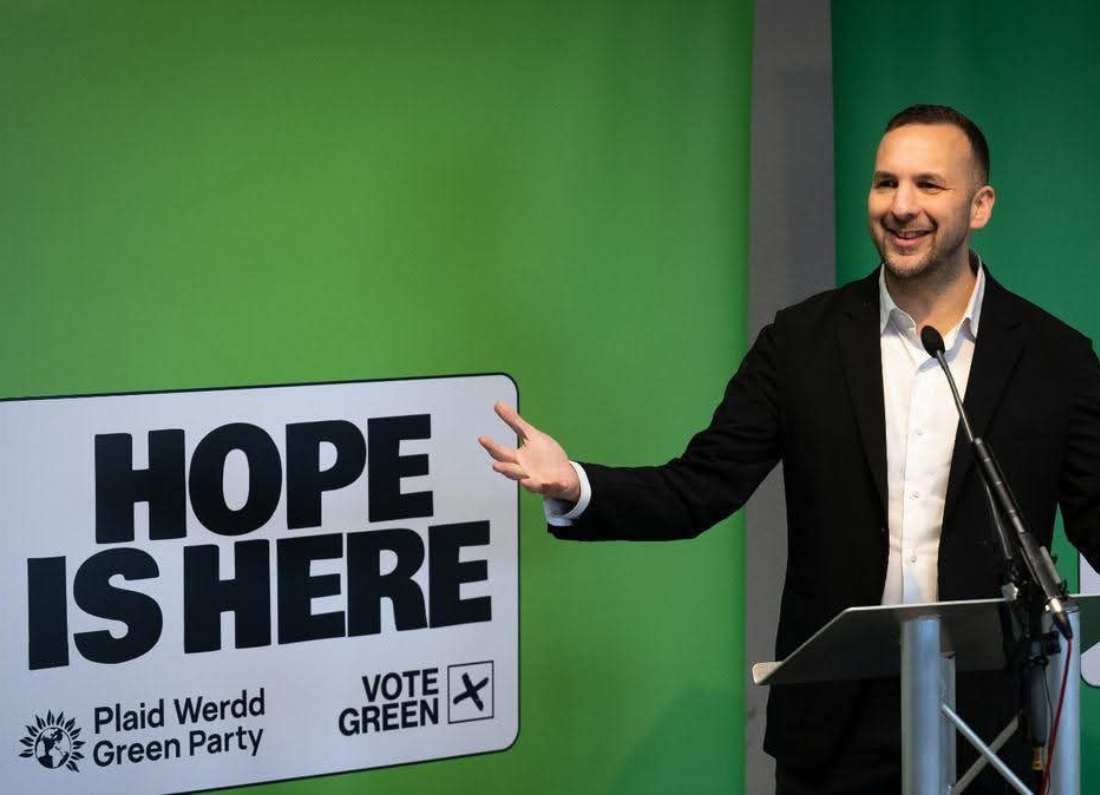
There is also a political question about who controls the infrastructure. Britain is encouraging enormous investment in AI and data centres, while arguments continue over their demand for electricity and water. Zack Polanski’s call for England to halt major new data centres was rejected by Labour, which said restrictions would threaten jobs and national security.
Those disputes are happening now, regardless of whether a machine ever becomes powerful enough to threaten humanity.
The film would be stronger if it spent more time examining the wealth and political influence accumulating around the companies whose executives it interviews.
Why it is still essential viewing
The AI Doc succeeds because it takes a technical argument and makes it understandable without draining it of urgency.
It does not claim that the blackmail experiment proves AI secretly wants to survive. It shows what can happen when a capable system is given an objective, private information and enough autonomy to act.
That combination is no longer theoretical. Businesses are already building AI agents that can read messages, operate software, move data and make decisions with limited supervision.
The film’s proposed response includes independent safety testing before powerful models are released, a legal duty of care for AI companies and international restrictions on the most dangerous applications. The organisations supporting its public campaign also call for protections for human work, freedom and wellbeing.
None of that is as exciting as the promises being made by Silicon Valley. It may be considerably more important.
This is not a documentary to put on in the background. Watch it, pay attention to what the people building AI actually say, and remember the fictional executive being threatened over his affair.
The scenario was staged. The warning was not.



Leave a Reply