

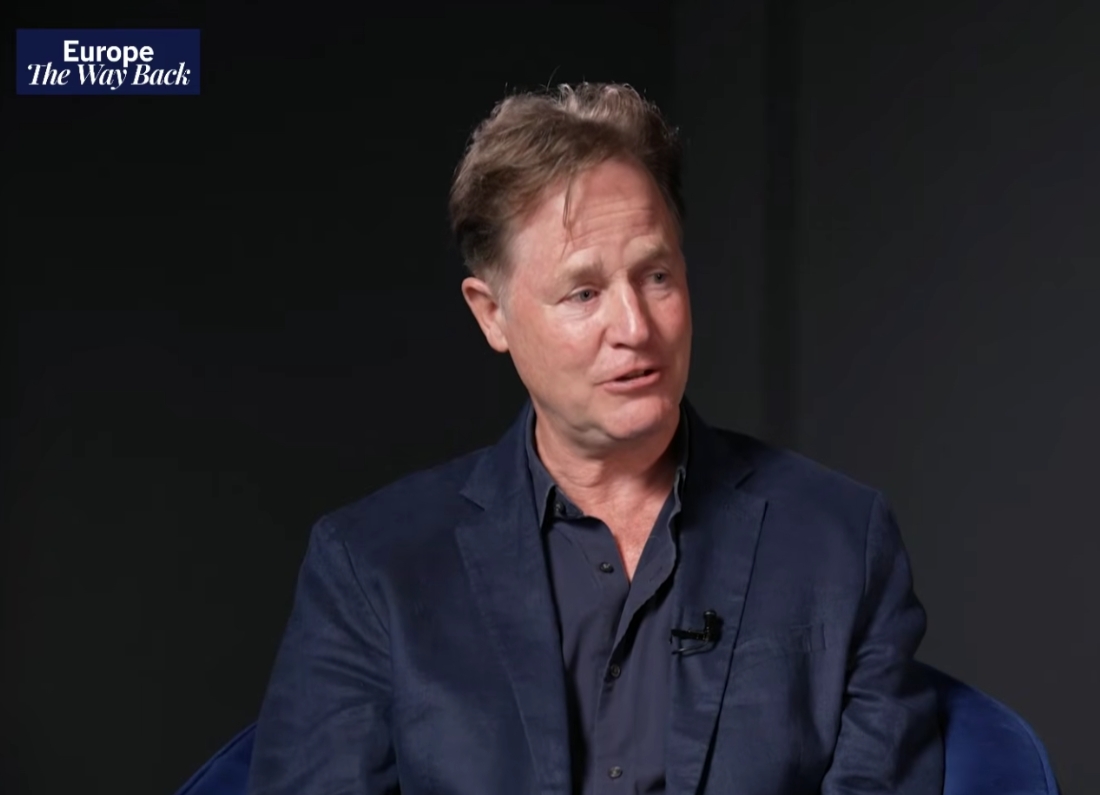
Brexit was a “self-inflicted punch in the face” that has left Britain “poorer, weaker, less safe and less sovereign,” according to former deputy prime minister Sir Nick Clegg, who argues the “vast majority” of voters now know it was a mistake and that Britain needs Europe more urgently than at any point since the referendum.
Clegg made the comments in an interview with the Independent’s editor Geordie Greig, part of the paper’s Europe: The Way Back campaign marking the tenth anniversary of the UK’s decision to leave the EU.
‘Two massive economic cardiac arrests’
Clegg, deputy prime minister in the 2010-15 Conservative-Liberal Democrat coalition, compared Brexit to “a massive cardiac arrest.” He argued that the warnings dismissed as “Project Fear” during the 2016 campaign have turned out to be accurate. “Much of the rest of the world has had to deal with things like Covid, wars in Ukraine, Iran and so on,” he said. “But no other country has punched itself in the face quite so forcefully as we have done over the last 10 to 20 years. We are poorer, weaker, less safe, and, here’s the great irony, less sovereign. That is the tragedy of those fibs from the Brexiteers that we would somehow take control. It has actually led to a decade where we have less control over our own destiny.”
He cited estimates from the US National Bureau of Economic Research placing the GDP damage from Brexit at between 6% and 8%, describing this as economically comparable to the 2008 financial crisis. “That makes the economic damage of Brexit equivalent to the other great terrible economic heart attack in the last decade or two. Two massive economic cardiac arrests.”
A ‘wafer thin’ mandate, interpreted as a landslide
Clegg was sharply critical of how Leave campaigners treated the narrow 52-48 referendum result. “Many people who voted for Brexit didn’t think they were handing Brexiteers a mandate to behave as if they’d won 90 per cent of the vote. They hadn’t won: the country was evenly split. It has meant that the Brexit that we are now living with is even more self-defeating.” He argued that treating a genuinely divided national vote as a sweeping mandate for the hardest possible version of Brexit produced a harsher outcome than the referendum result itself had actually justified.
Britain’s overstated sense of its own importance
Drawing on his subsequent seven years working for Meta in Silicon Valley, Clegg argued Britain routinely overestimates its global significance. “We’re a relatively small country in the grand scheme of things, floating off the muddy northwest fringes of Europe. In my seven-odd years in Silicon Valley, I was never asked by the tech bros much about the UK at all. They would sometimes ask me what my views were on Harry and Meghan. Us Brits, because of our glorious and grand history, overstate how important we are to others.”
Why America can no longer be relied upon
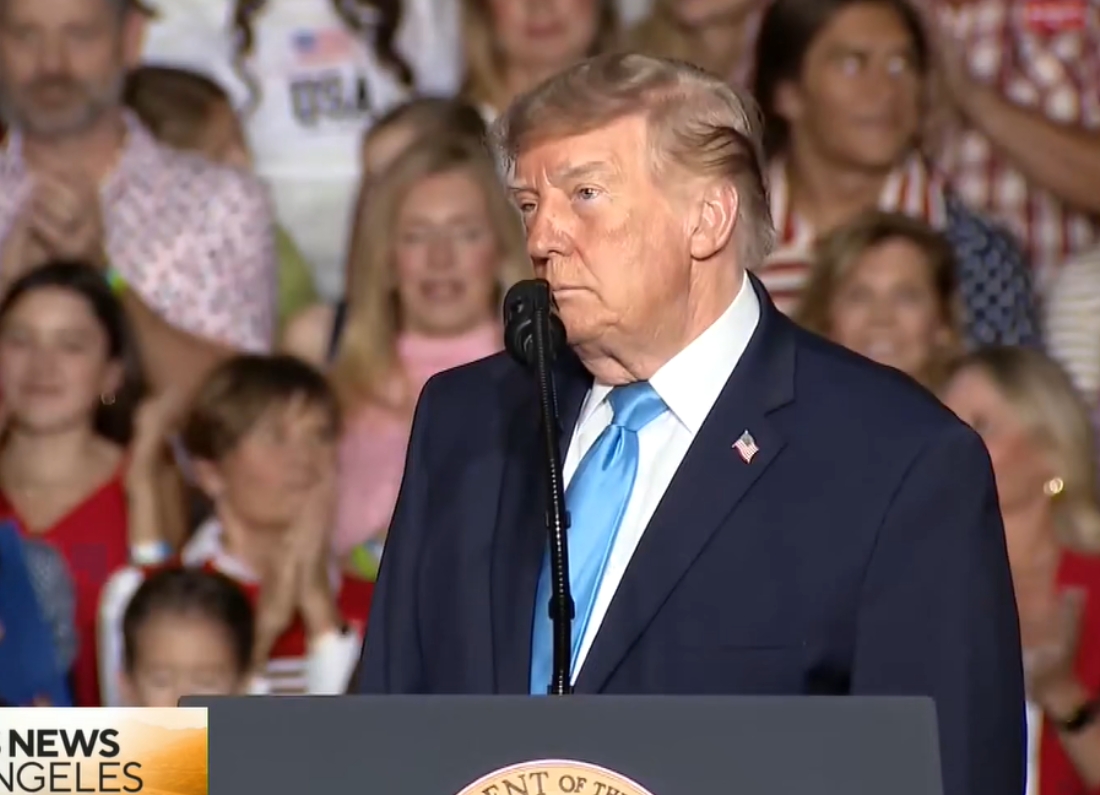
Clegg argued that Trump-era America represents a permanent rather than temporary shift away from Europe, making closer EU ties more urgent rather than less. “There has been a permanent shift in the body politic in the US. If you listen to what Vance and Trump say, they don’t just think that Europe is whiny, weak and feeble, as in many respects we unfortunately are compared to the US. They have real contempt for Europe. The things they really hate are immigrants, a swivel-eyed obsession against wind farms, and whiny Europeans. This is not a temporary shift. It is permanent. We can no longer rely on our traditional ally, the US. We are alone. If anyone thinks that being alone is a smart place to be in this modern world, they’ve got another think coming.”
This assessment sits alongside recent direct friction between Trump and NATO allies, including Trump’s repeated false claims about allied contributions to the alliance, and Downing Street’s own direct rebuttals of those claims.
Geography as destiny
Clegg was direct about what he sees as the central fantasy underlying Brexit: that Britain could somehow relocate itself geopolitically. “Whether you like it or not, we’re on this side of the Atlantic. We’re not part of the US. We are in Europe. It’s as if the Brexiteers want to perpetuate this fable, this fairy tale, that we can pretend we’re somehow nestled next to Connecticut. We’re not: we’re right next to Belgium and the Netherlands.” He noted that geographic proximity remains the single biggest determinant of trade volume, explaining why the UK will always trade more naturally with Belgium, France or the Netherlands than with Canada or Mexico, however strong any transatlantic relationship might be.
No quick route back
Despite his forceful critique of Brexit, Clegg was clear there is no easy or rapid path back into the EU, citing European wariness of what he called Britain’s “Hokey Cokey” approach to membership over decades: in, out, negotiating, vetoed, back in, and now out again. “If you’re sitting in Paris or Berlin or Brussels, and remember what an utter drain it’s been on their time and attention, this endless melodrama in the UK.” This caution echoes recent comments from Michel Barnier, who has separately suggested a technical path back could be relatively short if the political will existed, while also noting the UK could potentially retain the pound and its Schengen opt-out as part of any future arrangement.
Ukraine as the key
Clegg argued Britain’s path back into Europe may be tied directly to Ukraine’s own EU accession. “Our fate back in Europe in one shape or form will be very closely yoked to the fate of Ukraine. Ukraine will eventually join the EU. It is unthinkable that Ukraine would be at the top table of decision making in Europe and we would not, given the amount of sweat and treasure we have rightly committed to protect Ukraine’s independence.”
Firing Trump from Meta
Clegg addressed his own decision, taken while serving as Meta’s head of global affairs, to suspend Donald Trump from Facebook for two years following the January 6th Capitol riot, saying the move reflected a genuine breach of the platform’s content rules around incitement to violence rather than personal politics, while acknowledging discomfort at a private company having that power over an elected official at all. He was critical of the subsequent pattern in Silicon Valley of tech leaders “beating a path down to Mar-a-Lago,” arguing this reflected competitive fear of being left out of a transactional relationship with the administration rather than genuine political conviction, and warned of a broader concentration of technological power in an extremely small number of hands, in both the US and China, that he considers a serious and growing problem for democratic accountability.
A verdict on Burnham
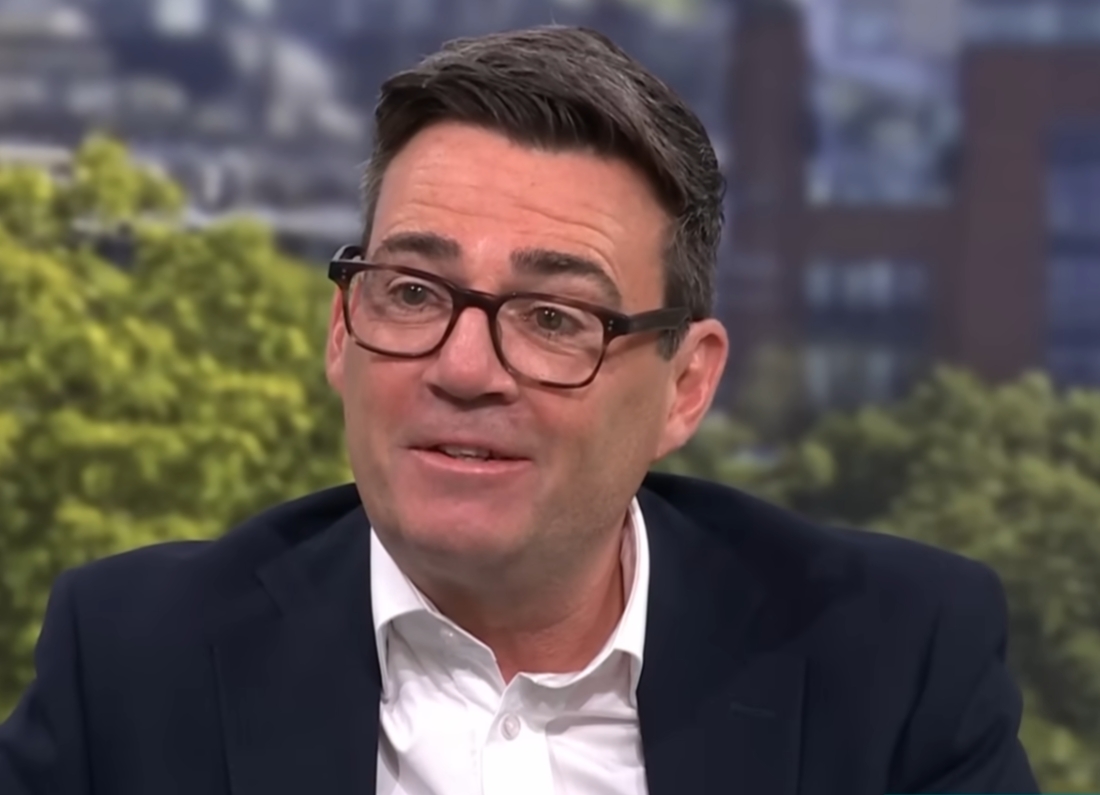
Asked directly about Andy Burnham, Clegg was notably reserved. “I have not seen any evidence from him so far. And I hope I’m wrong. This is probably the last chance we have for a government to deliver the prosperity the country deserves before a more populist reaction takes over our politics. I’ve heard nothing from Andy Burnham that suggests to me that he really understands the visceral animal spirits that animate a thriving growing private sector economy.” He was similarly sceptical of devolution as a solution in itself, noting evidence that devolved administrations do not automatically produce higher growth rates.
The missing party of business
Clegg’s sharpest domestic political critique was reserved for the Conservative Party, which he argued has forfeited its historic role as the reliable voice of private enterprise and wealth creation specifically through its association with Brexit, describing it as “the greatest act of economic self-harm” pursued in the name of removing regulation while simultaneously “suffocating our exporters in red tape.” He argued no other party has convincingly stepped into that vacated space, leaving Britain without a serious political voice for wealth creation at precisely the moment its fiscal position has become, in his words, “even more perilous than we thought.”
One response to “Nick Clegg compares Brexit to a “massive cardiac arrest” for the UK economy”
-
Brexit was never intended to benefit the UK economy, it was intended to do the very opposite, to disrupt and weaken both the EU but more particularly the UK itself! It was instigated by Russia !




Leave a Reply