

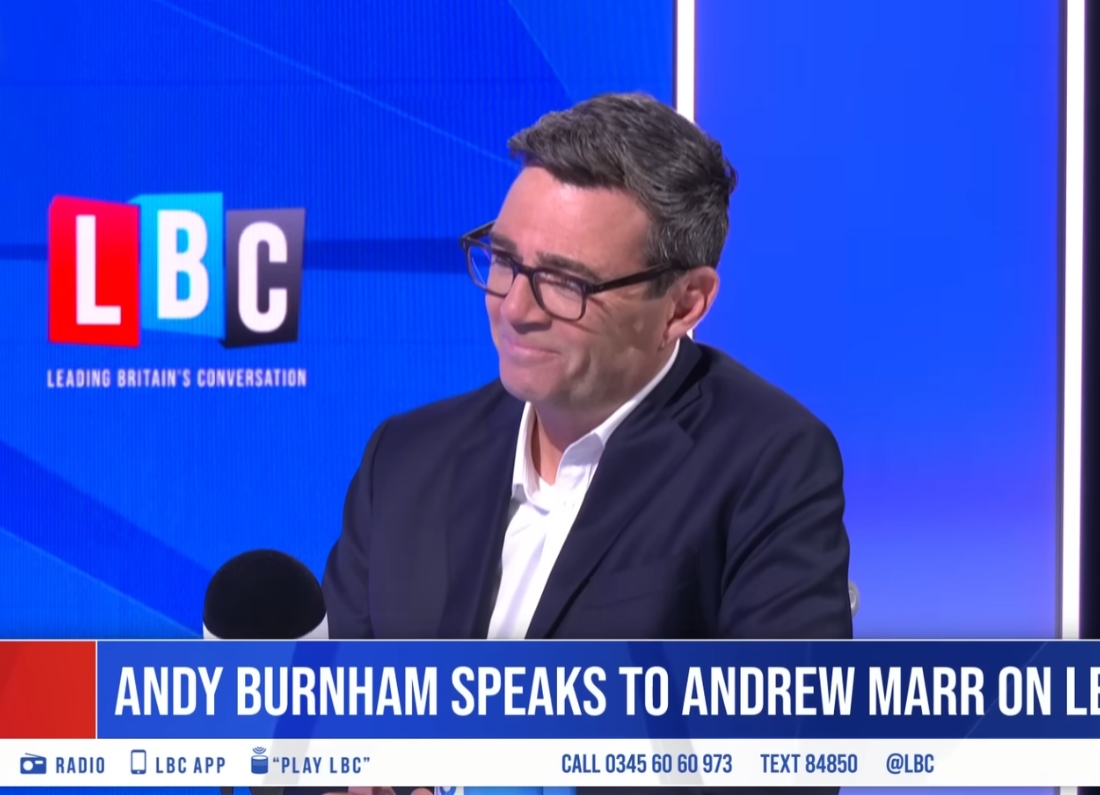
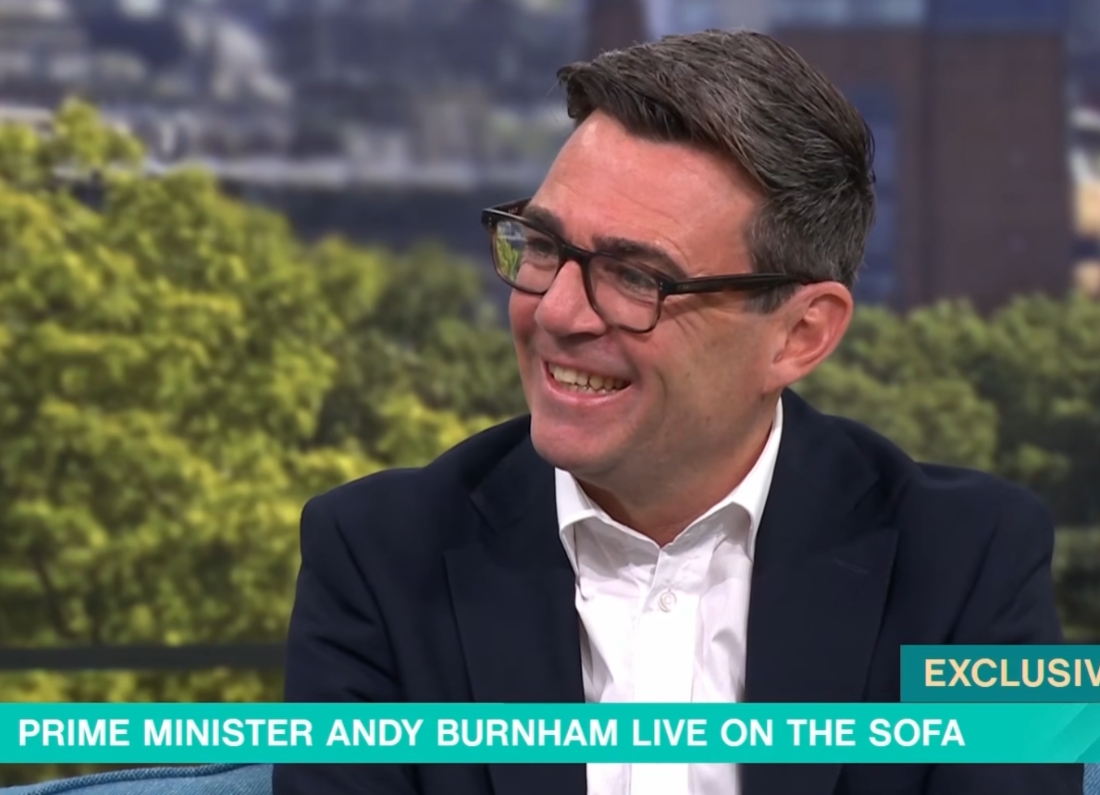
Andy Burnham has signalled a new era for Labour’s Middle East policy, indicating he will take a tougher line on Israel over Gaza as he prepares to become prime minister next week.
The apology
The prime minister-in-waiting issued a video on social media apologising for Labour’s response to Gaza, saying: “I know many people feel that at the start of Israel’s military action in Gaza my party didn’t get it right and I am sorry about that. The response has too often not been good enough. We need to do better. We’ve got to do more to put pressure on the Israeli government. Yes, we have taken some important steps. But let’s be honest, the UK was too slow to call for a ceasefire. And we must now do more to strengthen our approach.”
The intervention is significant given Gaza and Israel have been persistent touchstone issues for Labour and a major source of concern surrounding Keir Starmer’s government, whose position insisted Israel “has a right to defend itself.” It came as Burnham confirmed 322 nominations to become the next Labour leader, meaning no rival candidate can now mathematically challenge him, with only 81 MPs still to submit nominations.
What could actually change
The shift could mean arms sales being banned to Israel under Burnham’s government. It is understood Foreign Office ministers are already examining ways to prevent goods and services originating from Israeli settlements from reaching the UK market, while seeking to avoid any knock-on effect on legitimate trade with Israel itself. An outright ban on weapons sales to Israel has been demanded by many Labour MPs on the party’s left for some time, though it would represent a significant and potentially divisive break from the position Starmer’s government maintained throughout the conflict.
Burnham was careful to credit some of the outgoing government’s actions, praising its recognition of Palestine as a state and its sanctioning of Israeli ministers who had supported extremist settlers.
What Burnham did not say
Notably, Burnham stopped short of describing Israel’s actions in Gaza as “genocide,” a term some Labour MPs and campaigners have used and which remains genuinely contested both legally and politically, with international courts, rather than national governments, generally regarded as the appropriate bodies to make such formal determinations. Burnham’s own language reflected that caution directly: “I have been absolutely appalled by what I’ve seen and read about the destruction of Gaza. There’s increasing evidence that war crimes appear to have been committed. There must be accountability for the depth of the suffering the people of Gaza have experienced. Ultimately, however, it must be for the international courts to determine, rather than politicians.”
Reaction from Labour’s left
Left-wing York Central MP Rachael Maskell welcomed Burnham’s remarks: “The brutality levied against the Palestinian people continues to cause such devastation and trauma, so Andy Burnham is right to recognise the failings of the outgoing Labour leadership who did not do everything possible to prevent this genocide,” a description that goes further than Burnham’s own careful formulation.
The internal party balance Burnham has to manage
Labour Friends of Israel remains a significant grouping within the party, with support from senior figures including Chancellor Rachel Reeves, Welfare Secretary Pat McFadden and Business Secretary Peter Kyle, all of whom were understood to have played an instrumental role in shaping Starmer’s approach to the conflict. Burnham’s shift toward a tougher policy stance, potentially including an arms sales ban, therefore carries real risk of reopening exactly the kind of internal Labour division over Israel and Palestine that has repeatedly surfaced during the Starmer years and, further back, during Jeremy Corbyn’s leadership.
Starmer himself has previously described addressing what he called the “scourge of antisemitism” within Labour under Corbyn’s leadership as part of his own legacy heading into his departure. Burnham, in turn, was careful to signal he would not tolerate antisemitism within the party, strongly condemning both the 7 October attacks on Israel and subsequent terrorist attacks on synagogues and Jewish communities in Golders Green, London and Heaton Park, Manchester.
Why the politics matter beyond the policy itself
Burnham’s remarks arrive against a backdrop of significant electoral damage Labour has suffered over its Gaza position, with substantial numbers of voters, particularly in constituencies with high Muslim populations, having abandoned the party at recent elections. The Green Party in particular has benefited electorally from adopting a more explicitly pro-Gaza stance than Labour maintained under Starmer. Burnham’s apology and policy shift can therefore be read simultaneously as a genuine change of substantive position and as an attempt to win back a specific bloc of voters whose departure has measurably hurt Labour’s electoral standing.
A wider break from Starmer’s approach
The Gaza announcement follows Burnham separately writing to Labour MPs to confirm he will “no longer use the whips system to stifle debate,” addressing a pattern in which a number of MPs have been suspended over the past two years for disagreements on welfare, child benefit and jury trials. Taken together with the Gaza shift, this suggests Burnham intends his premiership to represent a genuine change in Labour’s internal culture and external policy positioning, rather than simple continuity with the Starmer government under new management.
Iran and the wider regional picture
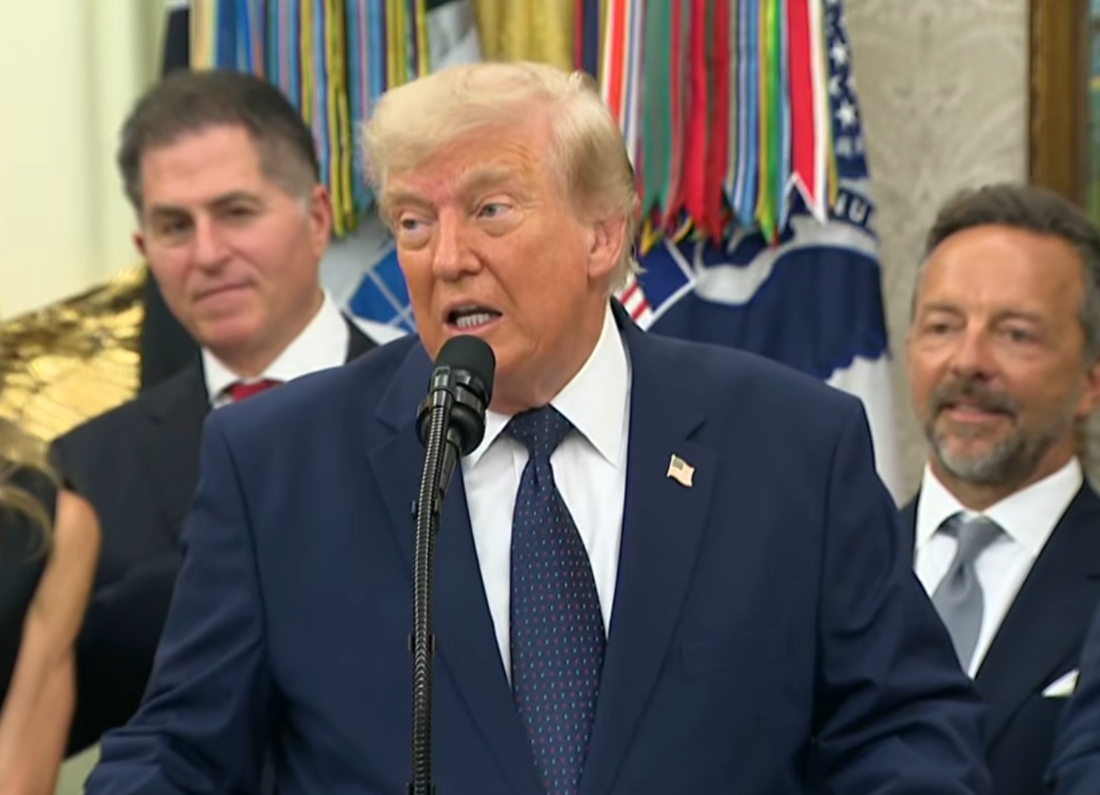
The intervention comes as the Middle East continues to dominate foreign policy more broadly, with Donald Trump’s confrontation with Iran, conducted with Israeli support, appearing close to flaring up again following exchanges of attacks on both sides. Burnham has indicated he intends to continue Starmer’s existing policy of UK non-involvement in that conflict beyond defensive operations, should Iran attack UK assets or allies directly. There remains ongoing speculation about how Burnham’s broader approach to Trump himself will differ from Starmer’s, and whether his government will adopt a notably tougher posture than his predecessor maintained.
What happens next
With nominations confirming Burnham as Labour’s sole leadership candidate, his formal transition to prime minister is expected around 20 July. His Gaza policy shift represents one of the clearest early signals of substantive change from the outgoing government, though the practical details of any arms sales restrictions, settlement goods measures, or further sanctions remain to be formally set out once he takes office.




Leave a Reply