

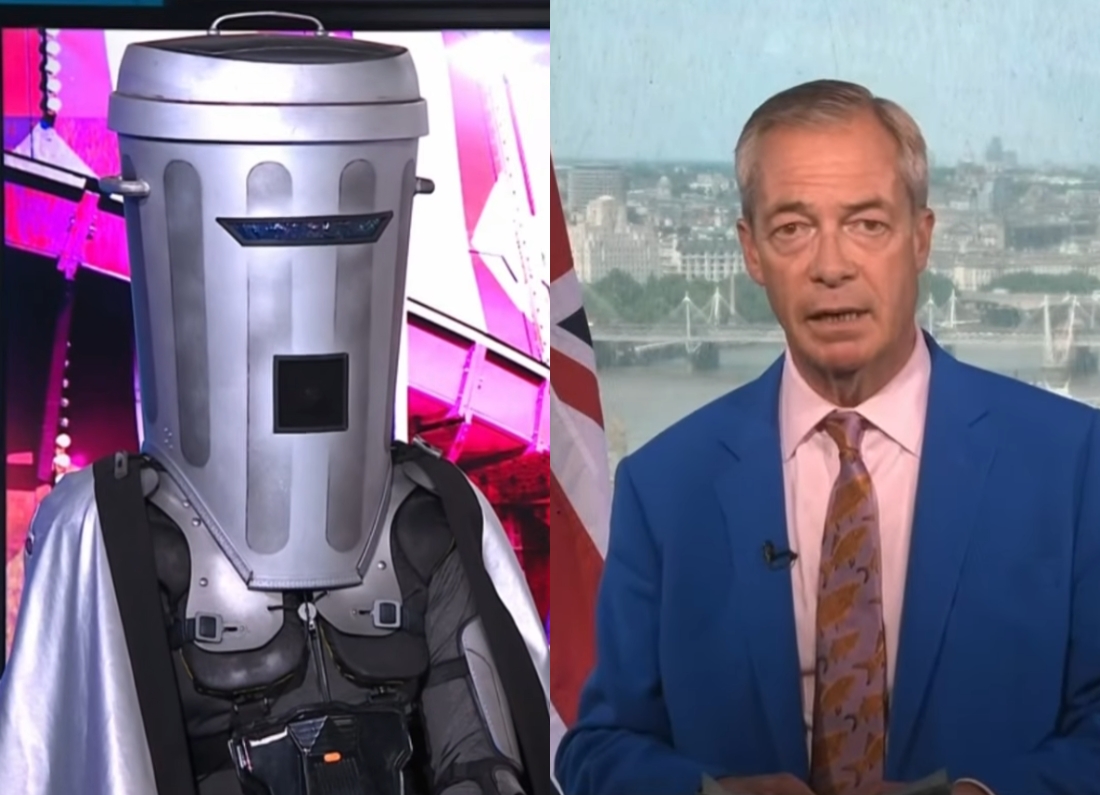
British voters want Count Binface to beat Nigel Farage in next month’s Clacton byelection, according to a new Ipsos UK poll. In a head-to-head contest, 33% would back the comedy candidate, compared to just 21% who support the Reform UK leader. A further 32% said they would vote for neither, and 13% don’t know.
How the byelection came about
The contest was triggered after Farage announced on Tuesday that he was resigning as Clacton’s MP amid mounting controversy over his and Reform’s finances. Parliament’s Standards Commissioner is investigating a £5m gift Farage received from a Thailand-based crypto billionaire shortly before he became an MP. The sleaze watchdog has also been urged to probe Farage’s decision not to declare financial support he received from convicted fraudster George Cottrell. Farage denies any wrongdoing and says he is the victim of a witch-hunt.
Why the polling matters more than the framing
Farage wants the byelection to be a “people versus the establishment” contest. In a post on X, he wrote: “In 2024 I told Clacton that I would fight for them against the establishment. They are trying to destroy me for it, but I will never stop.” That framing has already run into an obvious practical problem: Labour, the Conservatives, the Liberal Democrats, the Greens and Restore Britain have all declined to field candidates, leaving Count Binface as his main confirmed rival.
The new Ipsos figures suggest that even without those parties on the ballot, the public mood is running against Farage rather than towards him. A 12-point lead for a satirical candidate over the man widely tipped as a future prime minister is a genuinely striking finding, regardless of how the actual Clacton vote eventually plays out.
The standards investigation doesn’t go away
Perhaps the more politically significant finding in the poll is this: 74% of voters believe the Standards Commissioner should be investigating whether Farage broke parliamentary rules, and 73% say that investigation should continue even if Farage wins the byelection. This directly undercuts the core premise of Farage’s “let the people decide” framing, since the polling shows the public does not see a democratic mandate as any kind of substitute for the formal standards process. The Guardian has previously reported that Farage’s resignation could pause the ongoing inquiries, with the possibility they resume after the byelection if continuing them is judged proportionate, meaning a Farage win in Clacton would not, in practice, resolve the underlying questions about his finances at all.
What Ipsos actually said
Ipsos research director Keiran Pedley offered a careful reading of the numbers. “Of course, it is the people of Clacton that will vote in the upcoming byelection and not the public overall. But the fact that just one in five Britons would prefer Nigel Farage to win reflects how his personal poll ratings have fallen over the past year, even if Reform supporters remain very much behind him.”
He added: “Elsewhere in the poll we see strong support for parliamentary standards investigations continuing even if Mr Farage wins the byelection, suggesting his assumed victory will not make these issues go away.” That final point is the crux of the story: even Farage’s own supporters’ confidence that he will win the seat comfortably does not translate into public confidence that winning settles anything.
Part of a wider pattern this month
These findings sit alongside a broader collapse in Farage’s personal approval ratings, with a separate recent Ipsos poll finding 63% of Britons dissatisfied with him, up sharply from 49% a year earlier. Reform’s own poll lead over Labour has narrowed considerably amid what pollsters have described as a “Burnham bounce” ahead of Keir Starmer’s departure.
The “establishment versus the people” framing has also faced repeated public challenge from broadcasters and politicians. Victoria Derbyshire dismantled the argument on Newsnight, listing Farage’s private education, City career, five properties and billionaire-funded party as evidence he “couldn’t be any more establishment.” Nick Robinson made an almost identical case on Radio 4’s Today programme, and David Lammy delivered perhaps the sharpest version yet at Deputy Prime Minister’s Questions, summarising the contest as “the city trader, Putin-admiring, professional politician who is pals with crypto billionaires versus Count Binface.”
Why this poll changes the calculation
Up to now, most of the pushback against Farage’s framing has come from journalists, opposition politicians and online commentary, all of which Reform can plausibly dismiss as establishment hostility, precisely the narrative Farage is trying to build. This Ipsos poll is different in kind: it is direct evidence of what the actual public, not commentators or rival politicians, thinks about the contest and, more importantly, about whether a Farage victory would resolve the underlying questions about his finances.
The answer, according to 73% of respondents, is no. Whatever happens in Clacton, the Parliamentary Standards Commissioner’s investigations into both the Harborne gift and the Cottrell benefits are expected, in the public’s own overwhelming view, to continue regardless of the result. Farage may still win the seat comfortably against Count Binface and a scattering of independent candidates. But according to this polling, that win would do considerably less to settle the argument than his own framing suggests.
2 responses to “Britons back Count Binface over Farage in Clacton by-election poll”
-
Mr Farage’s supporters should be asking, “Why is he resigning just to stand again?” The only plausible answer is that he is trying to stop the investigation into his finances. I would think that a lot of his supporters would like his kind of financial problems.
-
We must all back Count Binface to totally humiliate Nigel Farage






Leave a Reply