

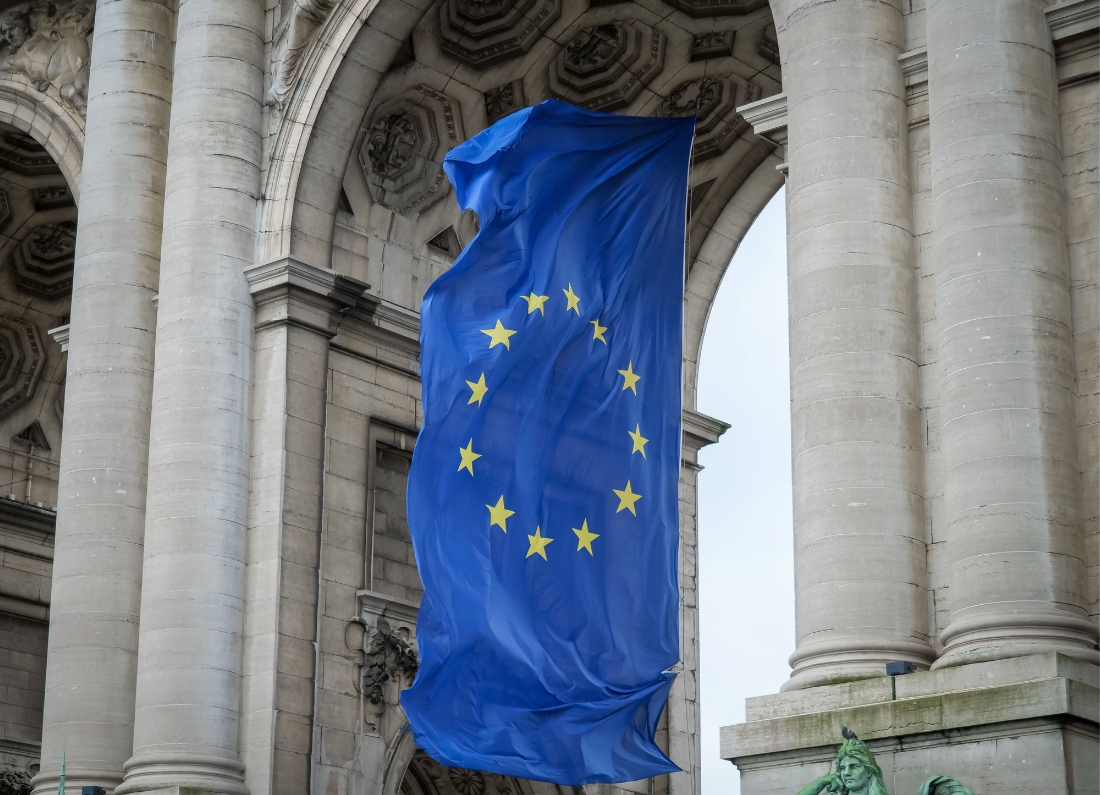
Last month marked ten years since 17,410,742 people decided the United Kingdom’s future should lie outside its greatest trading partner, the European Union.
As many of us have known for years, Brexit has been a disaster. But over the last 12 months or so, public opinion has truly shifted to an anti-Brexit one. A combination of mountains of evidence about how much leaving the EU has hurt the British economy, and historic ally the United States being run by, let’s say, an eccentric character, means that even some previously ardent Brexiteers are increasingly willing to admit it hasn’t gone the way they hoped.
If you were in any doubt about how far that shift has gone, you need only check a poll carried out by the Daily Mail, of all publications, this year.
The poll that backfired spectacularly
The Mail ran a poll as part of an article published in April about Hungary’s new prime minister urging Britain to rejoin the EU. The poll asked readers a simple question with four options: “Yes, better for the economy,” “No, stick to Brexit,” “Closer ties, not full membership,” and “Not now.”
Surely, of all newspaper audiences in the country, Mail readers would be the most likely to stubbornly insist the decision taken ten years ago was the right one?
Well, no. Very much no.
It started badly for the Mail, with 73% of respondents saying Britain should rejoin the EU because it’s better for the economy. Then it got worse. That figure grew to 84%, and eagle-eyed readers couldn’t help but notice that the newspaper appeared to be presenting the numbers using some rather creative graphical choices.
X user Tobi Frenzen summed it up: “Only the Daily Mail could make a bar chart depicting 84% in support of rejoining the European Union look like 48%.”
Not exactly a shock, given the wider polling
Anyone following the broader polling picture will not be remotely surprised by this result, even accounting for the Mail’s readership. Survation’s mega poll of more than 10,000 people, the largest Brexit survey conducted since the original referendum, found 63% would now vote to rejoin the EU against 37% who would stay out, a 26-point margin representing a 30-point swing from 2016. A separate poll found two-thirds of Britons believe Brexit has made every issue they care about worse. Research from More in Common found three in five Gen Z Britons would vote to rejoin, rising to 81% among likely young voters specifically.
Michel Barnier has said the technical process of rejoining could happen on a “short” timeline if the political will existed, and has separately suggested Britain could retain the pound and its Schengen opt-out as part of any future arrangement. Against that backdrop, a Mail readership poll landing at 84% in favour of rejoining is not really an anomaly. It is, if anything, a fairly accurate reflection of where the country has actually moved.
The bit that makes it funnier
What elevates this from a simple polling story to a genuinely enjoyable one is the apparent attempt to visually obscure just how lopsided the result was. A bar chart showing 84% support should, by any reasonable design standard, look like an overwhelming majority. Making it look closer to even, as commenters suggested happened here, requires either a very unconventional approach to data visualisation or a newspaper that would rather not draw too much attention to what its own readers actually think.
Either way, the numbers are the numbers, however creatively they end up plotted on the page. Ten years on, even the audience of one of Britain’s most committedly pro-Brexit newspapers appears to have made up its mind. And it is not the mind the paper might have hoped for.
5 responses to “Daily Mail Brexit poll goes so badly the chart became part of the joke”
-
Voting for “Brexit” led by the entertaining Boris and Nigel, who had all the easy answers, was obviously a case of biting the hand that fed you. But you had to study it a little. It was an outstanding case of voters needing to sober up, appraise their real interests, be boringly responsible. Nope. Unfortunately the vote came with Europe’s migration crisis that year plus economic stress, where people hoped for an easy way out. But sometimes there is no easy way out; voters are not spoilt children following the entertaining Pied Pipers; best option now is to grow up, modernise and rejoin EU.
-
To be fair to the Daily Mail – not a phrase I have often used – the blue in the Yes bar is eight times the size of the blue in the No bar, whereas 84% is only seven times the size of 12%. In terms of comparative votes indicated, they have actually been generous to the Yes vote. By the way, I am firmly in the Yes camp.
-
Yes but if you take the width of the ‘page’. The blue looks like 50% of the participants.
So misleading
-
-
What do you expect? Trying to turn an unfavourable result into less of a win for right-minded people is r par for their devious course.
-
I mean, why wouldn’t you use a scale that goes up to 200%?
*snrch*







Leave a Reply