

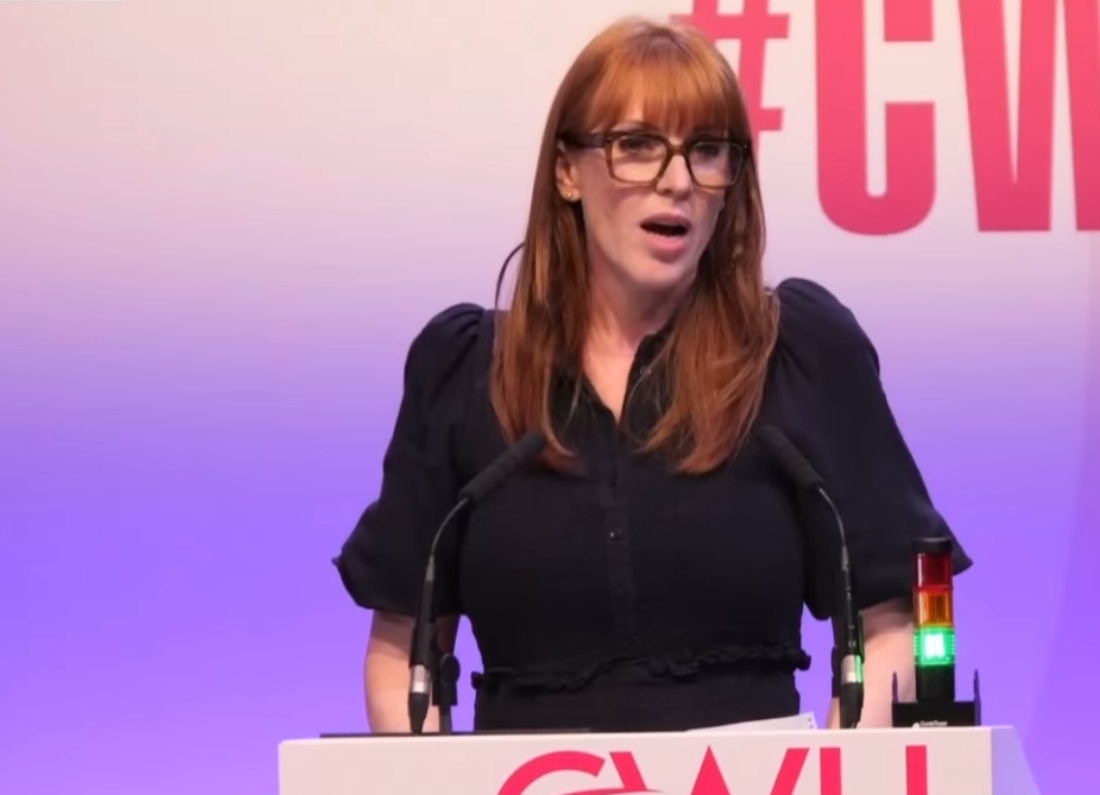
Angela Rayner has defended earning more than £105,000 from paid speaking engagements while sitting as an MP, despite previously calling for restrictions on politicians taking second jobs.
The Housing Secretary was challenged over the payments during a round of interviews on Wednesday morning after her register of interests showed she earned £105,250 from speaking engagements during the period she was outside government.
Asked how accepting the money squared with her previous criticism of MPs earning money on the side, Rayner rejected the suggestion that the engagements amounted to another job.
“I don’t consider that to have been a second job,” she said.
Rayner argued that the work consisted of a small number of speeches rather than regular outside employment, saying she had completed around six engagements over the course of roughly a year.
She also stressed that the payments had been properly declared.
The row has nevertheless left Rayner facing an uncomfortable question: where exactly is the line between a paid speaking engagement and the sort of outside earnings she previously wanted MPs to give up?
Rayner says speeches weren’t a second job
Rayner spent around ten months outside government before returning as Housing Secretary following Andy Burnham’s arrival in Downing Street.
During that period she remained the Labour MP for Ashton-under-Lyne.
Speaking to Sky News on Wednesday, she said the engagements were occasional appearances rather than a separate career alongside her parliamentary work.
“Over 12 months, I did about six speaking engagements that were a couple of hours each,” Rayner said.
She said MPs were entitled to earn outside income under the rules as long as it was declared.
There is no suggestion that Rayner broke parliamentary rules by accepting the payments.
The criticism instead centres on her previous position on MPs having second jobs.
Rayner has been outspoken about outside earnings in Westminster and previously described the system as a “racket”, arguing that MPs should concentrate on representing their constituents rather than using their position to make additional money.
That history made Wednesday morning’s distinction between a “second job” and paid speaking engagements an obvious target for her critics.
One speech earned Rayner £20,000
The controversy comes just days after Rayner faced separate questions over a £20,000 payment from Propertymark, a professional body representing estate and letting agents.
Rayner was paid the money for a two-hour speaking engagement at a Propertymark conference on 12 June, shortly before returning to government as Housing Secretary.
The timing attracted attention because Propertymark has opposed rent controls.
Four days after Rayner returned to government in July, she publicly ruled out introducing rent controls, arguing that freezes or caps were not the answer to Britain’s rising rents.
The London Renters Union subsequently staged a protest over the payment and accused Rayner of facing a conflict of interest.
Her spokesperson rejected that suggestion, saying Rayner’s opposition to rent controls pre-dated the speaking engagement.
Propertymark has also said she was invited because of her political and legislative experience rather than in expectation of influencing government policy.
Rayner’s earnings were declared in accordance with parliamentary rules.
Still, being paid £20,000 by an organisation with a direct interest in housing policy shortly before becoming Housing Secretary was always likely to attract scrutiny.
Labour has spent years attacking MPs’ second jobs
The argument is particularly awkward for Labour because the party has spent years attacking Conservative MPs over their outside earnings.
The issue became politically toxic during the previous Conservative government after a string of controversies involving MPs earning substantial sums from consultancy work.
Labour repeatedly argued that being an MP should be a full-time responsibility.
Rayner herself was among the loudest voices making that case.
That doesn’t necessarily make a two-hour conference speech equivalent to working regular hours for a consultancy or sitting on a company’s board.
There is a legitimate distinction between the two, and Parliament’s rules allow MPs to receive money from speaking, writing and other outside work provided it is properly registered.
But £105,250 is also considerably more than most people earn in a year.
It is therefore unsurprising that Rayner is being asked whether politicians who oppose second jobs should still be able to earn six-figure sums through occasional appearances.
Her answer is that the two things are different.
Not everyone will be convinced.
Rayner back at the heart of government
The scrutiny comes only weeks after Rayner made a dramatic return to frontline politics.
She resigned from government in 2025 following a controversy over the amount of stamp duty paid on a property purchase.
Burnham brought her back into Cabinet after becoming Prime Minister in July, returning her to the housing brief.
That immediately put Rayner back in charge of some of the government’s most politically sensitive policies, including housebuilding, renters’ rights and homelessness.
It also means her financial relationships with organisations connected to housing are likely to receive much closer attention than they did while she was outside government.
The £20,000 Propertymark appearance is a good example.
Had Rayner remained a backbench MP, it may have attracted considerably less attention. As Housing Secretary, the identity of organisations paying her to speak suddenly matters much more.
Rayner insists everything was declared and rejects the suggestion that occasional speeches constituted a second job.
Whether voters make the same distinction is another question.





Leave a Reply