

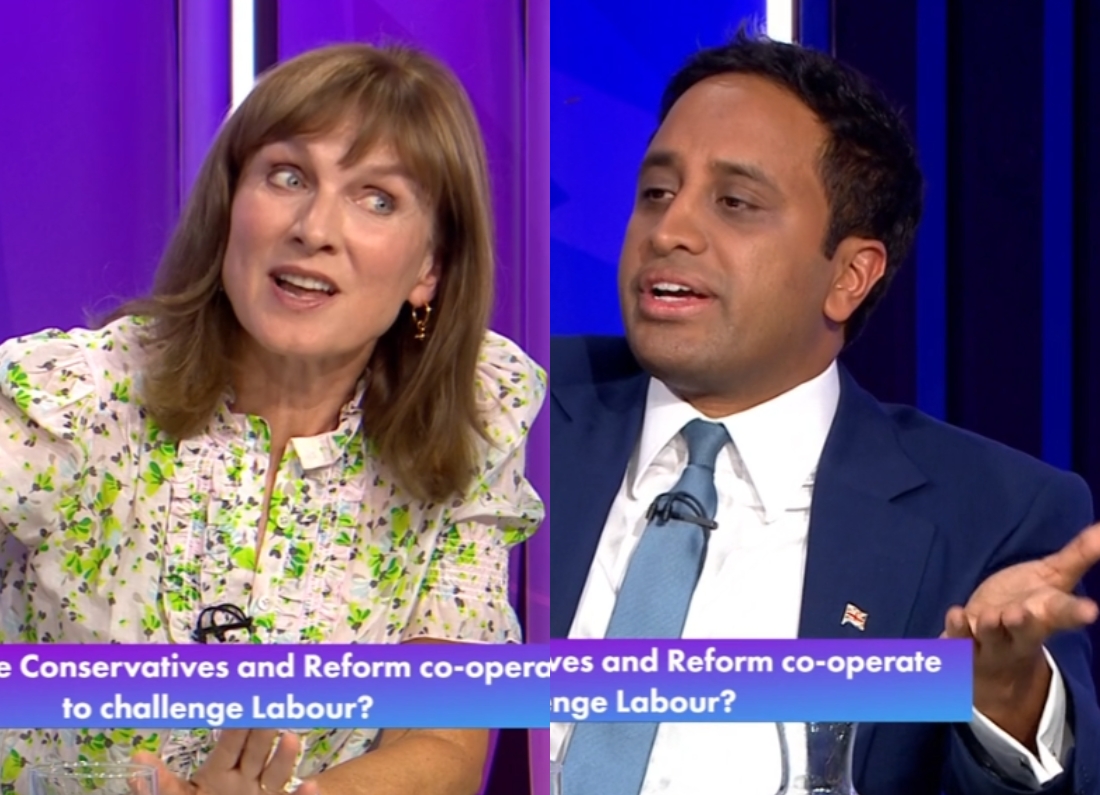
Zia Yusuf had a difficult Question Time. The Reform home affairs spokesman, already one of the more embattled figures in British politics after a week in which Reform insiders called for his removal after the Makerfield defeat and he was simultaneously publicly sparring with colleague Robert Jenrick over immigration policy, chose Question Time as the venue for a confrontation with the BBC itself over audience composition. It did not go entirely to plan.
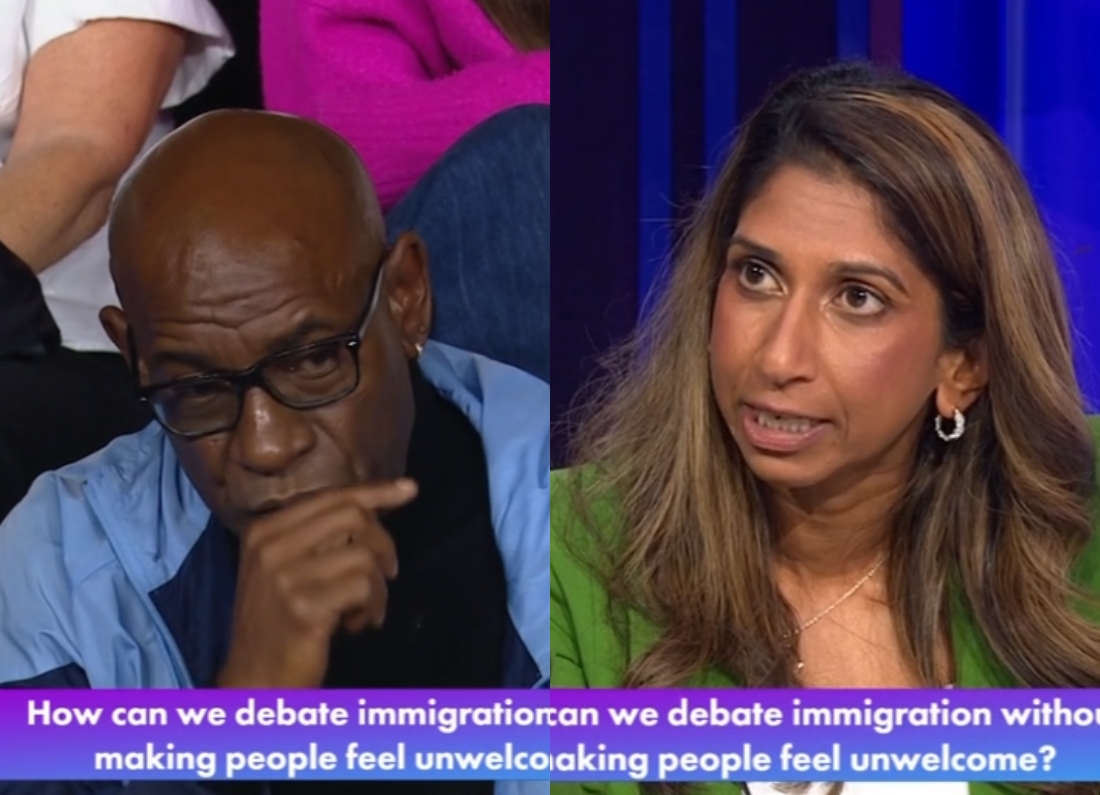
After an audience member said Nigel Farage should never be prime minister, Yusuf turned to presenter Fiona Bruce and raised the question of whether the studio audience reflected the party’s actual polling. “You did ask earlier who supports Reform, and I make out four people in the audience put their hands up,” he said. “Which is interesting given Reform is at 28% in the polls. It’s a genuine question – can we get a show of hands from people who actually support Reform?”
The exchange
When several people raised their hands, Bruce told him: “I think you’ll see that’s a bit more than four.” Yusuf counted. “I make that eight,” he said. “It’s certainly nowhere close to representative, I’m afraid, Fiona.”
Bruce pushed back directly. “Can I just point out there are more people than that in the audience – they’re just not putting their hands up.” Yusuf’s response – “We’ll all have to take the BBC’s word for that” – was a clear implication that the BBC could not be trusted to tell the truth about its own editorial processes.
Bruce’s reply was notable for its directness: “I’m certainly not lying about it, I can tell you that.” She went on to explain how the programme verifies audience balance. “As you know, we interview everybody over the phone, we check their social media. But what also happens is not everyone wants to put their hand up and show their political allegiance on national television, and there is nothing I can do about that, I’m afraid.” She described the BBC as “scrupulous” in ensuring the audience is representative of wider public opinion.
Is the complaint credible?
The Reform argument about BBC Question Time audiences has been a running theme in the party’s media strategy. The implicit claim is that the BBC systematically under-represents their supporters, either deliberately or through systematic sampling bias. It is worth examining that claim directly.
Bruce’s explanation is correct as far as it goes: not everyone will raise their hand to declare their party allegiance on national television. This is especially true of voters for parties that are associated in some quarters with social stigma – but it applies in both directions. Labour voters in strongly Tory areas, and Reform voters in some urban contexts, are both likely to be reticent about public identification.
More fundamentally, party polling support and Question Time audience composition are not directly comparable. A poll that puts Reform at 28% nationally represents the entire British electorate. A Question Time audience drawn from a specific venue on a specific night is going to vary. The BBC’s verification process – checking social media, interviewing by phone – is designed to ensure broad representativeness, not to produce an exact replica of the national opinion poll in a studio of a few hundred people.
None of which entirely answers whether the BBC’s processes produce consistently balanced outcomes. But Yusuf’s specific inference – that eight visible raised hands in a studio audience is evidence of systemic BBC dishonesty – is not a solid argument, for exactly the reason Bruce gave: people don’t want to put their hands up on television.
Question Time has not been kind to Reform recently
The broader context is that Question Time has indeed been a difficult programme for Reform representatives in recent months- though not for the reason Yusuf suggests. An audience member dismantled Jenrick over a catalogue of Reform and Tory scandals, telling him “grifters like YOU are the problem” in a clip that spread widely. Reform MP Danny Kruger received two separate hidings on Question Time and couldn’t answer either – including the “party of billionaires” challenge that he failed to rebut across two separate moments in the same programme. Robert Kenyon, Reform’s Makerfield candidate, was roasted on Question Time.0
What these appearances have in common is not BBC bias. It is that when Reform politicians are pressed on specifics – their donors, their policies, their candidates’ records – they struggle to provide coherent answers. The audience reaction to those struggles tends to be negative. Attributing that to audience selection bias is a more comfortable explanation than examining whether the party’s positions hold up under scrutiny.
The Yusuf context
Yusuf’s specific situation makes the Question Time confrontation even more charged. He has been a controversial figure within Reform itself, with insiders calling for his removal and blaming him for pushing the party’s strategy in a direction that contributed to the Makerfield defeat. His Belfast-related posts drew condemnation from across the political spectrum, including the comparison to 1930s antisemitic language made by Zack Polanski. His account of the Nowak family’s wishes on Laura Kuenssberg’s programme was factually challenged by a close examination of what had actually happened.
A politician in that position choosing a live BBC broadcast to suggest the presenter is implicitly dishonest about her programme’s editorial processes is, at minimum, a high-risk strategy. Bruce’s response – calm, specific and direct – left him in the position of having made an accusation he could not substantiate, on a programme watched by millions, while she explained exactly how the verification system works.
The broader pattern
The Reform approach to the BBC question is part of a wider political strategy familiar from the Trump playbook: when media appearances produce unfavourable outcomes, attribute them to institutional bias rather than the substance of what was said. It has the advantage of galvanising supporters who already distrust the BBC, and the disadvantage of being difficult to sustain when the host in question calmly explains her methodology on air.
Bruce’s “I’m certainly not lying” moment will be replayed. So will Yusuf’s “We’ll all have to take the BBC’s word for that.” Whether viewers find the exchange evidence of BBC dishonesty or Reform defensiveness may depend rather heavily on what they already thought going in. That is, in a sense, the point: these confrontations are not really about the audience composition at all. They are about generating content for social media that reinforces existing suspicions of the mainstream media among an audience already primed to receive them.
On that metric, the exchange served Reform’s purpose reasonably well. On almost every other metric – including the credibility of the specific claim, the quality of Yusuf’s argument, and the overall impression left by the encounter – it is harder to score it as a win.
2 responses to “‘I’m certainly not lying’: Fiona Bruce clashes with Zia Yusuf live on Question Time over BBC audience bias claim”
-
The assertion that Question Time audiences should reflect opinion polls is obviously badly flawed.
-
Regardless of BBC impartiality, which is questionable at best, reform via jenrick, Yusef and others have been on our screens ad infinitum in the last 4 years.
All main stream media will have to reflect on this when we’re lumbered with fascists as leaders and our rights, especially those of women and girls, are ripped from us






Leave a Reply