


Wes Streeting has compared Reform UK’s misleading attack advertisement on Kemi Badenoch to Nazi propaganda from the 1930s, saying on The News Agents podcast that he “does not say this lightly” but that the ad was “dangerous, incendiary” and evidence of “a politics that is about rage, that is about division, and seeks to foment and stir hatred to politically profit from it.” He also called Nigel Farage “an English nationalist” and said that English nationalism “is a dangerous and potent political force.”
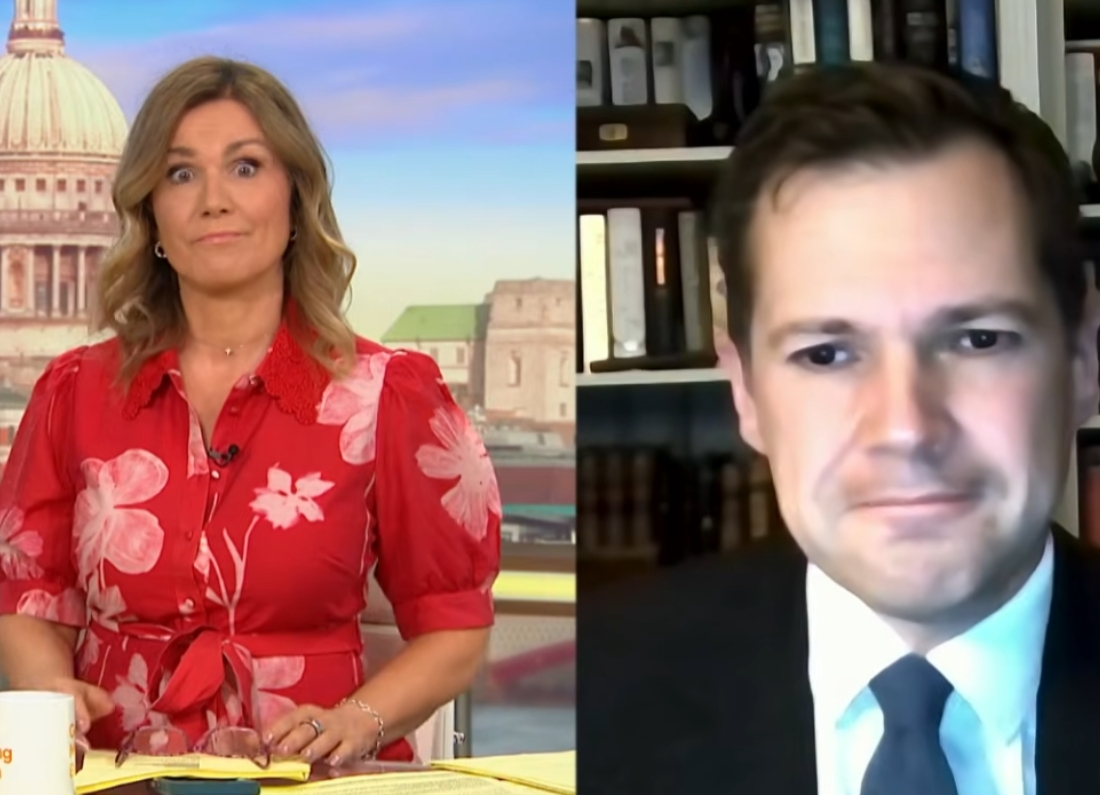
Streeting’s intervention came as the Badenoch ad had already been condemned as “a travesty” by ITV’s Robert Peston in a live confrontation with Robert Jenrick – as we reported in our Peston and Jenrick piece – and within days of Reform also being forced to remove a separate copyright-infringing AI-generated attack ad targeting Andy Burnham after artist Stanley Chow threatened legal action, as we reported in our Stanley Chow copyright piece.
What the Badenoch ad showed – and what she actually said
The Reform ad juxtaposed two quotes. First, a 2020 quote from Badenoch: “black lives do matter.” Second, a partial quote from her Good Morning Britain appearance this week: “I don’t want to hear about white lives matter.”
Her full Good Morning Britain statement was: “I don’t want to hear about Black Lives Matter. I don’t want to hear about White Lives Matter. Everyone matters. Henry Nowak matters.”
The ad removed the part in which she rejected Black Lives Matter and the part in which she said “everyone matters,” leaving only the juxtaposition of her saying black lives matter alongside her saying she doesn’t want to hear about white lives matter. It was designed to make her appear to endorse one while dismissing the other.
What Streeting said
On The News Agents, Streeting laid out exactly what he understood the ad to be doing: “She said ‘I don’t care about black lives matter, I don’t care about white lives matter, all lives matter.’ She was really clear about that. Then an ad goes up that quotes what she said in 2022, ‘black lives do matter’, set against one part of what she said on breakfast television this week: ‘I don’t want to hear about white lives matter.’ Those two sentences slapped on an ad with Kemi’s face and promoted across social media like wildfire.”
His analysis of the intent: “They want people to believe that the black woman who leads the Conservative Party cares about black people, but doesn’t care about white lives. And that was dangerous, it was incendiary, and I don’t say this lightly, this is the type of propaganda that is reminiscent of the 1930s.”
The “black woman who leads the Conservative Party” formulation is specific. The ad was designed to weaponise Badenoch’s race against her – to use her identity to reinforce the suggestion that she favours one racial group over another. That is the 1930s register Streeting is invoking: propaganda that used race to generate hatred of a political figure.
He framed the choice as existential for British democracy: “You can have a politics that is decent, or you can have a politics that is about rage, that is about division, and seeks to foment and stir hatred to politically profit from it. It is dangerous, it is nationalistic and it has got to be beaten.”
On Farage as a nationalist
Streeting made a specific and careful distinction on Farage. “Nigel Farage is an English nationalist, and nationalism is a dangerous and potent political force. I’m not saying Farage is a fascist, but I am saying he’s an English nationalist.”
The distinction matters. “Fascist” is a specific historical and political category that Streeting is explicitly not applying. “English nationalist” is his characterisation of what Farage is – and his argument is that English nationalism, while distinct from fascism, is itself dangerous and should be named and confronted rather than accommodated.
As we reported in our Electoral Dysfunction analysis, Ruth Davidson, Harriet Harman and Beth Rigby all concluded on their podcast that Farage had made a deliberate choice on the Nowak case to position himself with “the fringe elements of Tommy Robinson” rather than as a serious contender for government. Streeting’s “English nationalist” formulation is in the same register – an attempt to name specifically what Farage represents rather than treating his political project as conventional democratic politics.
‘Starmer will be the midwife’
The most striking exchange in the News Agents interview came from Lewis Goodall’s question: “Do you think if Starmer continues, he’ll be the midwife to that sort of politics?”
Streeting’s answer: “100%.”
This is a direct claim, from a Labour leadership candidate who has just resigned from cabinet, that the current Prime Minister will enable Reform’s rise if he remains in place. The “midwife” framing suggests not passive failure but active facilitation – that Starmer’s continuation creates the conditions for the politics Streeting just compared to 1930s propaganda to grow.
It also connects to the specific argument Streeting made about the Badenoch ad: that the choice between decent politics and rage-based division is not abstract, but determined by who leads the response to it. As we reported in our Burnham Newsnight interview piece, the Labour leadership contest is effectively underway with both Streeting and Burnham positioning for whatever comes next after 18 June.
You can watch the full interview below:
Two attack ads in two weeks
The Badenoch ad is Reform’s second significant attack ad failure in the Makerfield campaign. As we reported in our Stanley Chow copyright piece, Reform also ran an AI-generated attack ad using Manchester illustrator Stanley Chow’s portrait of Burnham without permission in an anti-immigration context. Chow is a second-generation immigrant from Manchester. He described it as using his work “to push anti-immigration agendas” in direct contradiction of everything the portrait was created to represent. Reform removed it after legal action was threatened.
The Badenoch ad misrepresented a rival politician’s words. The Chow ad used an artist’s work without permission to say something diametrically opposed to what it was created to say. Both generated substantially more coverage of Reform’s conduct than of any damage to their intended targets. Both were removed or condemned. Both arrived in the fortnight before the most scrutinised byelection of this parliament.





Leave a Reply