

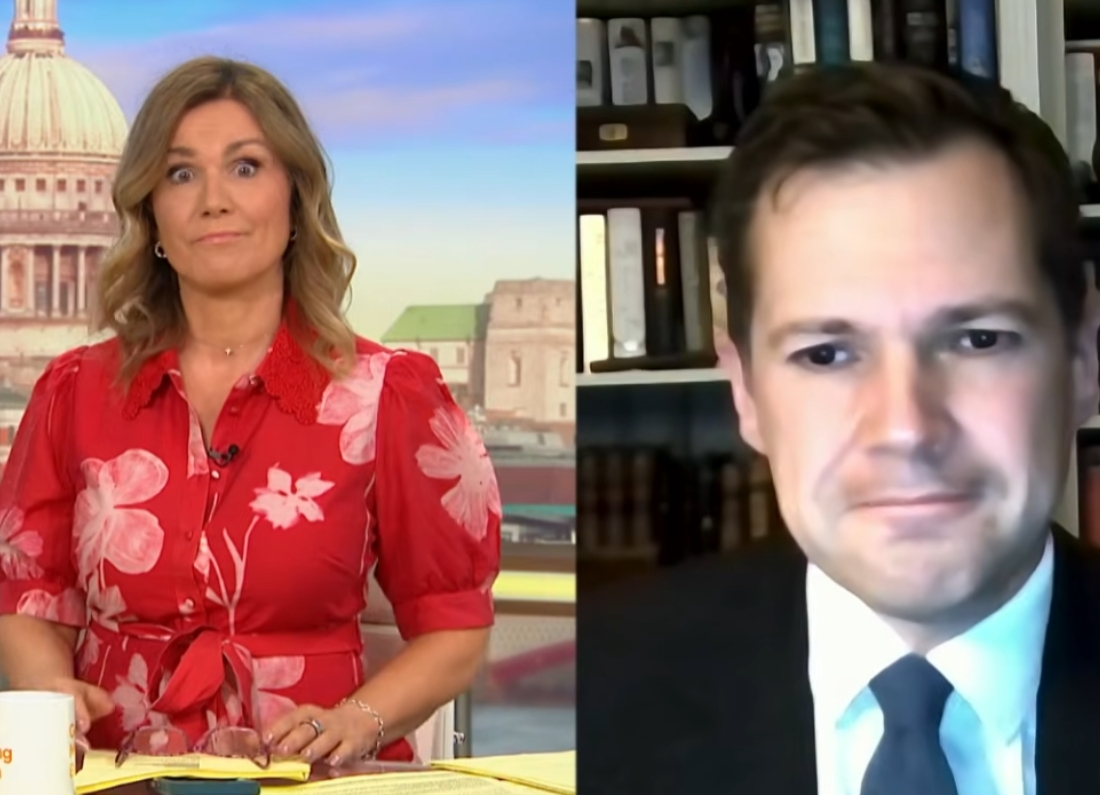
Robert Jenrick has just added his name to the long, embarrassing list of politicians who forget that studio microphones don’t magically switch off the second an interview ends.
He’d gone on Good Morning Britain to talk about prison overcrowding and the government’s early-release scheme. That part went badly enough. But the real damage came once Ed Balls started asking about the Metropolitan Police investigation into donations from Jenrick’s own failed Tory leadership bid, and Jenrick, by his own account, couldn’t even say for certain whether he was under investigation or not.
When the interview finally wrapped and Balls and Kate Garraway thanked him and moved on, Jenrick could still be heard muttering off-camera: “Well, that was a waste of time.”
Except the microphone was still live. There was an awkward beat, and then Balls came back with: “Oh dear. I think it wasn’t a waste of time.” He added that Jenrick had actually given “very clear answers,” particularly on whether the Met was looking into his campaign donations.
Not quite the graceful exit Jenrick was hoping for.
“There’s no stain on my reputation”
This is where the interview actually got interesting. Jenrick ran to succeed Rishi Sunak as Tory leader after the 2024 election, lost to Kemi Badenoch, and later jumped ship to Reform. His leadership campaign took £100,000 from a British company called The Spott Fitness. It’s since been alleged that £37,500 of that ultimately traces back to American businessman Gary Klopfenstein, via his US company Innovyz. Foreign money that doesn’t meet UK electoral rules isn’t allowed to fund British political campaigns, full stop.
The Electoral Commission referred the whole thing to the Met, which confirmed earlier this month it had opened an investigation. Nobody’s said Jenrick personally is a suspect. No finding of wrongdoing exists against him.
Jenrick insists his campaign followed electoral law properly, that the Conservative Party checked the donor was permissible, and that he had no idea about any Klopfenstein connection at the time. “There’s no stain on my reputation, Ed,” he told Balls. “This is a complete smear that’s been put about by the Tory Party.” He went on to argue that the media and political establishment were “chucking things” at Reform simply because it represents genuine change.
Balls pointed out that asking about a live police investigation isn’t the same thing as making an allegation against him. “Reform and you are not above the law, are you?” he asked.
Jenrick agreed, in principle, that any legitimate investigation should be allowed to run its course. Then he said something that immediately got picked apart: the police, he claimed, had “been clear that they are not investigating me.”
Balls asked the obvious follow-up: how could he know that, when he’d also just said he’d had no contact from the police whatsoever?
“I’ve had no contact from them,” Jenrick admitted. “So I don’t know any more than you do in that respect.”
He eventually clarified that the Electoral Commission had passed a file on the donation over to police, and that officers “may be looking into that,” while insisting nobody had approached him personally about anything he’d done. Which is a considerably murkier position than “there’s no stain on my reputation” and “the police have been clear they’re not investigating me,” two things he’d said only moments earlier.
The prisons argument didn’t go much better
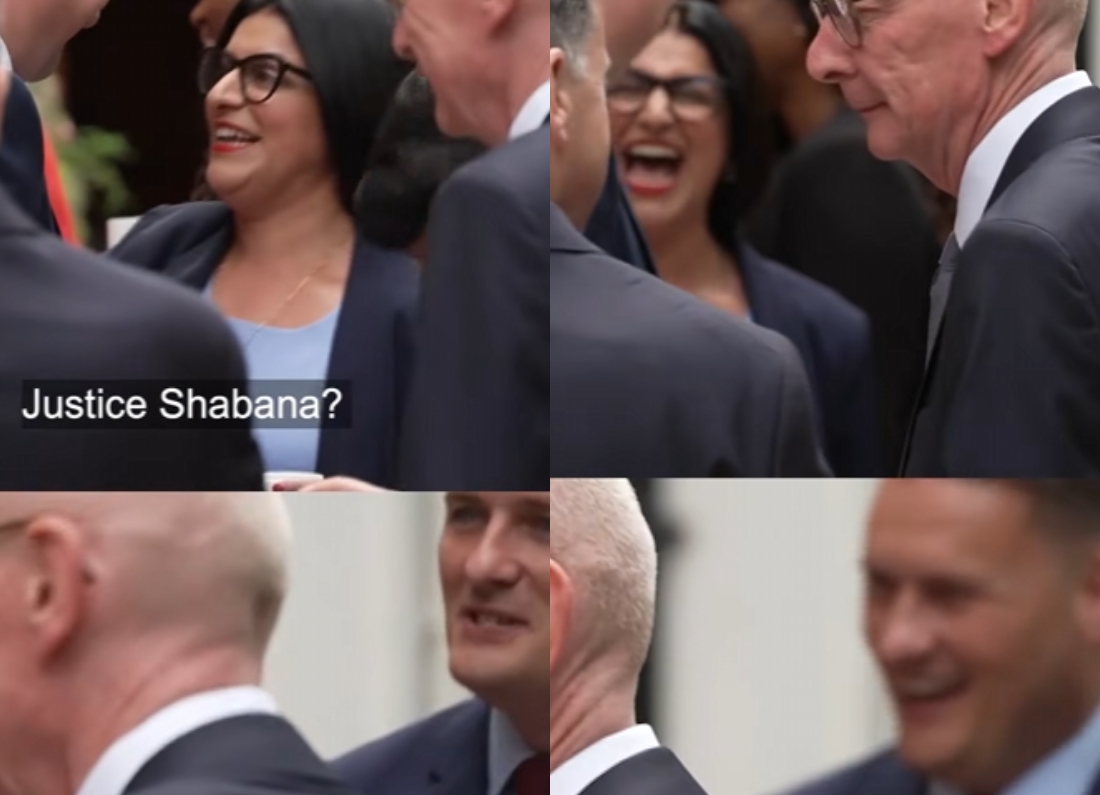
Before any of that, most of the interview was actually about reports that people convicted of serious crimes, including two men convicted of killing PC Andrew Harper, could be freed early because English prisons are dangerously overcrowded. Debbie Adlam, Harper’s mother, has said she’s been warned Albert Bowers and Jesse Cole could be among those released, despite her objections. The interview also referenced footage of Wes Streeting and Shabana Mahmood appearing to joke about the early-release scheme outside Number 10, at the exact moment families of victims were demanding answers.
Jenrick called the situation “an absolute disgrace” and blamed both the last Conservative government and the current Labour one for failing to build enough prison places. He repeated Reform’s proposal to leave European human rights agreements and use visas and foreign aid as leverage to force other countries to take back their nationals.
Balls and Garraway reminded him he’d actually served as a minister under the Conservative government that helped create this exact crisis. Jenrick tried drawing a line around himself: “I wasn’t a minister actually in the Ministry of Justice, which is the department responsible for this. So I never had any responsibility for this.”
He said he’d resigned from Rishi Sunak’s government over its broader failures and eventually left the party altogether. Pressed further on why that government hadn’t built enough prisons, Jenrick did concede it hadn’t devoted enough resources to the problem, and that older prisons were closed before enough new capacity had opened. “What a sick joke that was, to say that they didn’t want prisoners in grotty old jails, but they were happy for having them walking the streets and endangering the people of this country,” he said.
Balls kept pushing on the practical question: what would Jenrick actually have done differently, walking into government in July 2024 with prisons already full? Jenrick’s answer was that he’d have leaned on countries like Pakistan and Jamaica, threatening to cut visas and foreign aid until they took back their own nationals.
Balls wasn’t buying it as a complete solution. “The truth is, Mr Jenrick, you’d have done early release too,” he said. “You would have had no choice.” Those international negotiations, he pointed out, would have taken time Jenrick simply wouldn’t have had. Jenrick rejected that, insisting a Reform government under Nigel Farage would have moved far more forcefully and, implicitly, faster. Whether threatening aid and visas could actually have freed up thousands of prison places overnight never really got resolved. Jenrick just kept circling back to the same broader argument: previous governments were too weak to act.
Farage’s £5m keeps hanging over all of this
None of this happened in isolation. It landed in the middle of an extraordinarily bad stretch for Reform’s finances more broadly. Nigel Farage received £5m from crypto billionaire Christopher Harborne shortly before the 2024 election, and never declared it once he became an MP, insisting it was a purely personal, unconditional gift with nothing to do with his political career.
Farage’s own account of what the money was actually for has shifted more than once. First it was to cover his personal security. Then it became a reward for decades of Brexit campaigning. Then it was simply his money to spend however he liked, he specifically said he could put it towards a Ferrari if he fancied. A parliamentary standards investigation into whether the gift should have been registered got underway, then was paused when Farage resigned as Clacton’s MP to trigger his own byelection, and can restart once that contest is decided. Farage denies breaking any rules and has called the whole thing an “establishment stitch-up.”
Jenrick has spent weeks now defending Farage across a run of broadcast interviews, almost always reaching for the same basic line: that separate investigations, separate reports and separate scrutiny are really just one coordinated campaign to stop Reform. It’s the identical framing he used on GMB about his own donation, right down to the phrase “chucking things” at the party. Given he’s now on record admitting he doesn’t actually know the current status of the police investigation into his own campaign, that line is getting harder to sustain with a straight face, for his own case or for Farage’s.
He doubled down afterwards anyway
Once the hot-mic clip started circulating, Jenrick didn’t try to walk it back or claim he’d been misquoted. He defended the “waste of time” line and complained Balls hadn’t spent enough of the interview on Reform’s actual policies.
“We’ve got Ed’s useless mates back in government, people are struggling, and he can’t be bothered to ask how Reform would do things differently,” he posted. “For the record: Reform will cut your energy bills by £200 by cutting VAT and by removing green levies.”
That figure needs a bit of context. Reform’s plan is to scrap VAT on domestic energy bills and remove the remaining Renewables Obligation and Carbon Price Support costs. But the previous Labour government had already shifted 75% of the Renewables Obligation off household bills for three years, meaning scrapping just the remaining slice would save considerably less than Reform’s headline number implies. A Press Association fact check previously put the saving from removing that final 25% at around £29 a year for a typical household under the policy already in place. The bigger saving Reform is pointing to would only really materialise once the government’s existing intervention runs out, and even then, someone would need to explain what happens to whatever those levies were actually funding.
Meanwhile Burnham’s already done his own version
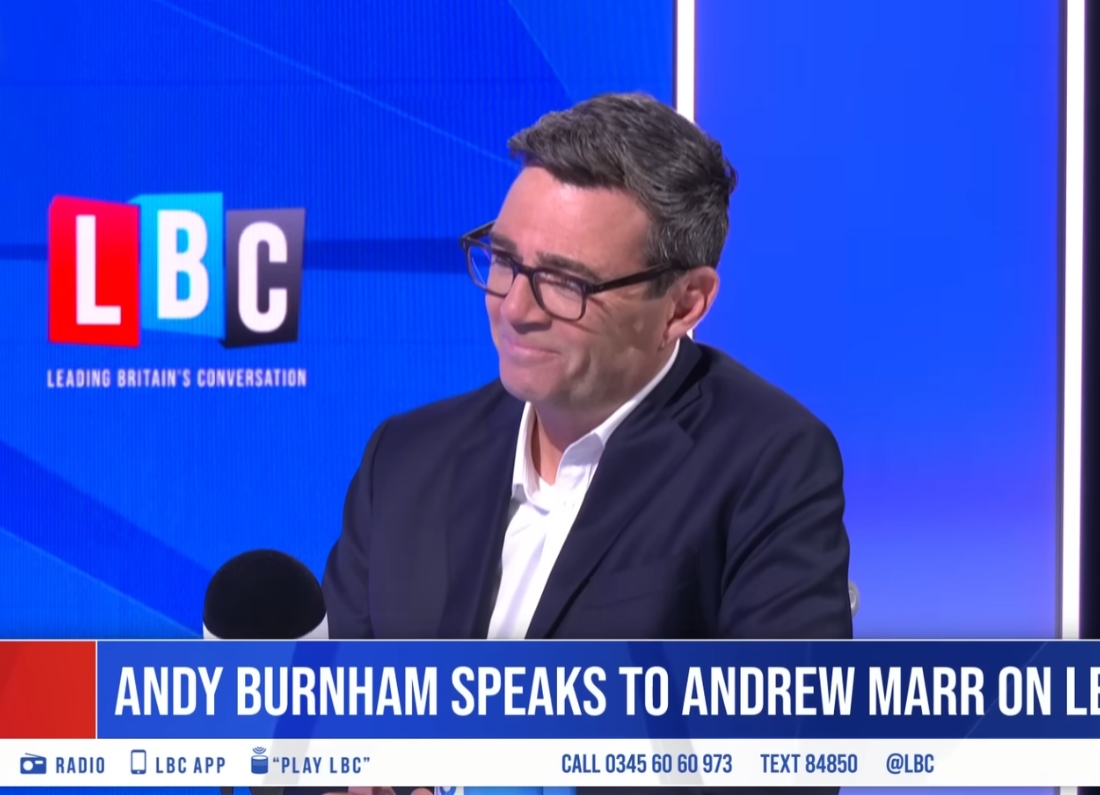
Jenrick’s comments landed just after new prime minister Andy Burnham announced VAT would come off household electricity bills entirely from 1 October, a move the government says will cut roughly £45 off the typical annual electricity bill. Burnham’s policy covers electricity only, not gas, and ministers say the £850m cost this financial year is being funded by scrapping Keir Starmer’s planned digital ID scheme, with longer-term funding to be set out at the Budget.
Jenrick clearly wanted the GMB conversation to become a straight comparison between Burnham’s plan and Reform’s bigger, punchier energy pledge. Balls had other questions. Politicians rarely get to pick every subject that comes up in a live interview, and calling the ones you don’t like a “waste of time” doesn’t make them disappear.
It just makes for a considerably better clip once someone forgets the mic’s still on.
You can watch it in full below:






Leave a Reply