

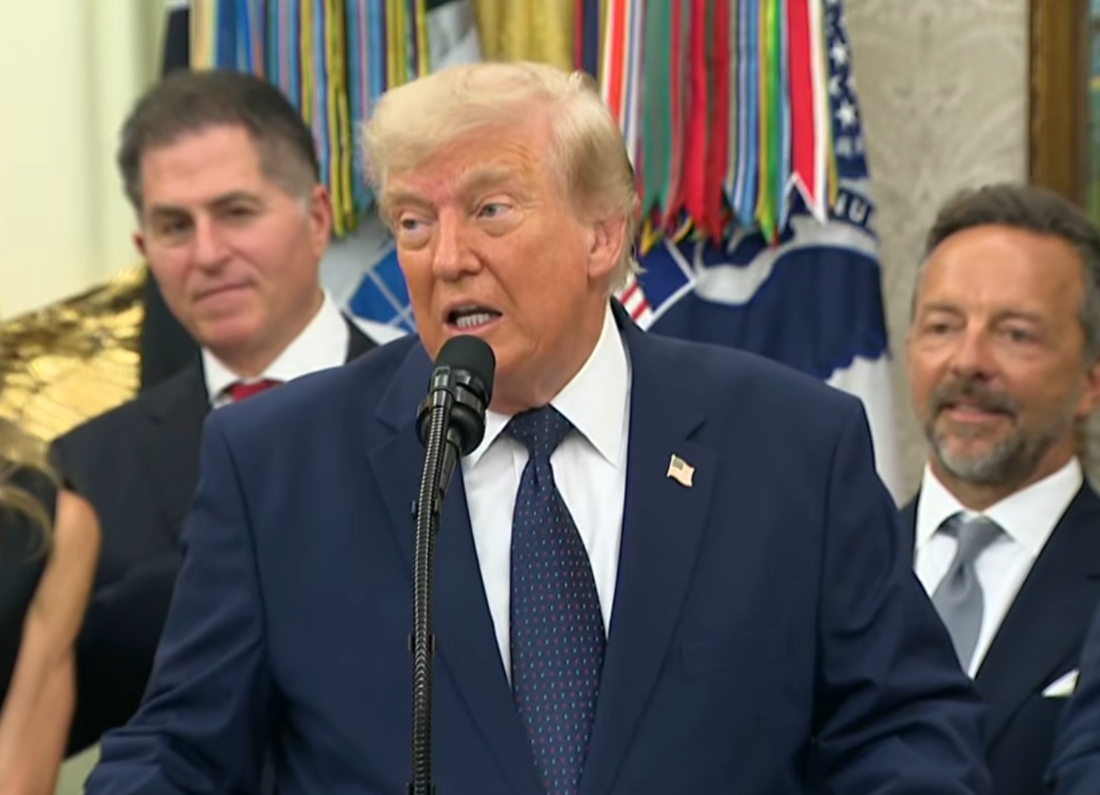
Tom Homan has a simple explanation for why two people ended up dead in encounters with ICE officers this month: they should have just done what they were told.
Standing outside the White House, Trump’s border chief was asked about the shootings, and the growing calls for someone to actually be held accountable for them. His answer didn’t leave much room for nuance.
“It comes down to one simple fact,” he said. “These people failed to comply with law enforcement.”
He went further, saying anyone who thinks an officer treated them badly should comply first and sort it out afterwards. “If you don’t like what law enforcement did to you, then go to the courts, sue, call the ACLU. Do whatever you want to do, but you should always comply with law enforcement.”
Then came the line everyone’s now sharing.
“If they did, they’d be alive today.”
That’s not a stray comment. It’s a blanket statement that the people who died brought it on themselves, delivered before either investigation was anywhere close to finished, and while significant parts of the official story are still being disputed.
Two deaths in the space of a week
Homan was responding to two separate shootings during attempted vehicle stops, one in Texas, one in Maine.
On 7 July, an ICE officer shot and killed 52-year-old Lorenzo Salgado Araujo in Houston. He was a Mexican national who’d lived in the US for decades, on his way to a construction job with his brother and two colleagues when officers stopped their van. They’d apparently been looking for two Guatemalan men in a similar vehicle. Salgado Araujo wasn’t one of them.
Officials initially claimed his van had struck an ICE vehicle. That claim didn’t reappear in a later statement from US Attorney Aaron Reitz, which also didn’t say the officer fired because he feared for his life. What officials did say was that Salgado Araujo tried reversing, then drove forward as officers surrounded the van, with one officer reportedly standing beside it, or partly inside it, when shots were fired. No officer was hurt.
Authorities also said they found bags of a white crystalline substance in the vehicle. His family says it was a salt-based hydration mix construction workers use to deal with the heat.
Less than a week later, an ICE officer in Biddeford, Maine, fatally shot 25-year-old Colombian national Johan Sebastián Durán Guerrero. He had permission to work in the US and wasn’t who agents were originally after. ICE says its officer fired because Guerrero tried to flee in his vehicle, creating a danger to the public. Footage from the scene reportedly shows the car moving slowly before officers pulled the wounded driver out, though it doesn’t clearly show the moment shots were actually fired. A witness said Guerrero told people at the scene: “I tried to stop.”
Both cases remain under investigation. Neither officer was wearing a body camera.
Homan reached a verdict before the investigators did
Maybe there’s evidence out there that backs up parts of the official account. That’s what investigations are for, they need to work through the footage, the physical evidence and witness accounts before anyone can say whether the force used was actually justified under the law.
Homan didn’t wait for any of that. By saying the victims would still be alive if they’d complied, he’d already decided their deaths were simply what happens when you don’t obey.
That’s a genuinely alarming standard for someone helping run a federal law enforcement operation. Not complying with an instruction doesn’t automatically make lethal force justified. Even when someone’s resisting arrest or trying to get away, officers still have to show the force they used was necessary and proportionate to the actual threat.
Homan skipped over all of that. What were the instructions? Were they even understood? Did the person actually pose an immediate danger? Could officers have handled it differently? None of it came up. His whole message was: comply now, sue later.
Not much use to someone who’s already been shot.
The body-camera problem
Neither officer involved was wearing a camera, and that’s fuelling calls for ICE to actually require them. Even Homan told CBS’s Face the Nation he now thinks body cameras are “the way to go,” since they’d let the public see what the officer actually saw before pulling the trigger.
Which raises an obvious question: why hasn’t the Trump administration made sure every agent has one, given how fast immigration enforcement has expanded under this government?
A group of Democratic senators, plus Maine’s independent senator Angus King, are now demanding the Department of Homeland Security explain both shootings in full and speed up rolling out body cameras. They also want ICE officers required to identify themselves clearly, and more transparency around how personnel get vetted in the first place.
ICE briefly paused some vehicle stops after the shootings while it reviewed procedures. Trump reversed that almost immediately, insisting traffic stops are too important to immigration enforcement to pause. So the practice continues, even with both deaths that prompted the pause still unresolved.
At least seven people dead so far
These two deaths aren’t isolated. A Reuters review found at least seven people have been fatally shot during immigration operations since Trump returned to office in January 2025, with dozens more dying in federal custody.
Earlier this year, the deaths of Renée Good and Alex Pretti in Minneapolis sparked national protests and put a spotlight on how federal officers use force. Good, a 37-year-old US citizen, was shot in January while driving away from an ICE operation, video showed an officer firing three times as her car passed him. Pretti, an ICU nurse, was killed by Border Patrol officers that same month while holding his phone and trying to help someone else, moments after officers pushed and pepper-sprayed protesters nearby.
Both those cases were followed by accusations that administration officials rushed to paint the victims as threats before any independent investigation had actually established what happened. Homan’s comments this week just extend the same logic to every recent death: if an ICE officer used lethal force, the person who died must have brought it on themselves.
The internet spotted the obvious problem
A lot of the reaction online zeroed in on what happens if you actually apply Homan’s logic consistently.
One user, posting as @swd2, asked whether everyone who stormed the Capitol on 6 January 2021 should have been shot for failing to comply with law enforcement. Another, @asclepiasyriaca, posted photos of rioters attacking officers and forcing their way inside, writing: “These people all failed to comply with law enforcement and they got pardons.”
That comparison lands especially awkwardly, given Trump has repeatedly defended the Capitol rioters and pardoned people convicted over that day.
Political journalist Chuck Todd suggested Republicans facing re-election in 2026, Susan Collins among them, probably won’t be thrilled about an official White House line that reads as blaming the dead for ICE shootings. Others were blunter. One user called it “comply or die” and compared the rhetoric to language associated with fascist regimes. Another pointed out that ICE officers frequently operate masked and in unmarked vehicles, making it a lot harder for anyone to calmly comply when they can’t even tell who’s approaching them. Someone else noted the reported final words of several people accused of “failing to comply,” including “Are you okay?” and “I tried to stop.” One reply simply asked where in the US Constitution failing to comply strips someone of their right to due process.
The comparisons to authoritarian regimes are opinions, not claims that today’s America is identical to any specific historical government. But they capture something real: genuine alarm at a senior official treating obedience as the line between living and dying.
“Comply now, complain later” isn’t accountability
There’s a legitimate interest in officers being able to do their jobs safely. Drivers trying to flee can genuinely endanger agents, passengers, bystanders. Not every use of force by immigration officers is automatically wrong.
Which is exactly why each case needs to actually be looked at properly.
You can’t just tell the public someone died because they didn’t comply, especially when there’s no body camera footage and the government’s own account of events has already shifted or is still contested. Officers hold enormous power. The burden should be on the state to prove force was necessary, not on a dead person to prove they behaved perfectly during a terrifying encounter they had no time to process.
Homan’s advice was to sue, or call the ACLU, if an officer mistreats you. That only works if you’re still alive to do it.
What he didn’t address was whether ICE officers made mistakes, whether different tactics could have avoided both deaths, or why federal agents are still doing high-risk stops without body cameras at all. He just blamed the people who got killed.
For an administration already under serious scrutiny over how its immigration officers behave and whether anyone’s held accountable, that answer did nothing to reassure anyone. If anything, it suggested Homan had already made up his mind about who was responsible, long before the investigations had actually finished.









Leave a Reply