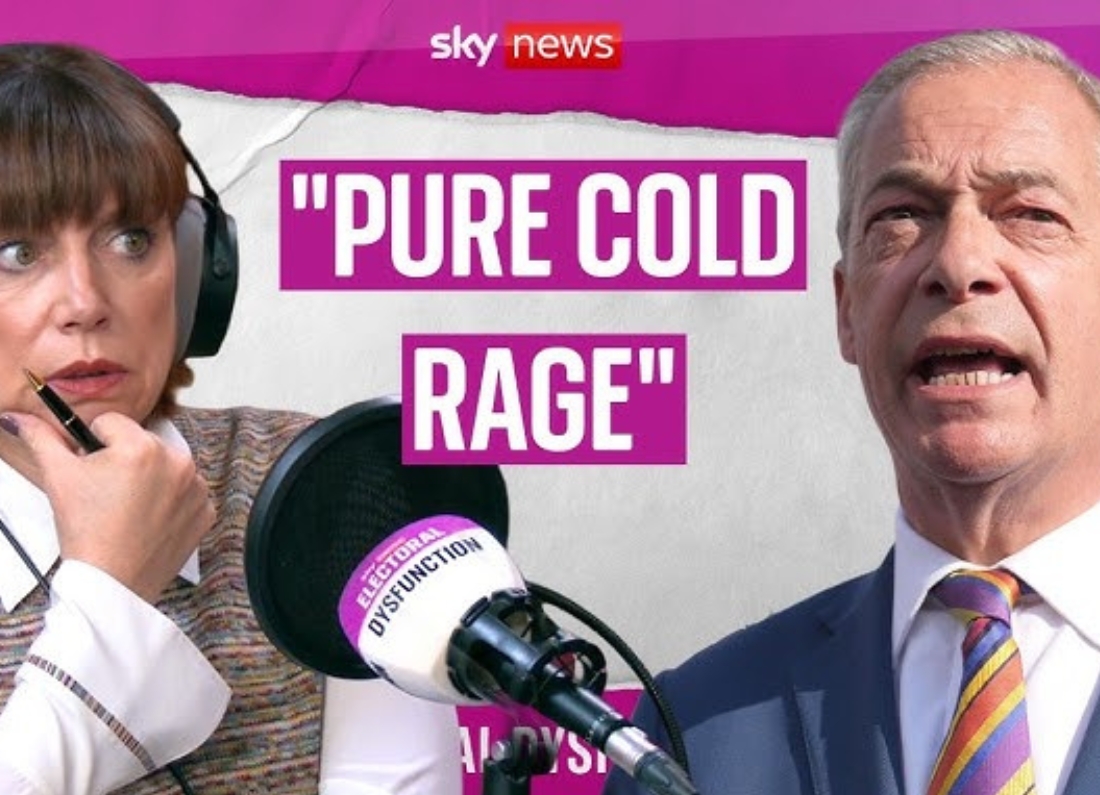
The Electoral Dysfunction podcast – Sky News political editor Beth Rigby, former Scottish Conservative leader Ruth Davidson and former Labour cabinet minister Harriet Harman – has devoted this week’s episode to Nigel Farage’s response to the murder of Henry Nowak, the question of whether Farage has now chosen Tommy Robinson’s political territory over any remaining claim to the political mainstream, and the debate about two-tier policing that Keir Starmer simultaneously won and partially fumbled at PMQs.
Starmer’s best day at the despatch box
Ruth Davidson’s assessment of Starmer’s PMQs performance is specific and notable given her politics. “I have never seen him perform better at the dispatch box. He absolutely smacked Farage silly. And Farage looked chastened.”
She described watching a rare moment of visible character from the Prime Minister. “I probably saw more of the character of Keir Starmer – or felt that I did – than I have in almost any speech he’s ever given, just because it was so from the heart of how dare you, not only how dare you do this, but when the dad – when the family have specifically said do not do it. How dare you go on and do that to this family?”
As we reported in our Peston and Jenrick piece, Starmer told Farage in the Commons: “His response has been to appeal for rage. Rage. That’s his response to a father who lost his son and asked this not to happen. It shows exactly who he is.” All three panellists agree it was a significant moment.
The Tommy Robinson question
The episode’s most pointed political analysis concerns the choice Farage has made and why. Davidson had previously argued, months earlier, that Farage faced a structural decision: deepen the Reform base by going further right, or broaden it into genuine electoral contention for government by following a more Richard Tice-style mainstream approach.
“On this, he’s made a very very significant choice. He’s made a choice to go right, to narrow his base, to double down in Makerfield.”
The specific pressures driving that choice are identified by all three. As we reported in our Southampton riots piece, Rupert Lowe’s Restore Britain is standing in Makerfield and polling at around 7%. Lowe was pushed out of Reform by Farage. And Elon Musk – who had previously backed Reform – has shifted support toward Restore in the Makerfield contest. Farage is being squeezed from his right flank in the most important byelection of the parliament.
Harman is direct about what she believes the “pure cold rage” call means for Farage’s political positioning. “He’s not being mainstream, not trying to look like a future prime minister. He’s looking like the fringe elements of Tommy Robinson again.” Davidson agrees: “It marks the point at which he’s finding himself back in the embrace of Tommy Robinson.”
What Badenoch did right
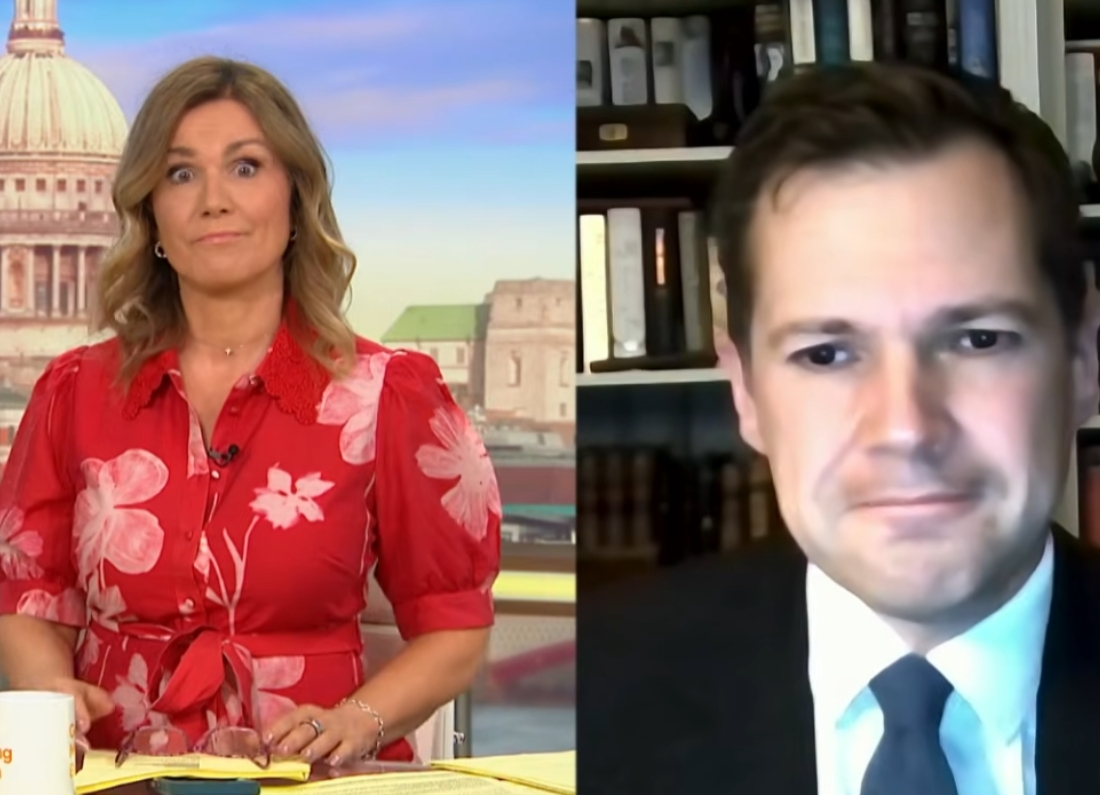
Something less noticed in the coverage is what Kemi Badenoch did – and both Davidson and Harman identify it as significant. As we reported in our Peston and Jenrick piece, Reform attempted to weaponise Badenoch’s Good Morning Britain interview by taking her words out of context. Badenoch had said she didn’t want to hear about Black Lives Matter or White Lives Matter – “everyone matters, Henry Nowak matters.”
Davidson: “It’s probably the first time the two of them on issues like this, where Farage has gone tonto on something and has really piled in, that they haven’t receded – that they’ve actually stood their ground and they’ve done it in a really measured way.”
Harman: Badenoch “showed herself to be a very good leader of the opposition at that point.”
Where Starmer missed
Despite the PMQs performance, the podcast identifies a specific failure in Starmer’s response. When Farage raised two-tier policing in the Commons, Starmer replied: “I do not believe there is two-tier policing in this country” – and then moved immediately to attacking Farage’s response.
Davidson argues this was the wrong approach. “I think it would have been better if he had only chastised Farage and not tried to swipe away the question itself.” The flat denial of a claim that has genuine public currency – however much Farage distorts it for political purposes – leaves the underlying debate unanswered.
The episode goes into significant detail on the substance of that debate. The National Police Chief’s Council anti-racism strategy is quoted: “producing equality of policing outcomes for people from different ethnic groups by responding to individuals and communities according to their specific needs, circumstances and experiences… It does not mean treating everyone the same.”
Davidson: “The actual guidance on anti-racism says you shouldn’t treat people the same. And I think the argument Kemi Badenoch has been putting forward quite articulately is that the only way to have true equality is to have equality under the law.”
The Manchester Arena bombing inquest provides a specific and disturbing illustration. A security guard had identified the bomber – he was fidgety, sweating, wearing bulky clothing, carrying a backpack – “and he almost went on his radio and reported it. And then he said he didn’t want to be seen as a racist for doing so.”
Davidson’s framing: “Is there an overcorrection?” – is the question the panel argues needs to be had in the open rather than swatted away.
The Sikh community – and Jazz Singh’s voice note
The programme includes a voice note from Jazz Singh of the Sikh Federation, which all three panellists treat with care. As we reported in our kirpan and UK law piece, the blade used in the attack was not a Kirpan – a fact the Sikh Federation has repeatedly clarified.
Singh’s voice note: “This isn’t a Sikh community on trial, but it feels like it. It feels like the Sikh community is on trial and is being challenged in ways it has never experienced in the last 100 years of Sikhs being here in the UK. We’ve contributed to two world wars fighting with our turbans and our kurbans on the front line and contributed to rebuilding Britain. But all of that was thrown away and forgotten in one senseless act by one lone actor.”
Davidson: “I’d imagine that being part of the Sikh community it does feel like a manifest unfairness – that community traditions are under the spotlight for one rogue actor doing a terrible thing, not even doing it with a ceremonial weapon.” She argues that the kirpan exemption question, while legitimate, “is a side issue” and that the primary focus must be on policing conduct and community trust.
Harman, however, states directly: “I don’t think religious or customary grounds for carrying bladed weapons should be acceptable anymore.” Davidson acknowledges the coherence of that position in principle while arguing that the focus on it in this specific context misidentifies where the problem lies.
Makerfield context
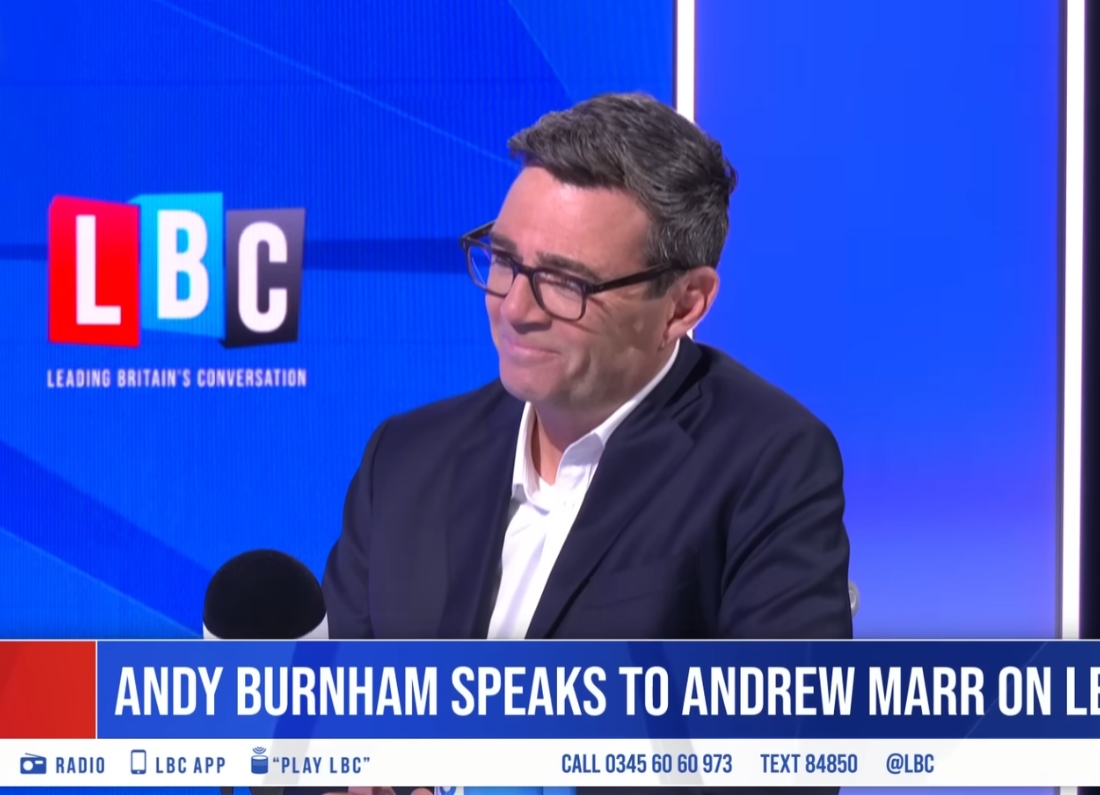
Beth Rigby notes she had been in Makerfield earlier getting the lay of the land and interviewing Andy Burnham. The byelection on 18 June is the backdrop to the entire episode – with the panel noting that next week they will be speaking to a group of Makerfield voters with pollster Luke Tryl to find out what voters actually think in the towns and villages between Manchester and Liverpool that make up the constituency.
You can watch the episode below: