

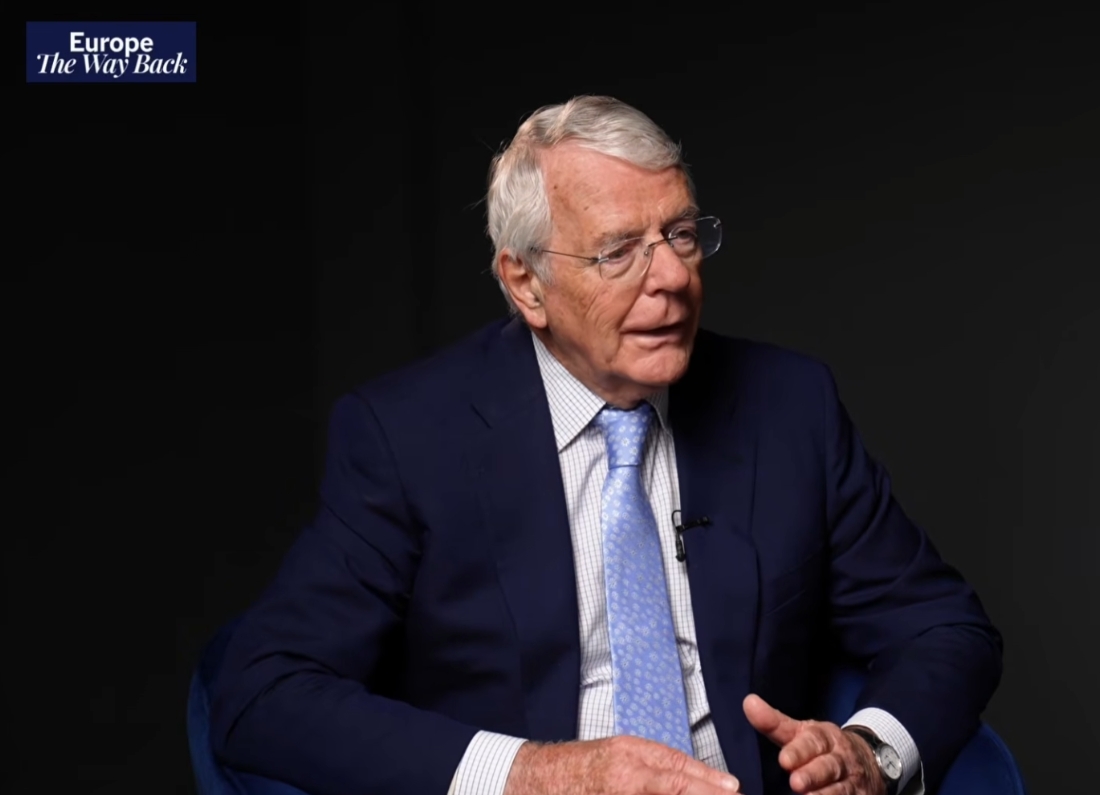
Sir John Major has called on Britain to rejoin the European Union’s single market within five years, describing the Brexit vote as a catastrophic economic failure for which every wallet, every purse and every balance sheet in the country has paid the price.
Speaking to The Independent to mark the tenth anniversary of the Brexit referendum, the former prime minister said the new prime minister should make rebuilding relations with Europe a central part of their agenda – and that the government must be honest with the British people about what rejoining will cost.
“The aim within the next five years must be to rejoin the single market,” he said. “But that will have a price. We are going to have to be absolutely honest with the British people. If we go back into the single market, we say ‘here are the gains we proposed and here is the price that we will have to pay for it.'”
The economic case
Major’s intervention is built on a stark reading of the economic data. He referenced the Bank of England’s analysis finding that the British economy is an estimated six to eight per cent smaller as a result of Brexit. “Even if you take the lower figure we have lost about £100bn worth of trade each year,” he said. “That £100bn would have yielded about £40bn worth of tax to the exchequer. If we’d had that £40bn annually over the last few years many of the difficult and unpopular decisions that have been taken would not have been necessary.”
In a withering attack on the architects of the Leave campaign, he said: “Michael Gove said after we leave we will hold all the cards. Well, the only card they held were P45s for people who lost their jobs.” The “take back control” slogan was “an empty slogan,” he said – a promise of “a land of milk and honey” that had instead seen millions of people lose out. Lord Heseltine this week called Brexit a “heinous crime” for which the same figures should hang their heads in shame – Major is making the same argument in somewhat more measured terms.
He was equally dismissive of claims that Brexit had been a success. “If you’re seeking to make Brexit succeed after ten years, you are admitting tacitly that it has failed thus far. It has failed thus far and I think will continue to do so.” He added: “We know who the losers are. It is every wallet, every purse and every balance sheet in the country. There’s only one country in the world that is completely sovereign and that is North Korea.”
The single market proposal
Major’s call for single market membership within five years is the most concrete political proposal from a former prime minister on EU relations in years. Rejoining the single market would mean accepting a wide range of EU rules and the return of freedom of movement – both of which would be politically contentious. He acknowledged the process would need to be gradual and would require broad public consent, saying: “We will have to take it slowly and make sure everybody is fully on board. So it’s not too early for people to start arguing the case, because it will take a long time.”
He described single market membership as a stepping stone toward the longer-term goal of full EU membership – not a destination in itself but a crucial first stage of repair. Michel Barnier said this week that Britain could rejoin the EU on a “short” technical timeline, with the obstacle being political will rather than process. Legislation currently before parliament would allow the UK to adopt EU single market rules without a parliamentary vote, a development that critics have described as creeping realignment by the back door.
The next generation
Major was confident that the direction of travel on public opinion made eventual return to the EU inevitable. Two-thirds of Britons now believe Brexit has made every major issue they care about worse, and 68% now consider leaving to have been a mistake. “So I think we will get back into Europe,” he said. He pointed to generational change as the key driver: the Leave vote had come disproportionately from older voters, and those demographics were shifting.
Reform and Farage
Major was caustic about Reform UK, dismissing what he called its “crude hostility” and absence of positive vision. “What is their unique selling brand? They don’t offer any inspiration or hope. The button they push is migration – which is falling, and so is their vote. And that will continue to happen.”
On Farage personally, he issued what amounted to a direct demand for transparency over the £5m gift. “It’s for my security,” he said Farage had explained. “Then on another occasion, he said ‘it’s for me getting Brexit through.’ And then on another occasion he said ‘it’s for me to spend exactly as I like on cars.’ He is a public figure aiming for the highest position in our land, and we need to know what obligations he may have and to whom.”
Major framed the scale of the gift in terms that most people could relate to. “Many people have a salary after tax and National Insurance contributions of no more than £20,000. That in a working life of 50 years is £1 million. Nigel Farage has just been gifted a sum that is equivalent to the total amount earned in five working lives for these people, and he seems to think it is entirely a personal matter, and that it is an insult for everybody else to look at that. If I were given £5 million, I think I would feel a little obligated to the donor. So what is going on?”
The intervention carries particular weight given its source. Major was the prime minister who signed the Maastricht Treaty, survived the parliamentary rebellion of Eurosceptic Conservative MPs that laid the groundwork for Brexit, and has watched the UK leave the institution he spent his career working within. His call for single market membership within five years is not the voice of a Remainer raging against the result. It is the voice of a former Conservative prime minister who has watched what happened and concluded that the destination is clear – even if the journey must be taken carefully.




Leave a Reply