

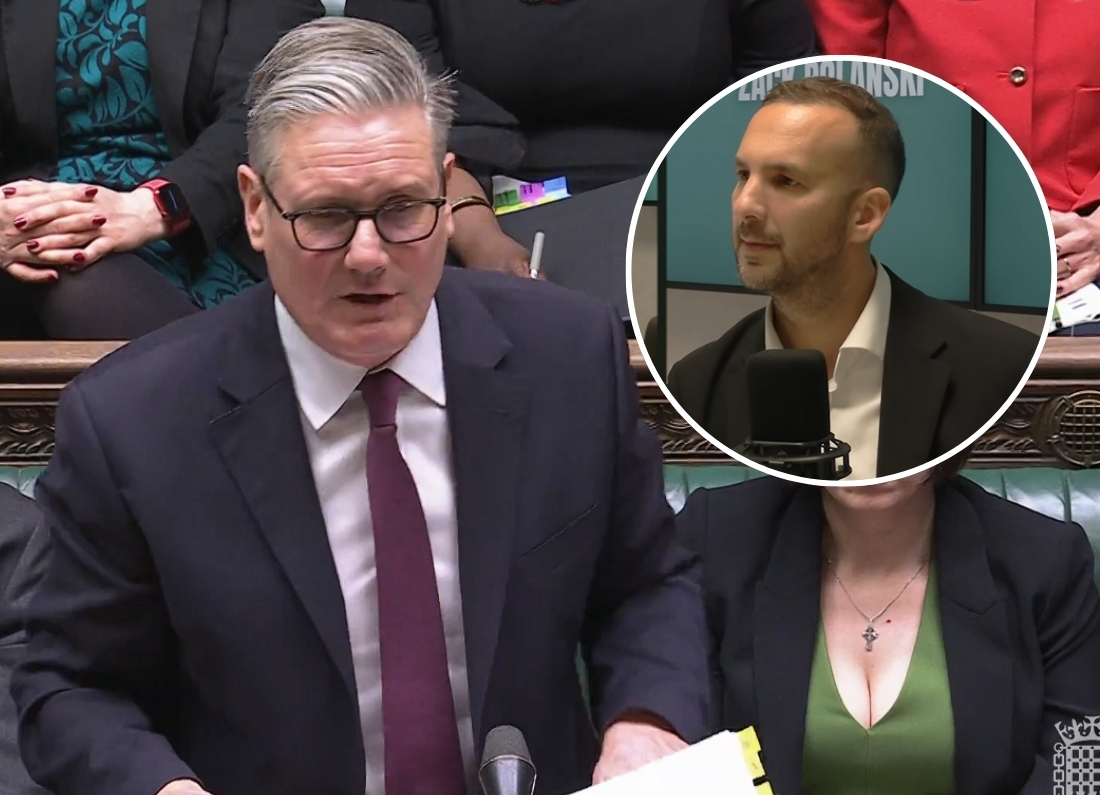
Nigel Farage and Keir Starmer are viewed unfavourably by the same proportion of young people, according to new polling carried out for ITV’s Peston programme.
The survey, conducted by Savanta, found that 51% of 16 to 25-year-olds said they had an unfavourable view of Reform UK leader Farage. The same percentage said they viewed the prime minister unfavourably.
While Reform continues to perform strongly in some national polling, the figures suggest younger voters remain sceptical of both the Reform leader and the Labour prime minister.
The findings come at a politically sensitive time, with parties jostling for position ahead of upcoming local and parliamentary contests.
What the polling shows
According to the Savanta poll of 1,040 people, Farage and Starmer were level when it came to unfavourable ratings among young respondents.
However, when asked about strong favourability, 9% of young people said they held a strongly favourable view of Farage, compared with 6% who said the same about Starmer.
The data also suggested relatively low levels of strong enthusiasm for other party leaders among younger voters. Just 5% said they had a strongly favourable view of Conservative leader Kemi Badenoch, while 6% expressed the same level of support for Liberal Democrat leader Ed Davey.
In contrast, 10% of those surveyed said they had a strongly favourable view of the Green Party leader.
Savanta’s polling for ITV did not indicate a surge of broad-based approval for any one leader among younger voters, instead highlighting a pattern of widespread ambivalence or disapproval.
Greens perform better with younger voters
The comparatively stronger showing for the Green Party leader among young respondents reflects a longer-term trend in British politics.
The Greens have often polled more strongly among younger voters and under-50s, particularly on issues such as climate policy, housing and social justice. That dynamic appears to be reflected again in the latest ITV-commissioned survey.
In recent national polling, the Green Party has frequently outperformed expectations in younger demographics, even when its overall national share remains in single digits.
This generational divide has become a recurring feature of UK elections, with older voters tending to back the Conservatives or Reform in greater numbers, while younger voters lean towards Labour, the Greens or the Liberal Democrats.
Context ahead of key contests
The findings come as parties prepare for upcoming electoral tests, including the Gorton and Denton by-election later this month.
The Greens are contesting that seat alongside Reform and Labour in what is expected to be a closely fought race. While bookmakers’ odds can fluctuate rapidly, recent commentary has suggested the contest could be competitive between multiple parties.
For Labour, weak favourability among younger voters presents a strategic challenge. Younger voters played a significant role in previous general elections, particularly in 2017 and 2019, when turnout among under-35s became a major focus of campaign strategy.
For Reform, strong national polling does not necessarily translate into strong approval ratings among younger voters, who may be less receptive to the party’s messaging or leadership style.
What it means politically
Favourability ratings do not always align directly with voting intention. Some voters may hold an unfavourable view of a leader while still backing their party, particularly if they view it as the least-worst option.
However, high unfavourability ratings can limit a leader’s ability to expand their party’s support base, particularly among swing voters or those who are politically disengaged.
The ITV/Savanta findings suggest that neither Farage nor Starmer currently commands broad personal enthusiasm among younger Britons. Instead, the data points to a fragmented political landscape in which approval is thinly spread and scepticism remains high.
As campaigning intensifies in the weeks ahead, parties are likely to focus on sharpening their appeal to younger voters, who continue to represent both a challenge and an opportunity in an increasingly competitive political environment.
You may also like: What NATO’s Article 5 actually means – and when it applies






Leave a Reply