Reform UK has announced plans to place migrant detention facilities in areas that do not vote for the party – explicitly targeting Green-controlled constituencies and councils first – in a policy that a former Conservative cabinet minister has described as “an abuse of ministerial power for political purposes” and that would likely be struck down in court before it could be implemented.
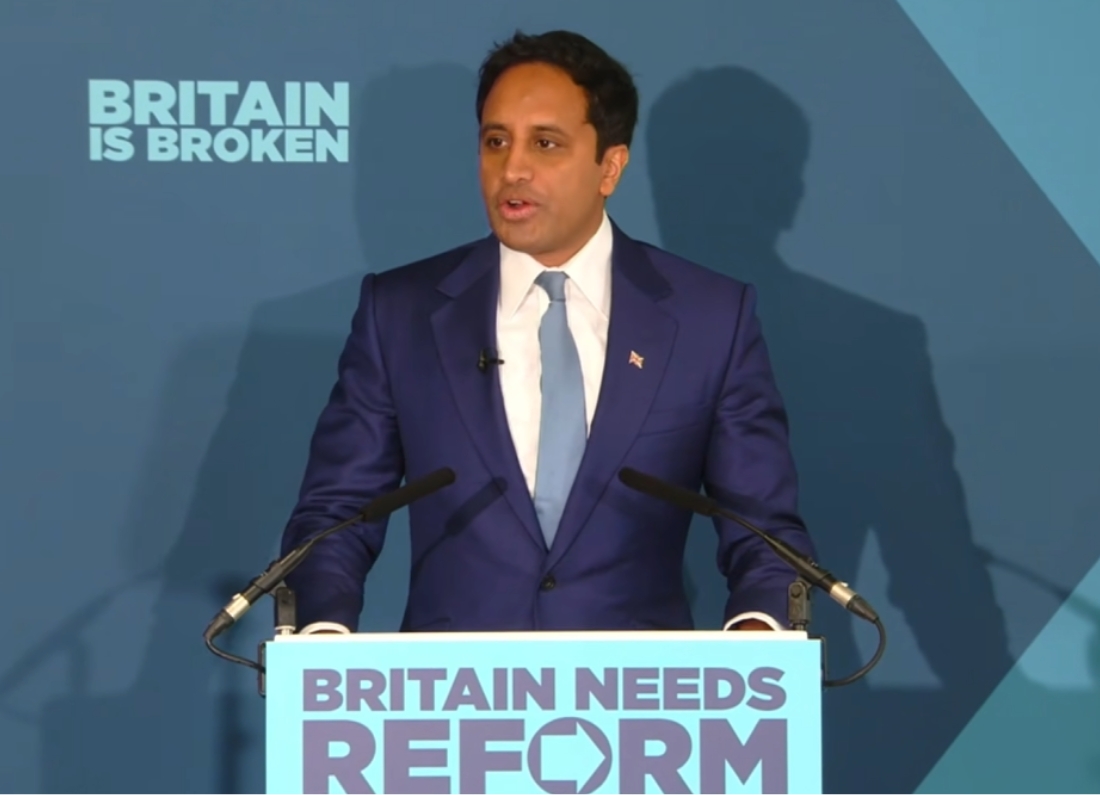
The announcement was made by Zia Yusuf, Reform’s home affairs spokesperson, days before Thursday’s local elections across England and devolved elections in Scotland and Wales.
Yusuf framed it as a matter of democratic consent. “A Reform government will not put any migrant detention facilities in any constituency with a Reform MP. Nor will we put them where Reform controls the council. And of the remaining areas, we will prioritise Green controlled parliamentary constituencies and Green controlled councils to locate the detention centres.”
The practical meaning was spelled out explicitly: “If you vote Reform, we guarantee you won’t have a detention centre near you. If you vote Green, there’s a good chance you will.”
What Reform says it is trying to do
Yusuf said a Reform government would “deport all illegal migrants in Britain,” with those awaiting deportation housed in detention centres for a “couple of weeks” while the process was completed. The policy of placing those detention centres in non-Reform areas was described by the party as “an important exercise in democratic consent.”
Taking a specific swipe at the Green Party, Yusuf added: “Given Zack Polanski openly advocates for open borders, we look forward to their warm embrace of this policy.”
Reform has not published details of how many detention facilities would be required, where they would be located, how they would be funded, or what legal framework would be used to implement a siting policy based explicitly on how an area voted.
Why critics say it is illegal
The policy was immediately challenged on legal grounds by former Conservative cabinet minister Sir Simon Clarke, whose post was retweeted by Conservative leader Kemi Badenoch.
Clarke’s assessment was direct. “Zia is proposing the siting of detention centres expressly as a form of political punishment for people and places that don’t vote Reform – not just Green, but presumably Conservative, Liberal and Labour too. And what about Reform voters in those constituencies?”
He continued: “It would almost certainly be deemed an abuse of ministerial power for political purposes, and as such would likely be struck down in court before ever being implemented, wasting millions for the taxpayer without detaining anyone.”
Clarke also questioned the practical logic of the proposal. “If it were to go ahead, it would still represent an appalling waste of public money as these sites might well not be in any way suitable for the proposed centres, or near the other infrastructure required.”
Ministers in Britain have a duty to act in the public interest and within the law. Using public infrastructure decisions to reward supporters and punish opponents is incompatible with those duties and would expose any minister who attempted it to judicial review. The principle that public resources must be allocated on the basis of need and suitability rather than electoral loyalty is foundational to British public administration and would almost certainly be upheld by any court asked to consider it.
The Green response
The Green Party was characteristically direct in its response. Deputy Green leader Mothin Ali said: “Reform keep making abhorrent announcements to distract voters from the fact they want to privatise the NHS.”
A Green Party source told HuffPost UK: “The shine is coming off Nigel Farage. His own voters are starting to see him for the establishment stooge he is.”
Green leader Zack Polanski connected the announcement to the ongoing story of Farage’s undisclosed £5 million personal gift from crypto billionaire Christopher Harborne. “Reform took a £5m donation and they’re trying to distract you,” he wrote on X.
The timing – and what it is designed to achieve
Clarke was explicit about the political purpose behind the announcement. “Reform know what they are doing. This goes beyond a pre-election stunt. It’s declared as a major policy commitment and should be treated as such.”
The timing is not incidental. The announcement comes three days before local elections in which Reform is expected to make significant gains. It follows a difficult week in which Farage pulled out of the BBC’s Sunday with Laura Kuenssberg at the last minute, days after the Guardian revealed the undisclosed £5 million personal gift from Harborne. The announcement generates outrage, maximises media coverage, puts the Greens on the defensive and keeps Reform’s core immigration message front and centre in the pre-election news cycle.
Whether it represents a serious policy commitment – as Clarke argues it should be treated – or a calculated pre-election provocation is a question that Reform’s behaviour in its newly won councils will eventually answer. Kent’s DOGE efficiency unit found nothing to cut. Durham’s first major spending story was a £12,000 patriotic roundabout. Andrea Jenkyns, Reform’s Greater Lincolnshire mayor, has promised to “resist” asylum seekers – a pledge with no legal mechanism behind it. Reform’s pattern in power so far is of announcements designed for political effect that dissolve on contact with legal reality.
The announcement that areas which don’t vote for them will be punished with detention facilities is consistent with that pattern. It is also something rather more than a stunt, because it explicitly describes a government using public infrastructure as a political weapon against its opponents. That is worth taking seriously regardless of whether it could ever be implemented – because the willingness to make such an announcement tells you something about the political culture of the party making it.
You may also like: Brexit promised to cut immigration. The ONS data behind the viral graphs shows what actually happened