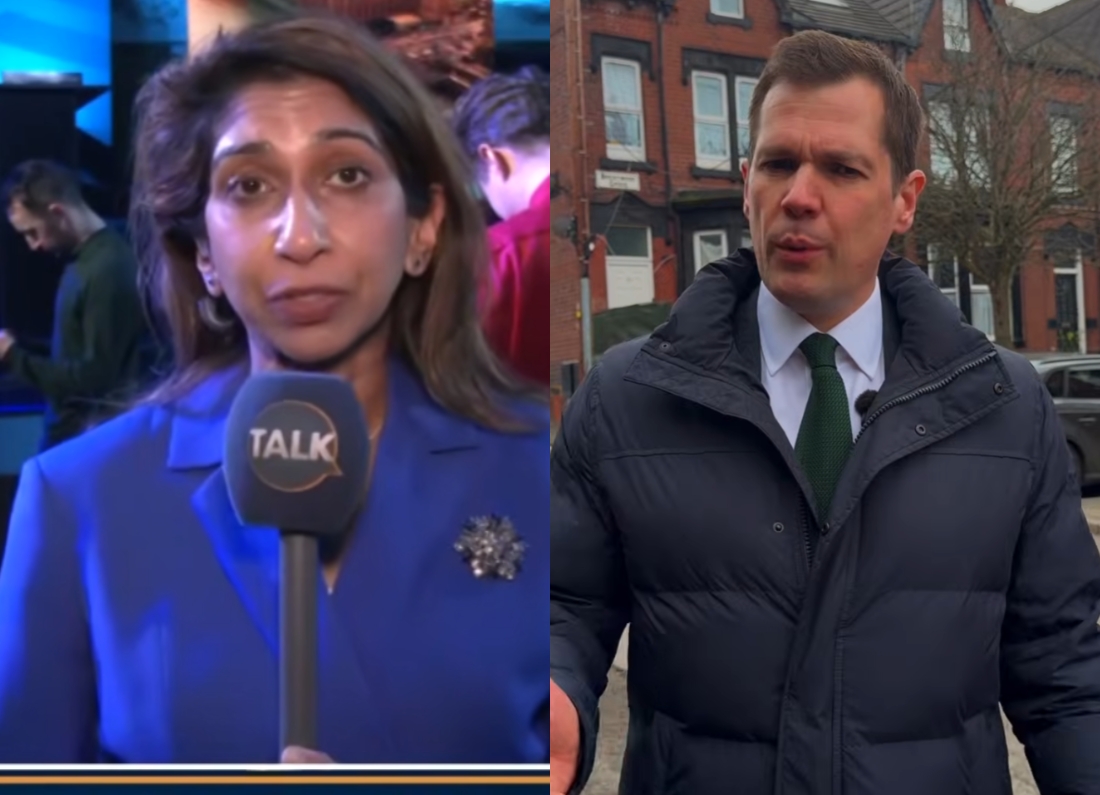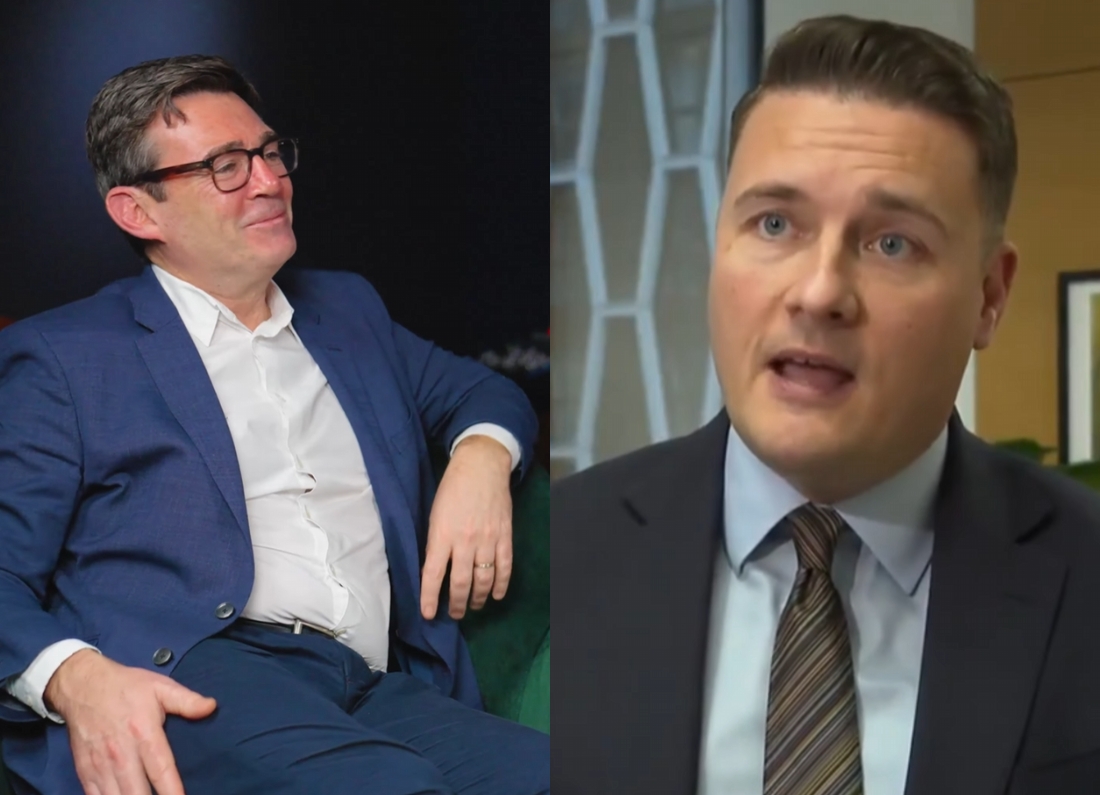
Wes Streeting has secured the backing of more than 81 Labour MPs – enough under party rules to trigger a formal leadership challenge against Keir Starmer – as Andy Burnham’s allies say the Greater Manchester mayor has a credible plan to return to Westminster “within weeks” and that the number of MPs backing his own candidacy has grown to well beyond the 80 required. The collision between the two most serious challengers to the Labour leadership is now a question of when, not whether.
Starmer himself is reported to have become aware of the brewing challenge through an embarrassing mishap: a Downing Street employee received a text message intended for someone else containing details of Streeting’s campaign strategy, including references to “five pillars” underpinning his pitch and a “PFG” – a plan for government.
What Streeting has and what he might do with it
Under Labour’s constitutional rules, a leadership challenger requires the public backing of at least 20% of the parliamentary Labour party – currently calculated at 81 of the party’s 403 MPs. Streeting’s supporters say he has crossed that threshold and are urging him to make his move as early as next Friday, the day after the May 7 local elections.
The timing is deliberate. A devastating local election result – one Labour source told the Telegraph that “Labour is going to lose in places it has never lost, including parts of London” and that the results will be “carnage” – would provide the political context for an immediate challenge. Supporters of Streeting believe the combination of a historic defeat and a pre-prepared plan for government could create the conditions for Starmer to stand aside rather than face a formal contest.
Should Streeting proceed, he faces a strategic choice. He could formally declare his candidacy – a move that would force a vote within the parliamentary party. Or he could resign from cabinet, in the hope that a wave of departures would pressure the Prime Minister into announcing his own departure voluntarily. An early strike would also catch Andy Burnham off guard, given that the Greater Manchester mayor currently has no Westminster seat and cannot formally enter a leadership contest without one.
Despite having the numbers, Streeting remains publicly cautious. A spokesman maintained he “supports the Prime Minister” and remains “completely focused on his job.” Historical precedent weighs on him – those who bring down sitting leaders rarely inherit the crown.
What Burnham has and what he is planning
Andy Burnham’s operation is further advanced than was previously understood. Allies of the Greater Manchester mayor told the Guardian that his team has already lined up an “impressive” candidate – understood to be not a sitting MP – to replace him as mayor of Greater Manchester, with Manchester city council leader Bev Craig seen as the frontrunner. Craig declined to comment when approached.
Burnham has identified several parliamentary seats – in Greater Manchester and Merseyside – where MPs are prepared to step aside to trigger a byelection through which he could return to Westminster. His plan is to use that byelection campaign as a platform to set out what allies describe as a “radical rewiring of the state” – including introducing proportional representation across the UK, a 10-year plan for local services and an overhaul of inheritance tax to fund social care.
The number of MPs backing Burnham is understood to have grown well beyond the 80 required threshold following the fortnight in which Starmer was fighting for his political future over the Mandelson vetting scandal. Burnham’s supporters say they hope to avoid a formal leadership challenge entirely – instead engineering a process in which Starmer announces a timetable to stand down after May 7, allowing an orderly transition that spares the party the spectacle of a bloody contest.
There is even a proposed accommodation for Starmer himself: allies of Burnham have discussed offering the Prime Minister the position of Foreign Secretary, allowing him to continue work on the Iran war and Ukraine while stepping aside from domestic leadership. Ed Miliband and Angela Rayner are also expected to be offered prominent cabinet roles in a Burnham government.
The polling picture
New polling from Portland Communications has provided ammunition for Burnham’s supporters. The survey found that just one in ten voters believes Starmer should remain as Prime Minister if the party loses the predicted 1,850-plus councillors on May 7 – representing 75% of the seats Labour is defending.
The same poll found Burnham was seen as the politician most likely to be “strong and decisive,” most competent at getting things done and most genuinely understanding of the lives of ordinary people – a set of attributes that directly address the perception problem that has dogged Starmer throughout the Mandelson affair. However, the polling also found that Starmer led on having a clearer vision for the country and being more honest about trade-offs – and notably, the scores for all politicians were extremely low compared to the number of respondents who picked “none of the above.”
What Rayner is doing
Angela Rayner – the bookmakers’ 6/4 favourite to be the next Labour leader and former Deputy Prime Minister who left cabinet after a stamp duty controversy – has not yet declared her own intentions. Her backers are said to have 80 MPs willing to support an immediate challenge to Starmer. She is reported to be in discussions with Burnham and Ed Miliband about the possibility of a soft-left alliance to shape the transition of power.
The three-way dynamic between Streeting, Burnham and Rayner means that no single challenger is certain to command the majority needed to win a full leadership election. Streeting’s support is concentrated among the moderniser wing of the party. Burnham’s appeal extends across multiple factions but his return to Westminster is not yet guaranteed. Rayner’s base is in the trade unions and the membership – but her relationship with some unions has been complicated by the stamp duty affair and by Labour’s internal tensions over oil and gas licensing.
Why this is difficult for Starmer
Starmer’s position is complicated by several structural factors. His parliamentary majority of 170 seats means he cannot be forced from office by opposition parties. His cabinet has remained publicly unified. But the Mandelson affair has exposed the limits of loyalty – 15 Labour MPs defied the whip in the Mandelson sleaze vote, 53 more abstained, and a formal parliamentary standards investigation has been opened into whether he misled the House.
Downing Street advisers are reported to be divided over strategy in response to the emerging challenge. Acting chief of staff Vidhya Alakeson is said to be advocating an immediate cabinet reshuffle to reset the political narrative. Political director Amy Richards has reportedly warned that such a move would only create additional problems. The absence of consensus at the top of the government at the moment of maximum political pressure is itself a sign of the difficulty Starmer faces.
The NEC – which blocked Burnham from standing in the Gorton and Denton byelection in February – has been identified by some MPs as a potential mechanism for managing a transition. But NEC members have told the Guardian there is “no route” for Burnham through that committee, and elections to the NEC that might shift its balance will not take effect until after Labour conference in the autumn.
What happens next
The sequence that Burnham’s supporters are hoping for: Labour loses badly on May 7. The scale of the losses creates irresistible pressure for a leadership change. Starmer announces a timetable to stand down – perhaps as early as the autumn conference. Burnham secures a Westminster seat through a byelection, sets out his programme for government, and positions himself as the candidate of renewal rather than the candidate of a hostile coup.
The sequence that Streeting’s supporters are planning for: Labour loses badly on May 7. Streeting moves immediately, either by formal challenge or cabinet resignation, catching Burnham without a seat and Rayner without a decision. The contest is framed as a choice between Streeting’s modernising programme and the alternatives, with Streeting positioned as the decisive actor who moved when it mattered.
The sequence Starmer is trying to engineer: survive May 7, contain the damage, regroup over the summer and demonstrate through the King’s Speech on May 13 and a refreshed legislative programme that the government has heard the message and changed direction.
Only one of these sequences will play out. Which one becomes clear within days.
You may also like: Starmer’s niece selected for safe Croydon seat as two Black women councillors are deselected