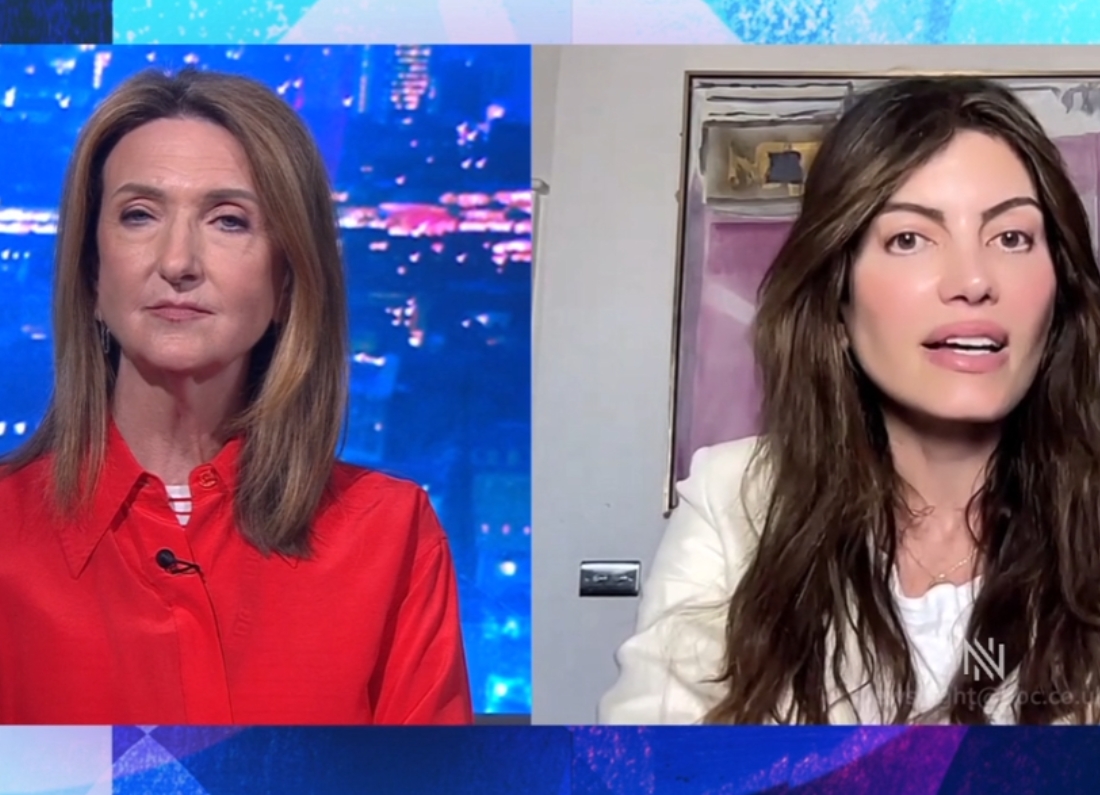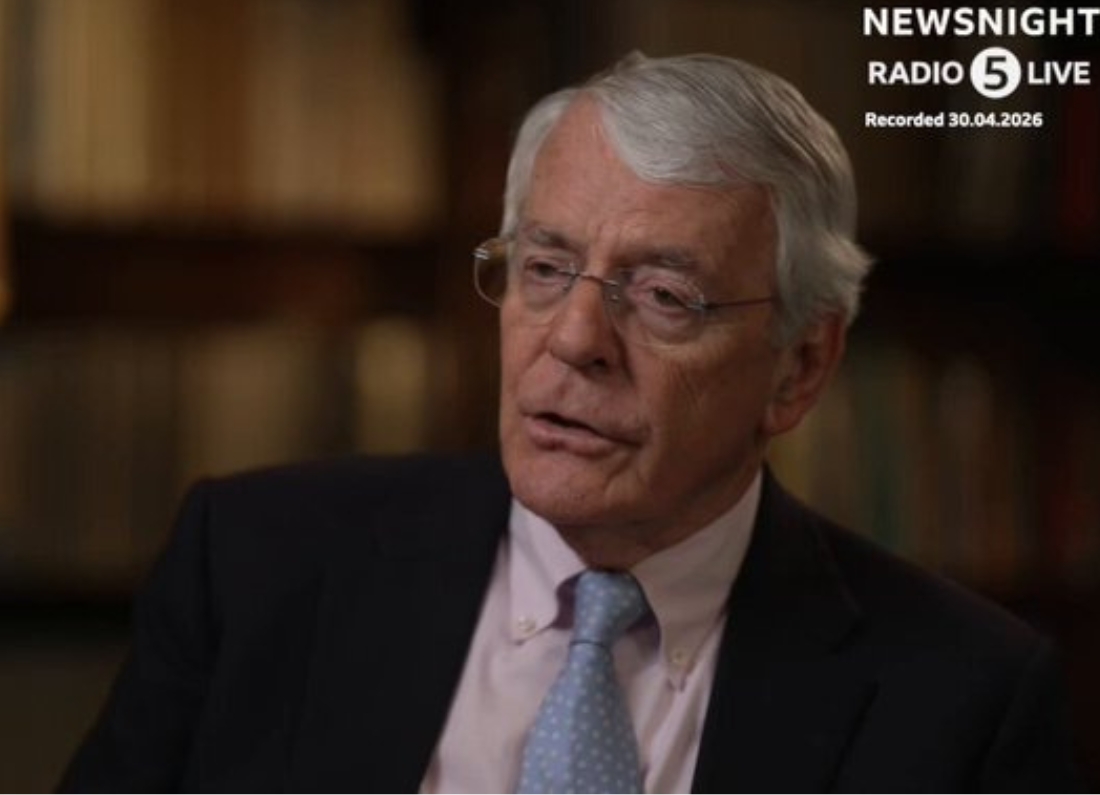
John Major has delivered one of the most pointed interventions in the current debate over climate policy, telling Newsnight that politicians who argue for delaying or abandoning net zero commitments are effectively telling future generations that they do not matter – as new academic research reveals that seven out of ten Reform UK-controlled councils have already scrapped their climate targets since winning control last May.
The former Conservative Prime Minister – who has become an increasingly prominent voice of reason across multiple political debates, having previously called Brexit “an act of collective folly,” condemned Boris Johnson and warned about the dangers of the modern right – turned his attention to those calling for Britain to abandon its climate commitments in favour of short-term financial relief.
“Those people who say ‘let’s push it back a bit, let’s not do anything, let’s just wait so we can spend the money on something else,'” Major told Newsnight, “all they’re doing is saying to my children and your children and their grandchildren, ‘tough luck chaps, we’re not only leaving you a difficult economy and too many old people that you can’t afford to care for, we’re going to leave you with climate change that we should have put right for you and didn’t.'”
The argument Major is making – and why it matters
Major’s intervention is not primarily a technical argument about renewable energy or carbon targets. It is a moral and constitutional one about the purpose of government.
“The role of government,” he said, “is to leave something better for the next generation than your generation inherited – and this is not done now. The youngsters of today are inheriting a more difficult world and a less favourable world for them than my generation. And their successors may be in the exact same position unless now we begin to take seriously those very long term problems.”
He went further, connecting climate inaction directly to the failure of democratic representation: “We send representatives to parliament to make sure our lives are better, and if you ignore and deny those issues, our lives will not get better and those parliaments will have failed.”
What Reform is actually doing in power
Major’s criticism is not abstract. New research from the Grantham Research Institute on Climate Change and the Environment at the London School of Economics – published in March – found that seven out of ten Reform UK-controlled councils have scrapped their climate targets since being elected in May 2025. Three councils have successfully moved to rescind Climate Emergency Declarations entirely. Climate change denial has been expressed by Reform UK councillors in at least five councils.
Kent County Council pointed to a supposedly “unproven view of anthropogenic climate change” in a motion to rescind the county’s Climate Emergency Declaration, citing several widely discredited sources.
The LSE paper concluded that “the promotion of climate change denial by both its national leadership and many of its local councillors indicates that Reform UK is failing to recognise the growing risks the British public face from climate change impacts, including rising sea levels, heavier rainfall and more intense heatwaves.”
Richard Tice, Reform’s deputy leader, has described net zero as an “extreme cult” and has previously told an interviewer there is “no evidence that man-made CO2 is going to change climate change.” He has also claimed there are “a thousand scientists” who agree with him. Analysis of more than 3,000 peer-reviewed studies puts scientific consensus on human-caused climate change at above 99%.
Every Reform council elected on a promise to “scrap net zero to cut your energy bills” has, in practice, raised council tax. In most cases by close to the legal limit.
What the Conservatives are proposing
Kemi Badenoch’s Conservative Party has gone further still at the national level, pledging to repeal the Climate Change Act 2008 – the legislation introduced under Gordon Brown that established legally binding carbon reduction targets and created the framework within which British climate policy has operated for nearly two decades.
Oxford University’s Professor Friederike Otto noted that “undoing the act would signal that the UK no longer values the long-term stability that has driven clean investment and made its climate policy admired around the world.” She said “the policy uncertainty generated by the Tory announcement and similar pronouncements by Reform UK will eventually find its way into the risk premiums for investors.”
The Climate Change Act has had cross-party support since its passage. It was supported by the Conservatives in opposition. David Cameron made climate action a central part of his modernisation project. The current position – that the Act should be repealed – represents a significant departure from every previous Conservative government’s position including Major’s own.
What the science says about the urgency
The World Meteorological Organisation published its annual State of the Global Climate report in March, confirming that the period from 2015 to 2025 represents the warmest eleven consecutive years since temperature records began in 1850. UN Secretary-General António Guterres said: “The State of the Global Climate is in a state of emergency. Planet Earth is being pushed beyond its limits. Every key climate indicator is flashing red. When history repeats itself eleven times, it is no longer a coincidence. It is a call to act.”
The Iran war has added a further dimension to the climate argument. The conflict that has sent oil prices to $110 a barrel and raised British energy bills by £300 is the second major fossil fuel price shock in four years – after Russia’s Ukraine invasion pushed gas prices to record levels in 2022. Ed Miliband has explicitly cited both events as evidence that Britain’s dependence on fossil fuels is not only environmentally damaging but strategically dangerous. Renewable energy advocates argue that the Iran war has demonstrated exactly the point Major is making – that delay costs future generations more, not less, because it prolongs the period of vulnerability to fossil fuel price shocks.
The public opinion question
The debate over net zero is not settled among the public. The share of the UK public who believe Britain needs to reduce carbon emissions to net zero sooner than 2050 has nearly halved since 2021, falling from 54% to 29%. That shift reflects genuine public concern about energy bills, cost of living pressures and scepticism about the pace and fairness of the transition.
That public mood is precisely what Reform and the Conservatives are responding to. Major’s argument is that responding to it by abandoning climate commitments is a form of short-termism that future generations will pay for – and that it is the job of political leadership to make the long-term case rather than simply to follow the immediate poll.
Whether that argument from a former prime minister who left office 29 years ago lands differently from the same argument made by an environment secretary who is perceived as a political liability is a separate question. But the argument itself – that the role of government is intergenerational responsibility, not the management of the next news cycle – is one that the current political climate makes increasingly rare to hear.