

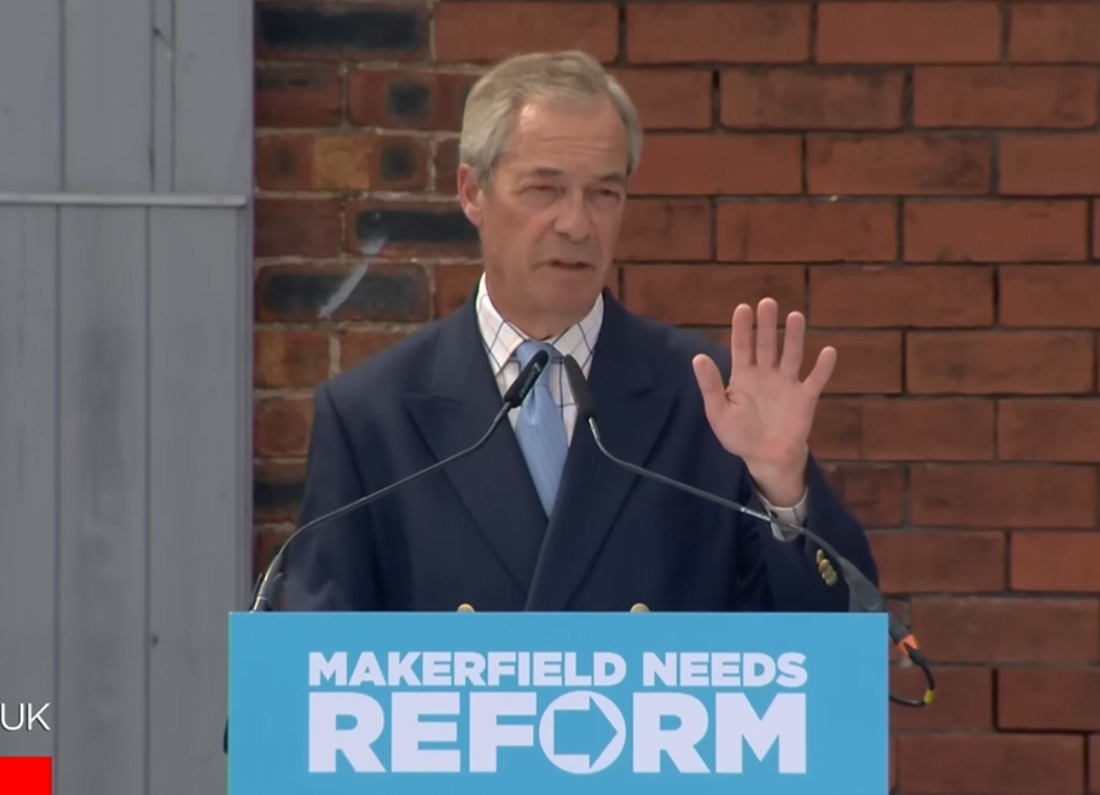
Another Reform UK councillor has gone. Tony Nelson, elected in May for Eynesbury on Huntingdonshire District Council, has resigned just weeks after taking his seat, becoming the latest addition to a running tracker of Reform departures that has become one of the most awkward ongoing stories for Nigel Farage’s party since its local election breakthrough.
On paper, Reform UK is still selling a growth story. Its own website boasts of 14 councils gained at the 2026 local elections, eight MPs in Parliament, more than 2,400 councillors and 270,000 members.
But underneath that national momentum is a messier local picture.
The scale of the tracker
The updated departures tracker being circulated by @reformexposed now lists Tony Nelson as the latest confirmed departure, with the overall list running to 121 entries across six categories, or 120 unique names once a duplicate listing is accounted for.
The breakdown: 21 councillors kicked out, 38 defected, six suspended, one disqualified, 50 resigned, and five who lost their seats outright. Since the local elections specifically, the narrower post-May tracker contains 41 entries: five lost seats, 17 resignations, 13 defections and six suspensions.
Different trackers use different methodology. Mark Pack’s stricter tracker, which counts only councillors elected under Reform on 7 May 2026, lists 21 who had already departed by 29 June, with Nelson added as the latest confirmed resignation. The scale of this pattern has been documented in detail before, when the tracker first passed the 100-name mark and the mainstream press had, at that point, barely noticed.
The caveats matter. Not every name falls under the same category of office, timing or verification. A suspended candidate is not the same as a suspended elected councillor. Some trackers include parish-level cases. But even accounting for all of that, the direction of travel is not in doubt.
Kent showed the problem in full colour
The clearest illustration of Reform’s local government problem came in Kent, the council the party most wanted to hold up as proof it could govern. In October 2025, a leaked video exposed bitter internal divisions, with councillors complaining about being ignored by council leader Linden Kemkaran, who told colleagues to “suck it up” if they disagreed with her decisions. Reform suspended four county councillors, Paul Thomas, Oliver Bradshaw, Bill Barrett and Maxine Fothergill, reducing its Kent group from 57 seats to 50 councillors with the whip after two others had already been suspended and one had joined UKIP.
Brian Black, Oliver Bradshaw and Paul Thomas, along with Bill Barrett, were subsequently kicked out of Reform entirely following investigations, with a Reform spokesperson citing a “lack of integrity” and a “pattern of dishonest and deceptive behaviour.” The Kent instability has continued since, with the Greens taking a Kent county seat from Reform in a byelection, leaving Farage’s flagship council six seats from losing overall control entirely.
The vetting question
Reform’s rapid May success created an obvious practical problem: finding and managing large numbers of candidates at speed, with limited time for proper vetting. Four Reform councillors were suspended or removed within days of being elected, as the party’s vetting record came under fresh scrutiny almost immediately after the results were declared.
Stuart Prior resigned shortly after election following accusations of racist and Islamophobic social media posts. Jay Cooper was declared “not welcome” by Farage personally after reports he had called the Holocaust a hoax, before resigning. Nathaniel Menday was suspended after reports he had shared images of swastikas and Mein Kampf. Billy Burke was suspended after being charged with possessing an offensive weapon. One Reform councillor was even photographed posing with a Jimmy Savile banner during the Makerfield campaign, later apologising. Another quit after adult content he had previously produced was revealed, refusing to apologise in order to keep his seat.
Not all cases are equally serious, and not all involve wrongdoing. But put together, the obvious question is whether Reform’s candidate machine has grown faster than its ability to control it. In one especially striking case, Reform reinstated a councillor who had said Nigerians “should be melted down” to fill potholes, giving him only a final written warning rather than expulsion.
Defections may be the bigger problem
The expulsions and suspensions attract headlines, but the defections may be more politically damaging in the long run. A suspension can be dismissed as a disciplinary process. A resignation can be attributed to personal circumstances. A defection suggests something else entirely: someone who was willing to stand for Reform, win for Reform, and then decided they could not continue sitting for Reform.
Robbie Lammas, who had originally defected from the Conservatives to Reform, later left Reform after eight months, calling the move “the biggest mistake of my life” and describing the party as “good at spin, but struggle with good governance.” One Reform councillor quit the party live on the BBC during a council tax row. Another defected to the Conservatives in Buckinghamshire, sparking calls for a formal byelection, a call Kemi Badenoch has echoed more broadly, urging Reform defectors more generally to face voters rather than simply switching allegiance while retaining their seat. Still another quit Reform in fury to join the Tommy Robinson-backed party, illustrating the pull Reform is experiencing from its right flank as much as anywhere else.
The governance problem underneath it all
None of this means Reform is collapsing. The party is still growing, still polling strongly, and still has an unusually large local government footprint for a party that only recently broke through at scale.
But the councillor departures undermine the argument that Reform is ready for national power. Jeremy Corbyn recently argued that many Reform councillors “haven’t got a clue” about the actual substance of local governance, suggesting some think being a councillor is “all about the flags you put up outside the town hall” rather than the practical work of budgets, planning and services.
The case of Edward Harris, former chair of Warwickshire County Council, is a particularly awkward example for a party that frequently talks about housing, landlords and local accountability. Harris resigned as chair and as a Reform member after Tamworth council found he had been illegally running two unsafe HMO properties lacking basics including heating, hot water and working fire alarms. He said he took full accountability and did not want the issue to distract from the council’s work.
Why this deserves mainstream scrutiny
Reform is no longer a fringe pressure group shouting from outside the system. It controls councils. It has MPs. It claims thousands of councillors. It presents itself as a government-in-waiting. That means its local failures deserve the same scrutiny as anyone else’s.
If Labour, the Conservatives, the Liberal Democrats or the Greens had a rolling tracker of departures, suspensions, expulsions and defections running to well over 100 names in under two months, it would be treated as a major national story. Reform should not be treated differently simply because chaos has become somehow priced into the brand.
Tony Nelson’s resignation is one more name on a long and growing list. On its own, it is a local council vacancy in Huntingdonshire. In the wider picture, it is another entry in a ledger of Reform representatives who have not lasted. The party can still point to its election wins. It can still claim momentum. But the question now is not whether Reform can win seats. It is whether it can keep hold of the people who win them.











Leave a Reply