

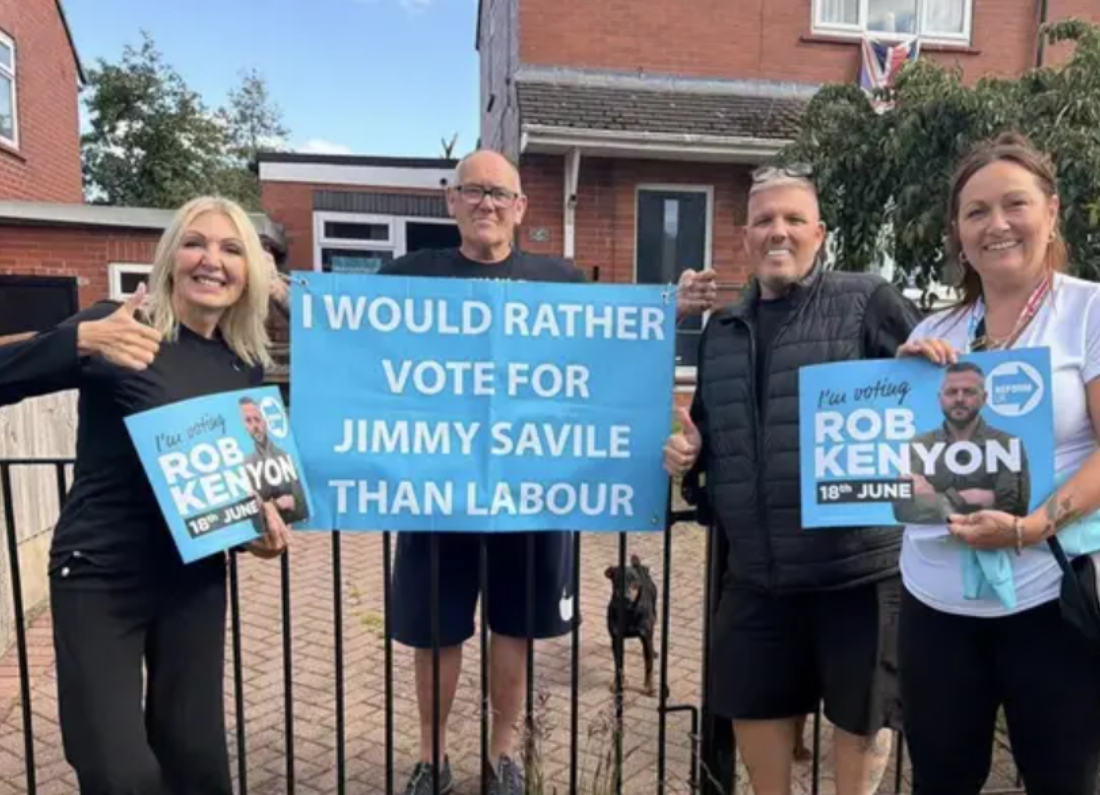
A Reform UK councillor from Wigan has apologised after photographs emerged of her posing with a banner reading “I’d rather vote for Jimmy Savile than Labour” while out campaigning in the Makerfield byelection.
Cllr Lillian Rogers, who was elected to represent Shevington with Lower Ground and Moor in May and currently holds the position of vice chairman of the health and social care scrutiny committee, said the wording was “utterly indefensible” and that she had been let down by her own naivety. A second councillor, Cllr Gemma Painter, who represents Ince, also appears in the photograph but has not commented and appears to have deleted her social media accounts since the image circulated online.
Jimmy Savile, the television presenter who died in 2011, was posthumously exposed as one of Britain’s most prolific sex offenders, having preyed on hundreds of women and children in hospitals, schools and BBC studios over several decades.
Rogers’ apology
In a statement posted to Facebook shortly after polls closed on byelection night, Rogers offered a detailed explanation of how the photograph came to be taken – though one that will strike many as difficult to accept.
She wrote: “The photograph was taken at the end of a long day of canvassing. We stopped to speak with a supportive local resident who asked for a quick picture with a homemade sign. While I saw the sign at the time, I want to be absolutely clear: I completely failed to realise its sickening implications or context. In the rush of a busy campaign day, it was viewed as entirely innocent, and I did not comprehend the true, disgusting meaning behind it.”
She added: “The wording on that sign is utterly indefensible, and I completely condemn it. I am deeply sorry for any distress this situation has caused to anyone who has seen it, and I am incredibly disappointed in my own naivety in allowing myself to be compromised in this way. This matter is now being dealt with internally.”
Another controversy for Reform in Wigan
The incident is the latest in a series of embarrassments to hit Reform’s campaign in and around the Makerfield byelection. The party’s candidate, Robert Kenyon, had a difficult campaign from the start – it emerged that he apparently did not vote for Brexit despite standing in a constituency that voted 67% Leave. He was also laughed at during a hustings after a rant about biological males, and Nigel Farage was forced to address Kenyon’s past sexist comments, dismissing them as “laddish things you’ll hear in every pub”.
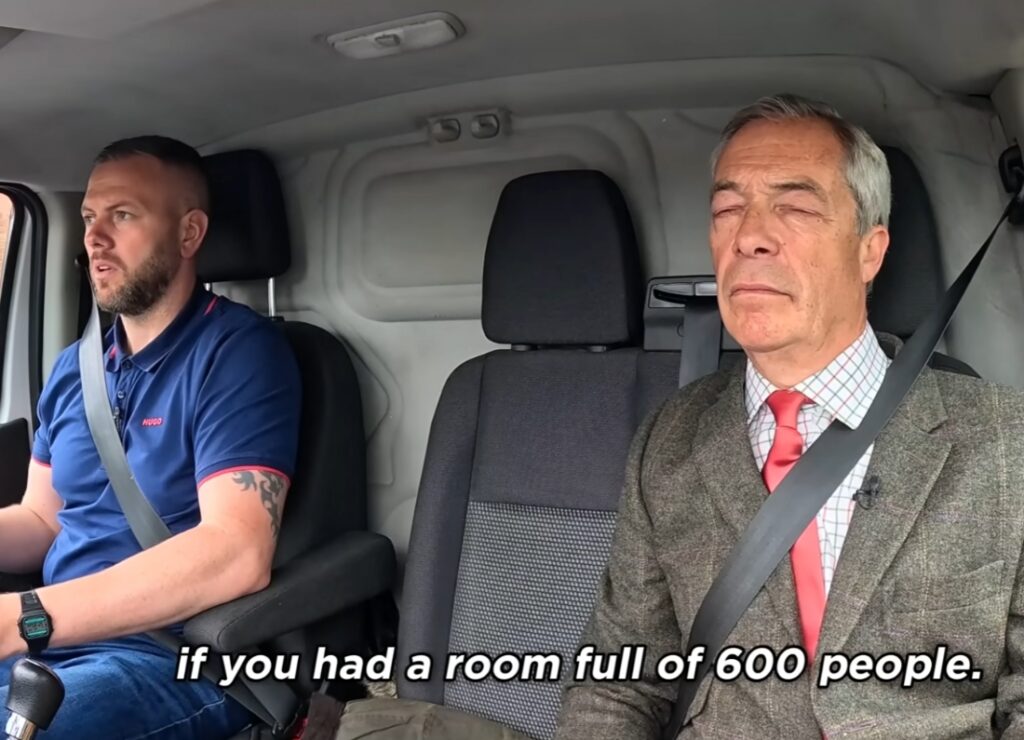
Kenyon finished more than 9,000 votes behind Andy Burnham on election night, with Labour taking 54% of the vote to Reform’s 35%.
A wider pattern
The Savile banner incident also fits a broader pattern of controversy involving Reform councillors since the party’s surge in local government elections. Reform reinstated a councillor who said Nigerians “should be melted down” to fill potholes, issuing only a final written warning. A Tory defector who joined Reform as a councillor quit after eight months, calling it “the biggest mistake of my life” and saying the party was “good at spin but struggles with good governance.”
That record in local government is beginning to attract serious political attention. James Cleverly, speaking after the Conservatives won Aberdeen South from the SNP on the same night as the Makerfield result, said pointedly: “When people see what Reform is like in office, they change their minds about Reform.”
What happens next
Rogers says the matter is being dealt with internally by the party. Painter has not responded to press requests for comment. Reform UK has not issued a statement at the time of publication.
The timing is particularly awkward for the party. Coming in the immediate aftermath of their worst byelection night since the general election, the last thing Reform needed was another local councillor making national headlines for the wrong reasons. With the Greater Manchester mayoral byelection expected on 30 July, the party will be hoping the story fades quickly – though Cllr Painter’s decision to wipe her social media presence suggests those involved are not confident it will.









Leave a Reply