

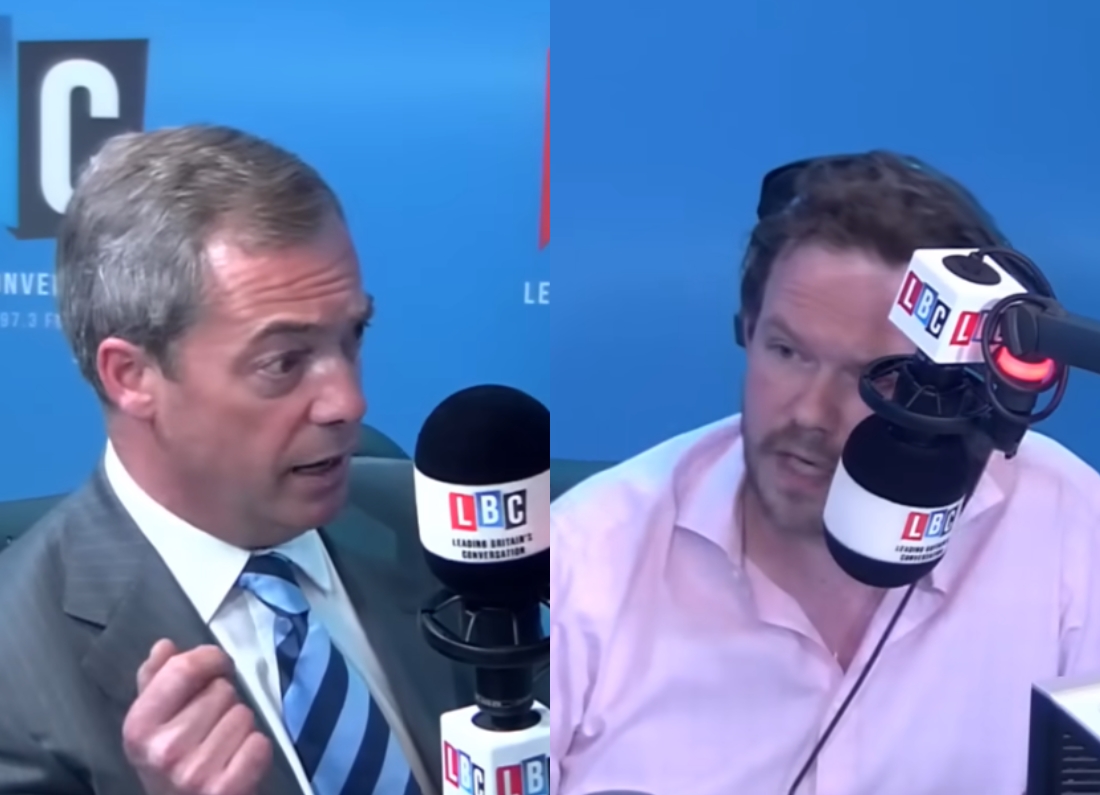
It has been a difficult week for Nigel Farage in interviews. From the BBC to LBC to TalkTV, broadcaster after broadcaster pressed him on the £5m personal gift from crypto billionaire Christopher Harborne – and he struggled on all fronts. But for those wondering how long this dynamic has been in play, an interview from twelve years ago has resurfaced to provide some context.
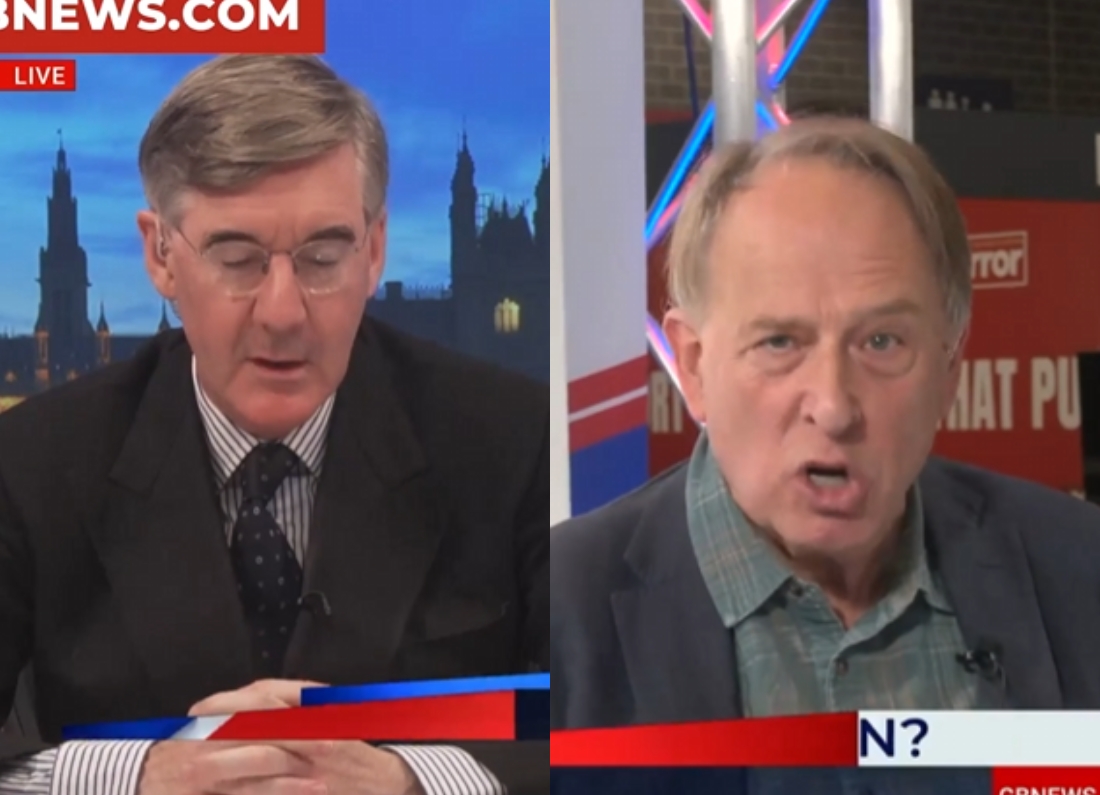
The 2014 LBC interview between Farage and James O’Brien – from a time when Farage was leading UKIP and O’Brien was already one of his most consistent challengers – has been widely reshared this week on social media. The timing is not coincidental. It is the ten-year anniversary of the Brexit vote, and the clip serves as a reminder that the patterns on display in this week’s interviews have deep roots.
What the 2014 interview covered
O’Brien challenged Farage over controversies surrounding UKIP candidates and councillors at the time, then moved on to comments Farage had made about immigration – specifically his claim that he was uncomfortable hearing foreign languages spoken on public transport, and his answer when asked whether he would have any concerns about Romanian men moving in next door to him.
The exchange exposed what became a recurring feature of Farage interviews: the attempt to frame personal or cultural discomfort as rational political concern, challenged by someone who would not accept the framing. O’Brien pushed back on the logic, called out the divisive rhetoric, and refused to let Farage reframe the questions. In the end, Farage’s press spokesman stepped in to halt the interview.
One viewer sharing the clip this week described it as “a masterclass in how to flush a turd down the toilet.”
Why it resonates now
The reason the 2014 clip has travelled so well this week is that the dynamic it captures – Farage becoming evasive and irritable when pressed, reaching for deflection and counter-attack rather than answering the question directly – is precisely what viewers have been watching play out in 2026. The specific subject matter is different. But the mechanics are recognisable.
O’Brien’s analysis this week was notably similar in structure to the 2014 interview: identify the central evasion, state it plainly, and refuse to move on. His observation that Farage was the owner of Reform UK when he received the money – making his “I wasn’t in politics” defence unsustainable – followed the same template as his 2014 challenge to the Romanian neighbours question. Find the logical gap, name it clearly, and keep asking.
O’Brien has been a consistent critic throughout, calling out Farage’s response to the Henry Nowak murder as exhibiting “gleeful relish at the prospect of violence” and repeatedly pointing to the distance between Farage’s public positioning and the reality of his financial arrangements.
The £5m story: everything Farage still hasn’t answered
What makes the 2014 clip’s resurgence so pointed is the sheer volume of unanswered questions that have accumulated around Farage’s £5m in 2026. This is no longer a single story about an undeclared gift. It is a pattern – of evasion, contradiction, refused appearances and shifting explanations – that stretches across months of coverage.
Farage bought a £1.4m property in cash weeks after receiving the undisclosed £5m gift – and weeks before standing for parliament. His company accounts appear to contradict his claim that the property was paid for with his I’m A Celebrity fee. When Newsnight asked him about it, they asked ten times and he refused to discuss it ten times.
Isabel Oakeshott, one of his most reliable media allies, mounted a defence of his property that quickly backfired. “Why is it anyone’s business?” she asked about Farage’s £5m property – while the internet reminded her she had previously demanded that Angela Rayner explain how she could afford her house. The double standard was not subtle, and it spread quickly.
When the story first broke, Farage was in the Makerfield constituency – Channel 4 found him, and he jumped in his car and drove off. At Reform’s Havering victory celebration he shut down questions about it entirely: “We’ll talk about that any other time.” He pulled out of the BBC’s Kuenssberg show in the days that followed. Labour published 50 specific questions he needed to answer. He held just one press conference in fifty days.
Then there was the Russia angle. Farage suggested that Russia had hacked his phone to leak the story to the Guardian – a claim the Guardian described as deflection and which Farage never substantiated. Labour referred the claim to police after he failed to act on a 24-hour ultimatum to provide evidence. No evidence was ever provided.
The contempt referral and the judges
The legal picture around Farage has grown considerably more complicated in 2026 beyond just the Parliamentary Standards investigation. A judge referred Farage to the Attorney General for contempt of court over his commentary on the Manchester Airport trial. Farage responded by attacking the judiciary – a response that itself attracted criticism, given his long-standing positioning as a champion of British institutions and the rule of law.
He was separately found to have breached MPs’ financial rules 17 times by failing to register £384,000 in earnings. And he has missed 77 consecutive parliamentary votes, giving him the lowest attendance rate of any Reform MP – a striking record for a man who says he gave up a quarter of a century of his life to serve the public interest.
What the Harborne relationship actually looks like
The gift sits within a broader financial relationship between Farage and Harborne that former Reform deputy leader Harbi Faige has alleged goes back much further, claiming Harborne paid both Farage and Boris Johnson £1m each in a 2019 election deal. Farage has not addressed this allegation. Between Harborne and fellow crypto billionaire Ben Delo, the two men account for nearly two-thirds of Reform’s total fundraising. The party’s financial existence depends on them.
And yet the story that Farage wants to tell is one of personal independence, of a man who gave up a lucrative City career and twenty-five years of his life to fight for ordinary people – financially sustained by nothing more than the gratitude of a Thai-based billionaire who wanted nothing in return.
Our full investigation into the Farage-Harborne timeline documents what happened after the gift: the parliamentary candidacy, the election, the property purchase, and then a string of crypto policy speeches that directly benefited Harborne’s financial interests – including lobbying the Bank of England to kill the digital pound, a policy that could cost Harborne billions.
What twelve years reveals
Back to 2014. What the resurfaced clip most usefully illustrates is not just the personal dynamic between O’Brien and Farage – it is how consistent the Farage political method has remained across more than a decade. The arguments are repackaged. The targets shift. UKIP became Brexit Party became Reform UK. But the rhetorical structure – the appeal to plain speaking, the irritability when pressed with logic, the press spokesman ready to halt things when necessary – is almost identical.
The difference between 2014 and 2026 is one of stakes. In 2014, Farage was the leader of a protest party. Today he is under a formal Parliamentary Standards investigation, referred to the Attorney General for contempt, found to have breached MPs’ financial rules 17 times, and spending his mornings giving contradictory explanations for a £5m gift to three different broadcasters before lunchtime.
O’Brien has been applying the same method for twelve years: identify the evasion, name it, and refuse to move on. The 2026 interviews suggest Farage still does not have satisfactory answers. Whether the Parliamentary Standards commissioner, the Attorney General, or eventually a jury finds the same thing is a question that will take longer to answer.
You can watch the 2014 interview it below:
2 responses to “James O’Brien had Nigel Farage’s number back in 2014. A resurfaced interview shows not much has changed.”
-
I’ve ALWAYS felt Farsge is an utter scheister! He’s only, only out for his own benefit and would sell his grdd as many for cash if he could .. he doesn’t huff s toss about the ‘man in the street ‘ he frequently talks bout supporting and sucks up to his rich mates ! He was privat rely educated; worked in the city fur megabucks salaries; he never bothered to attend meetings to assist the uk when an MEP and gets a pension for effectively doing f-all ! It beggars belief people think he’s looking out for them when he has never been interested in helping his constituents in Clacton… he voted adding human right, equality and employment law … he is s narcissistic self serving xenophobic racist … wake up to th ed rafts people! He’s Nit your friend!
-
Once a grifter always a grifter…he wanted to plead poverty then and FarRightRage expects us to get the violins out for the sacrifices he’s had to make to ruin the country with Brexit! Mr 4 homes has the right to buy a Ferrari if so choses 🤬what a piece of work he is but hopefully he continues to show himself up on National media !





Leave a Reply