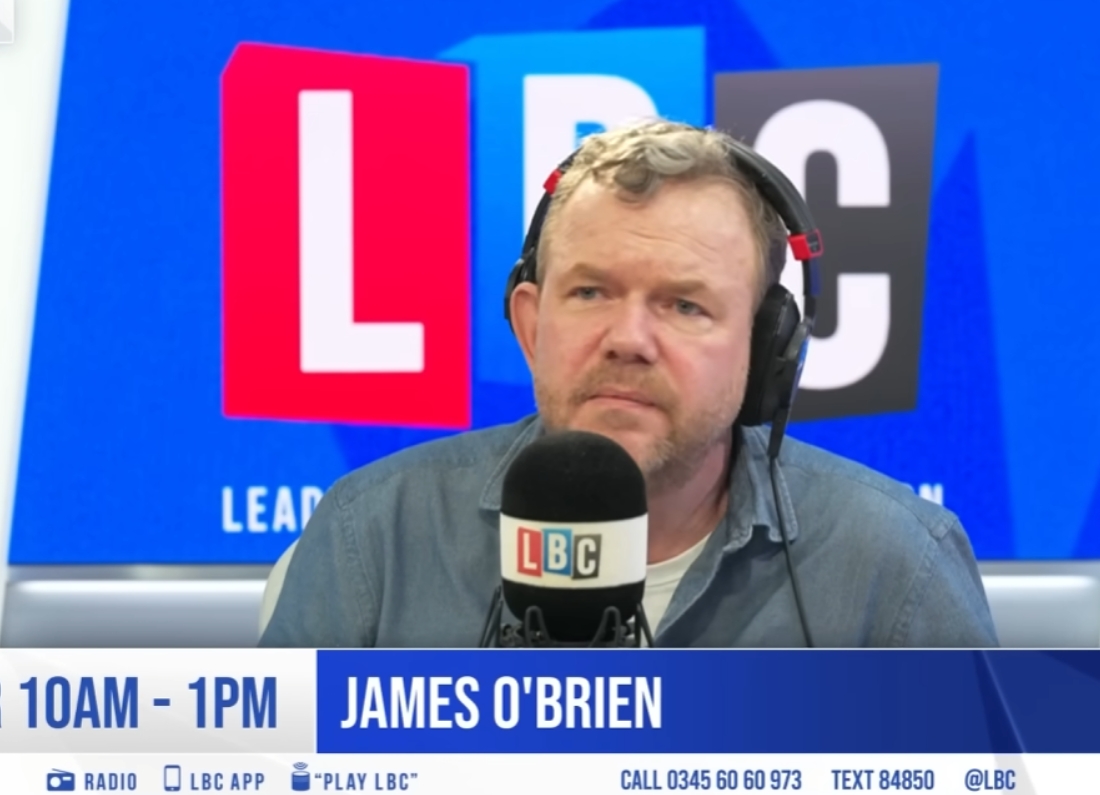
James O’Brien has condemned Nigel Farage’s response to the death of Henry Nowak on LBC, calling him a “gleeful opportunist” and accusing him of feeling “a gleeful relish at the prospect of provoking more violent responses” to the case – directly comparing his conduct to the role Farage played after the Southport murders. On Farage’s call for “pure, cold rage,” O’Brien asked: “What does that mean, if not, do what you did after the Southport killings when I was responsible for spreading deep and racist lies.”
Henry Nowak, 18, was stabbed to death in Southampton in December last year by Vickrum Digwa, 23, who has been given a life sentence with a minimum of 21 years. The case attracted significant attention over the conduct of officers at the scene, who handcuffed Nowak as he lay dying after Digwa falsely claimed he had been racially abused and acted in self-defence. Hampshire Police apologised. Henry’s father asked that his son’s death not be used to “create further hatred, division or tension.” As we reported in our Nowak and Farage piece, Farage responded with an “emergency address to the nation” calling for “pure, cold rage” and promoting “white lives matter” language.
What O’Brien said
O’Brien’s LBC response addressed both the specific language Farage used and the pattern it represents. “They feel a gleeful relish at the prospect of provoking more violent responses,” he said of Farage and those deploying similar language, directly linking the response to Nowak’s death to the dynamics that followed the Southport murders.
The Southport comparison is specific and documented. As we reported in our full Kenyon investigation, Reform’s Makerfield candidate Robert Kenyon was among the figures who spread disinformation within hours of the Southport murders, amplifying false claims about the attacker’s identity that drove the first riot before any facts about the case had been established. Kenyon used the deaths of three children as a Reform recruitment pitch within hours of the attacks. The riots that followed injured 26 police officers, destroyed homes and businesses, and were described as the worst civil unrest since 2011.
O’Brien’s question about “pure, cold rage” is therefore pointed rather than rhetorical. The phrase does not specify what the rage should produce. It does not direct it toward systemic change, police reform or the specific conduct of the officers at the scene that Henry Nowak’s family has called for a transparent inquiry into. It is, as O’Brien frames it, a mobilisation of emotion toward an unspecified outcome that the previous comparable moment – Southport – translated into riots against mosques, arson and communal violence.
The family’s question, still unanswered
O’Brien named the specific distraction that Farage’s intervention creates. “Do we let him and his hatred and his desire for violence on the streets of our country distract us from the horror of what happened to Henry?”
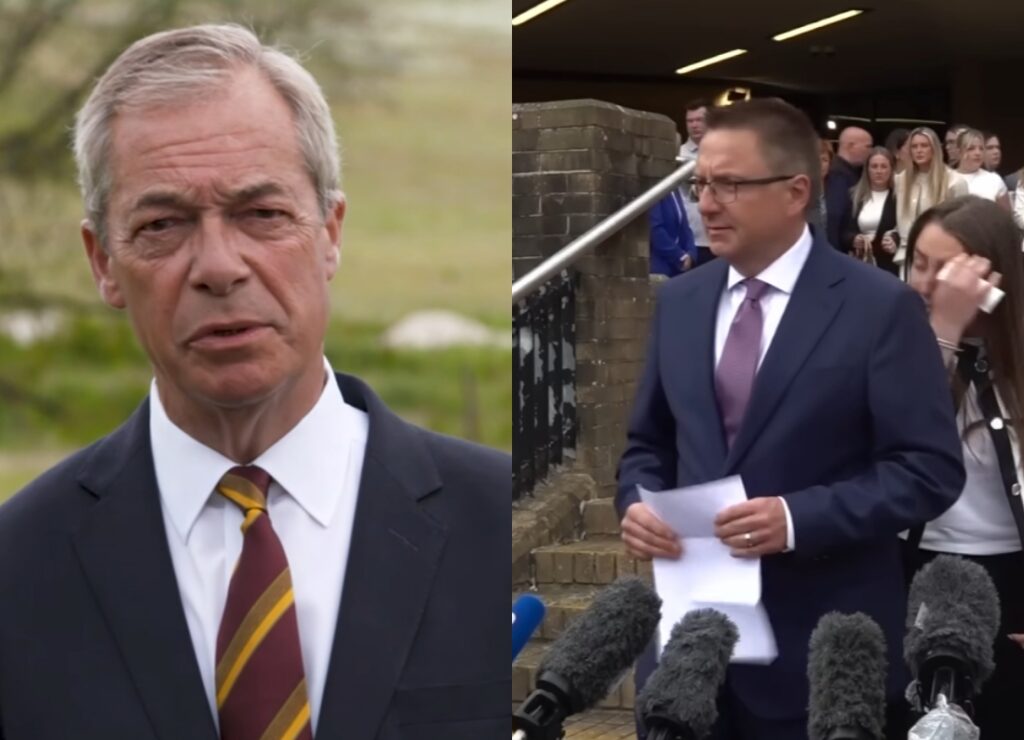
The horror of what happened to Henry Nowak is specific and documented. A teenager walked home from a night out and was stabbed. Police arrived and believed the attacker’s lie rather than the victim’s words. The dying teenager told officers he had been stabbed and couldn’t breathe, multiple times. Those words were not adequately acted on. He became unresponsive. Hampshire Police has apologised. The Police and Crime Commissioner called it a national tragedy. The family has called for a transparent investigation.
None of that requires “pure, cold rage.” It requires exactly what the family asked for: a transparent inquiry into what happened, why the police responded as they did, and what needs to change.
Farage’s intervention redirects attention from that specific question – which is about policing procedures, training and institutional response – toward a culture war narrative about “two-tier” policing and “anti-white prejudice.” The family’s specific request was for the death not to be used to create “further hatred, division or tension.” The Sikh Federation has noted that their community has been “demonised” for the actions of one individual, and has clarified that the blade used was not a Kirpan.
The pattern O’Brien is naming
O’Brien has identified a specific and consistent pattern in Farage’s public communications: the deployment of genuine tragedy as emotional fuel for political mobilisation. As we reported in our O’Brien on Blair piece, O’Brien has been willing to name conduct he finds disqualifying directly and without diplomatic softening. He called Blair “disgusting” for joining Trump’s Board of Peace. He called his essay “insane.” His characterisation of Farage as a “gleeful opportunist” is in the same register – an identification of what he believes the behaviour to actually be, rather than a measured political commentary on a contested question.
The specific word “gleeful” carries weight. It is not simply that Farage is exploiting a tragedy – exploitation can be cynical and cold. Gleeful implies something more active: that the tragedy produces, in Farage, something that looks like pleasure rather than grief. That the opportunity it presents is welcomed rather than reluctantly seized.
Whether that characterisation is fair is a judgment individual observers will make. What is not in dispute is that Farage’s response ignored the family’s explicit wishes, used the same rhetorical infrastructure that preceded the Southport riots, called for “pure, cold rage,” and has contributed to the Sikh community – which did not commit this murder and has clarified that the weapon used was not what Digwa claimed – facing what the Sikh Federation describes as demonisation.
You can watch the full LBC clip below: