

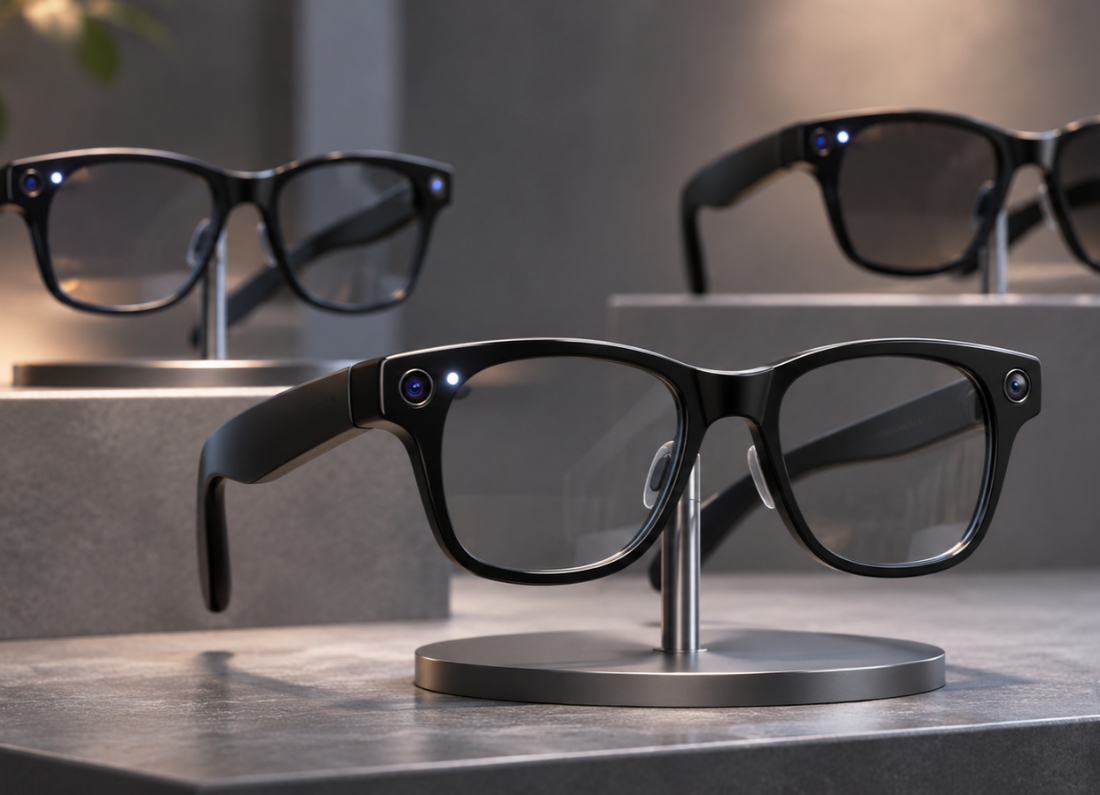
The government is considering new restrictions on smart glasses amid growing concerns that women are being secretly filmed without their knowledge, with some discovering that footage recorded during nights out has subsequently gone viral online.
Safeguarding minister Satvir Kaur confirmed that officials were examining whether camera-equipped glasses should be restricted in certain locations, as well as the possibility of limiting sales to particular users.
The announcement came during a House of Commons debate on Wednesday 4 November, where MPs from several parties raised concerns about privacy, harassment and the growing availability of wearable technology capable of recording people without them noticing.
Liberal Democrat MP Anna Sabine, who secured the debate, warned that smart glasses were being promoted partly on their ability to record discreetly, despite the obvious implications for people who have not consented to appearing in videos.
The technology, sold by companies including Meta, can contain cameras, microphones and electronic displays built directly into frames that look much like ordinary spectacles.
While the glasses have legitimate uses, particularly for people with visual impairments, ministers acknowledged that the same technology could be misused to record women and girls in situations where they might reasonably expect some privacy.
No nationwide ban has been introduced, and the government has not confirmed precisely which users or locations might be subject to new restrictions.
Women discovering videos of themselves after nights out
Sabine, the Liberal Democrat MP for Frome and East Somerset, told MPs that reports of women being filmed covertly were becoming increasingly concerning.
She described cases in which women had returned home from nights out without realising they had been recorded, only to discover videos of themselves circulating online.
Unlike a mobile phone, which is usually visible when someone holds it up to take a photograph or video, smart glasses allow recording from approximately the wearer’s eye level.
That can make it difficult for somebody nearby to distinguish between an ordinary interaction and being filmed.
Some devices include a small indicator light to show when recording is taking place, but Sabine warned that this did not provide a sufficient safeguard.
She told Parliament that services were being advertised which offered to remove the indicator, potentially making recording even harder to detect.
The concern is not simply that videos might be captured in public. It is what happens when footage is taken without a person’s knowledge, uploaded to social media and circulated among strangers.
For somebody who has been targeted, discovering the recording after it has spread can make it extremely difficult to regain control over their image.
Sabine argued that the burden should not fall on women to confront strangers wearing recording devices or discover afterwards that their privacy has been violated.
Minister confirms restrictions are under consideration
Responding to the debate, Kaur acknowledged the risks created by technology that can film people without attracting attention.
She confirmed that the government was already examining restrictions on smart glasses in particular settings and possible limits on who could purchase them.
The minister said the benefits offered by the devices needed to be balanced against the harm they could cause.
Her remarks represented a significant development from the government’s position in September, when ministers said there were no current plans to ban the sale or use of camera-equipped smart glasses.
However, Wednesday’s announcement did not amount to a commitment to ban the devices entirely.
Kaur did not identify which groups of users might face sales restrictions, explain how such restrictions could be enforced or provide a timetable for legislation.
For now, the proposals remain under consideration.
The distinction matters because there is a considerable difference between restricting recording in sensitive environments and banning a product that can also provide useful accessibility features.
Hospitals and schools could face tighter controls
Among the settings under examination are healthcare facilities and educational institutions.
Kaur confirmed that NHS England and the Department for Education were reviewing how wearable technology should be handled in certain circumstances.
Hospitals, schools and other environments involving children or vulnerable people already operate safeguarding and professional rules concerning photography and recording.
But smart glasses introduce practical difficulties because recording equipment may be less obvious than a phone or conventional camera.
A person entering a hospital ward wearing ordinary-looking spectacles could potentially have access to recording technology without patients, visitors or staff immediately recognising it.
Similarly, schools must consider the implications of devices capable of capturing images and audio without the knowledge of pupils or teachers.
The government has not announced a blanket ban covering hospitals or schools.
Instead, ministers are examining whether existing policies and safeguards remain sufficient as wearable technology becomes more common.
Some restrictions are already in place elsewhere.
For example, recording in courts and tribunals is subject to strict legal controls, meaning using smart glasses to film proceedings can already break the law.
Is secretly filming someone already illegal?
One of the central questions raised during the debate was whether existing laws provide adequate protection.
The legal position is more complicated than simply saying that filming somebody without permission is always a criminal offence.
Recording in a public place is not automatically illegal in England and Wales, even if people appearing in the footage have not expressly consented.
However, the circumstances and purpose of recording can make it unlawful.
Filming connected to harassment, stalking, voyeurism or certain forms of sexual misconduct may amount to a criminal offence.
Sharing intimate images without consent is also subject to criminal restrictions.
The government has highlighted existing laws and the responsibilities of online platforms where unlawful material is uploaded.
But MPs argued that these protections do not necessarily prevent the initial recording or stop footage spreading before a victim becomes aware of it.
Conservative MP Shivani Raja raised particular concerns about the difficulties involved in proving somebody’s intentions when recording takes place covertly.
She also questioned why victims should be left relying on reporting mechanisms and removal requests after footage has already circulated.
The broader issue is whether laws designed around more familiar forms of recording remain sufficient when cameras can be integrated into everyday clothing and accessories.
MPs question whether manufacturers are doing enough
The debate also placed pressure on companies developing and selling smart glasses.
Sabine questioned whether manufacturers were doing enough to prevent the misuse of devices whose recording functions may be difficult for other people to identify.
MPs discussed stronger recording indicators, restrictions on equipment that allows those indicators to be disabled and clearer obligations to protect users’ privacy.
Independent MP Shockat Adam argued against a complete ban but called for stronger rules governing manufacturers.
Among his proposals were visible recording indicators that could not easily be tampered with and clearer legal protections against covert sexualised filming.
There were also concerns about how footage captured by smart glasses might be processed by technology companies, including where artificial intelligence features are involved.
Sabine questioned whether people recorded without their knowledge could have their personal information processed without meaningful consent.
That concern raises separate questions under data protection law, depending on how footage is collected, stored, shared and used.
The Information Commissioner’s Office already provides guidance to organisations developing connected products, including smart glasses.
But MPs warned that the technology is developing more quickly than public understanding of the risks.
A ban could also affect people with disabilities
Despite the concerns, MPs acknowledged that smart glasses can offer substantial benefits to people with disabilities.
Some devices can describe surroundings, read printed text aloud and provide assistance to people with limited vision.
For blind and partially sighted users, these features can make everyday activities easier and help people navigate unfamiliar places.
Kaur acknowledged those benefits during her response, while other MPs cautioned against imposing restrictions that would unnecessarily disadvantage people using the technology for accessibility.
The Royal National Institute of Blind People was referenced during the debate, with MPs emphasising that disabled users should not be treated as responsible for the behaviour of people misusing recording equipment.
A blanket prohibition could therefore create consequences far beyond the activities ministers are attempting to address.
That is one reason the discussion has focused on targeted restrictions and stronger safeguards rather than simply removing smart glasses from sale.
Reform politician’s use of smart glasses also raised questions
The debate follows earlier controversy involving a Reform UK politician who used smart glasses during proceedings in the Welsh Parliament.
Jason O’Connell, a Reform member of the Senedd representing Pontypridd Cynon Merthyr, was reported to have used a built-in teleprompter while delivering a speech.
He defended the practice, explaining that he wanted to spend less time looking down at written notes.
His use of the device was not itself evidence of secret filming.
Nevertheless, the episode prompted further discussion about whether politicians should be permitted to wear technology capable of recording or displaying information during parliamentary proceedings.
Concerns have also been raised about smart glasses on the Westminster parliamentary estate, where MPs and parliamentary staff regularly discuss sensitive political and personal matters.
Kaur confirmed that appropriate next steps were being considered, although decisions about parliamentary rules may also fall to the relevant parliamentary authorities.
What happens next?
The government’s announcement leaves several major questions unanswered.
Ministers have confirmed that restrictions are being examined, but have not published draft legislation, identified which groups might face sales restrictions or said when any new rules could take effect.
NHS England and the Department for Education are reviewing the use of wearable technology in particular settings, while existing criminal and data protection laws continue to apply.
Sabine has made clear that the Liberal Democrats are not demanding an outright ban on smart glasses.
Instead, she wants action before widespread adoption makes covert recording more difficult to prevent.
The debate has also established that there is cross-party concern about how the technology could be misused, particularly against women and girls.
For now, smart glasses remain legal to buy and use in Britain, subject to existing restrictions on recording and other applicable laws.
The next significant development will be whether the government moves beyond examining the options and publishes specific proposals covering where the devices may be used, who may buy them and what safeguards manufacturers must provide.








Leave a Reply