

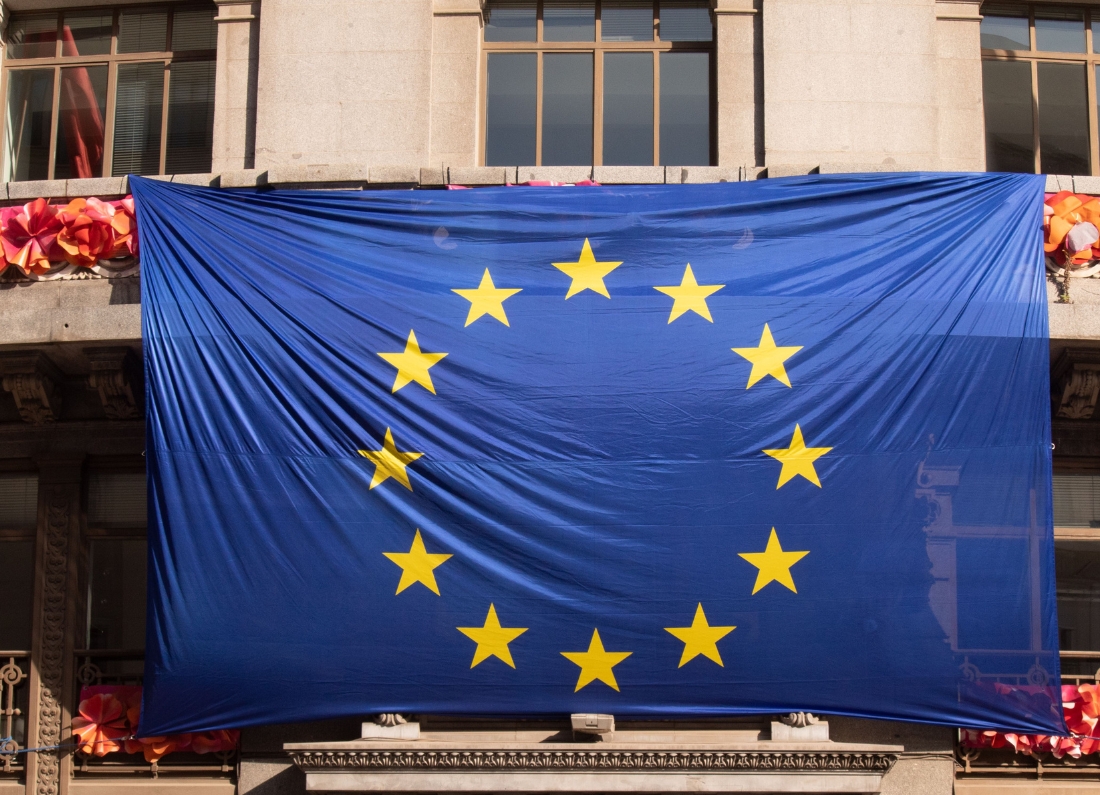
Britain could move much closer to the European Union within months under a new “Switzerland plus” arrangement, according to one of the European Parliament’s most senior trade figures.
Bernd Lange, the German MEP who chairs the Parliament’s International Trade Committee and played a prominent role in the Brexit negotiations, said the EU’s “doors are open” if Britain decides it wants a substantially deeper relationship with Brussels.
Speaking in London, Lange suggested that the most realistic next step could be a bespoke agreement modelled partly on Switzerland’s relationship with the EU, but going further in areas such as security, digital policy and strategic cooperation.
He said:
“At the moment, my feeling is Switzerland plus.”
Lange suggested the arrangement could combine much greater economic integration with closer political cooperation, potentially covering trade, security, critical raw materials and digital policy.
He added:
“Of course, the last step to come back is not forbidden. But that’s in your hands.”
Lange believes a Switzerland-style deal could potentially be negotiated within months once Britain had made the political decision to pursue one.
That would be dramatically faster than the process required for formal EU membership and could offer Andy Burnham’s government a route towards restoring significant parts of Britain’s pre-Brexit economic relationship without immediately attempting to rejoin the bloc.
What would ‘Switzerland plus’ actually mean?
There is no formal EU policy called “Switzerland plus”, and Lange was discussing a possible model rather than unveiling an agreed Brussels negotiating position.
The phrase refers to building a UK-EU relationship around the kind of bilateral agreements Switzerland already has with the bloc.
Switzerland is not an EU member and does not have a vote over EU laws, but it has negotiated extensive access to parts of the single market through a network of more than 100 agreements.
Those arrangements cover areas including trade, transport, research, education and the free movement of people.
Switzerland also makes financial contributions linked to its participation in European programmes and its access to parts of the internal market.
Lange’s proposed “plus” element would appear to involve Britain going beyond that traditional Swiss arrangement by adding much deeper cooperation on foreign policy, security, digital technology and strategic materials.
It could therefore represent a middle ground between Britain’s current Brexit deal and full EU membership.
Single-market access would come with conditions
The obvious attraction for Britain would be reducing some of the trade barriers created by Brexit.
UK companies currently face additional customs paperwork, regulatory checks and restrictions when trading with the EU, despite the bloc remaining Britain’s largest trading partner.
A deeper Swiss-style agreement could potentially remove or significantly reduce barriers in selected sectors.
But Britain would not get those advantages for free.
Switzerland accepts free movement of people as part of its relationship with the EU and aligns with European rules in sectors where it receives market access.
It also contributes financially to European cohesion programmes.
Any British version would therefore force Burnham to confront many of the same trade-offs that dominated the original Brexit debate: whether greater access to the European economy is worth accepting EU regulations, financial contributions and some form of freedom of movement.
Britain would also remain outside formal EU decision-making.
That means the UK could once again find itself following significant European rules without having ministers in the Council or MEPs in the European Parliament helping to write them.
Lange says the deal could be done quickly
Perhaps the most striking part of Lange’s intervention was his suggested timetable.
Formal EU accession would require Britain to apply under Article 49 of the Treaty on European Union, negotiate dozens of policy areas and secure unanimous support from existing member states.
A bespoke bilateral agreement could theoretically move much faster.
Lange told his London audience that a “Switzerland plus” agreement could potentially be negotiated within months after a political decision had been made.
That is not a promise from the European Commission or member states, and no formal negotiations on such an arrangement have begun.
But Lange’s position matters because of his role.
He chairs the European Parliament committee responsible for international trade and played an important part in scrutinising the post-Brexit Trade and Cooperation Agreement.
He is also meeting UK trade minister Anas Sarwar and Labour MPs including Stella Creasy and Liam Byrne during his visit to discuss how Britain and the EU could move closer together.
‘I would love to see the UK back’
Lange made little secret of his own preferred destination.
“I would love to see the UK back.”
He nevertheless acknowledged that full membership remained a decision for Britain and suggested closer economic integration could come first.
That fits a wider change in tone among European political leaders since Burnham replaced Keir Starmer.
Burnham has said Brexit has caused “more harm than good” and has explicitly reopened discussion about Britain’s long-term relationship with the EU.
He has listed several possible future arrangements, ranging from improving the existing deal to a customs union, closer single-market integration and potentially full membership.
He has repeatedly stressed that the public would ultimately have to approve any major change.
Speaking in Parliament this week, Burnham said:
“Sticking with the current status quo is not good enough for Britain.”
He argued that Britain needed to reconsider its relationship with Europe if it was serious about economic growth, immigration management, security and Britain’s values abroad.
Business pressure for a closer relationship is growing
Lange’s intervention comes as businesses are becoming increasingly vocal about the economic cost of the current arrangement.
British Chambers of Commerce director general Shevaun Haviland said this week that repairing the economic damage caused by Brexit should be one of Burnham’s highest priorities.
More than half of businesses surveyed by the BCC said the existing UK-EU trade deal had not benefited them.
The Office for Budget Responsibility continues to assume that the current post-Brexit trading relationship will leave UK productivity around 4 per cent lower in the long run than if Britain had remained inside the EU.
Separate analysis published this week by Goldman Sachs estimated that much deeper integration with Europe could produce very substantial economic gains, with single-market participation potentially increasing the long-term size of the economy by several percentage points.
The debate is therefore increasingly shifting away from whether Brexit created new trade barriers and towards how much of the old economic relationship Britain wants to rebuild.
Food exports show scale of the problem
Fresh figures released this week illustrate why pressure is growing.
British food and drink exports to the EU have fallen by more than a third since Brexit, according to analysis of trade figures by the National Farmers’ Union.
Some sectors have suffered far larger declines.
Egg and egg-product exports were down around 65 per cent in early 2026 compared with pre-Brexit levels, while poultry exports were down 53 per cent and sugar exports around 70 per cent.
The EU still accounted for roughly 68 per cent of UK food and drink exports in 2025, making barriers with Europe particularly costly for farmers and food manufacturers.
The government has already begun trying to reduce some of those obstacles through a new sanitary and phytosanitary agreement with Brussels, but businesses are pushing for broader change.
France has already softened its position on UK industry
There are also signs of movement elsewhere in Europe.
France this week dropped its opposition to Britain being included in parts of the EU’s proposed “Made in Europe” industrial programme.
France and Germany now support allowing British carmakers to benefit from the scheme if the UK agrees to align with European trade-defence measures, including policies dealing with heavily subsidised Chinese electric vehicles.
That development was important because France had previously been one of the strongest advocates of excluding non-EU countries from preferential industrial treatment.
The shift suggests European governments may be increasingly willing to find bespoke ways to bring Britain back inside parts of the European economic system where doing so also benefits EU companies.
A route towards membership without immediately rejoining
A “Switzerland plus” model would not amount to reversing Brexit.
Britain would remain outside the EU, outside its institutions and without formal voting rights over the laws governing the single market.
But economically it could represent a substantial reversal of the distance created since 2020.
For Burnham, that may make it politically attractive.
It would allow the government to demonstrate tangible economic benefits from closer European integration without immediately asking voters to support full membership.
It could also become a transitional arrangement if public opinion eventually moved decisively in favour of rejoining.
A report from Best for Britain published this week argued that the UK could potentially complete full EU accession within a single parliamentary term because Britain remains unusually closely aligned with European law and institutions compared with a conventional applicant country.
Others have warned that rejoining would be significantly more complicated, particularly because Britain could not assume its old opt-outs on issues such as the euro, Schengen and budget contributions would automatically be restored.
November summit now looks increasingly important
The next major milestone will be the UK-EU summit scheduled for 20 November.
Burnham is expected to use the meeting to pursue practical agreements on trade, energy, food standards, industrial policy and security while beginning a much wider discussion about Britain’s future relationship with the bloc.
Lange’s intervention means that discussion now has another possible destination.
Instead of choosing immediately between the existing Brexit settlement and full EU membership, Britain could attempt to build a relationship resembling Switzerland’s, with much deeper economic integration but without formal membership.
Whether Burnham would accept the regulatory alignment, financial contributions and free-movement obligations likely to accompany such a deal remains unresolved.
But the message coming from one of Brussels’ most senior trade politicians could hardly be clearer.
If Britain wants to move closer again, the EU is willing to talk.
One response to “Senior EU figure says Britain could move rapidly towards single market with ‘Switzerland plus’ deal”
-
Excellent. Burnham must of course drop Labour’s risible red lines. So yes, let’s prove the economics in real time then move to full rejoin.






Leave a Reply