

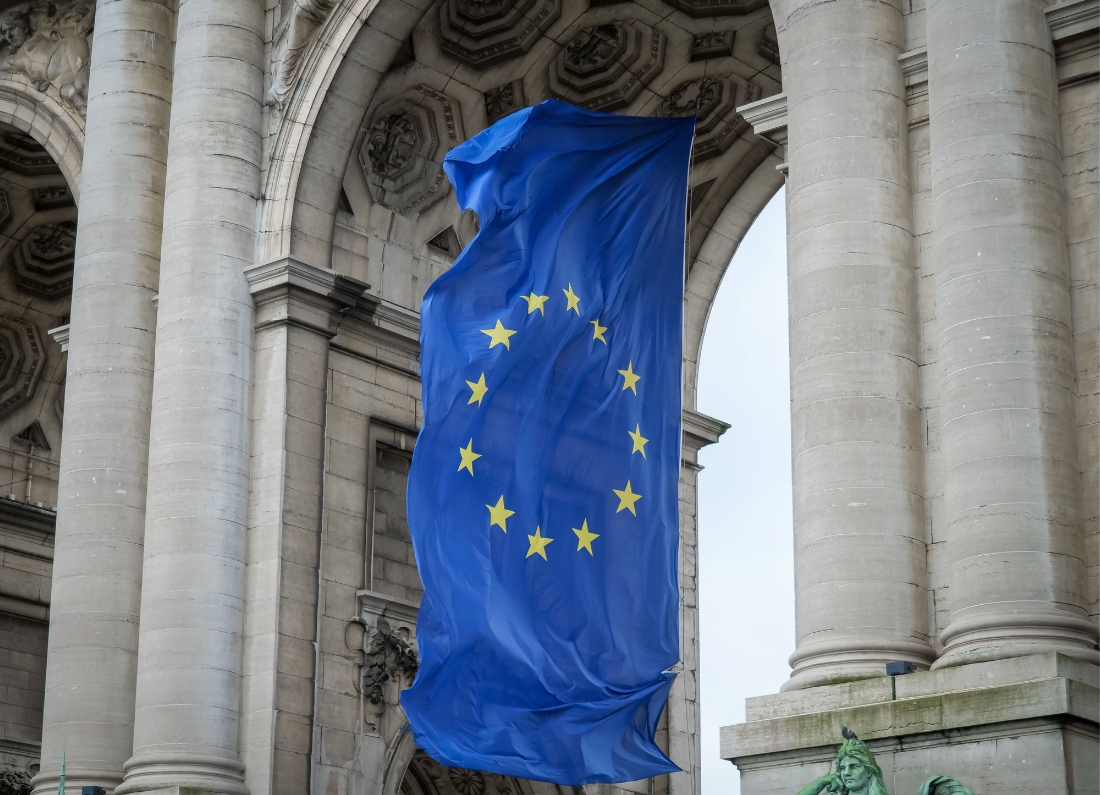
Britain could gain as much as £150 billion from rebuilding its economic relationship with the European Union, according to new analysis from Goldman Sachs that lands just as Andy Burnham prepares for his first major UK-EU summit as prime minister.
Economists at the Wall Street bank estimate that rejoining the European single market could eventually make the UK economy between 2 per cent and 5 per cent larger than under the current post-Brexit trading arrangements.
That would be equivalent to an economic boost of roughly £61 billion to £152 billion by the beginning of the next decade.
Goldman Sachs said there was a “significant economic upside from ‘Breturn’”, its term for Britain moving substantially closer to the EU after a decade dominated by Brexit.
The analysis gives fresh ammunition to Burnham after he used Labour conference to declare that Brexit had caused “more harm than good” and subsequently confirmed that the government would consider everything from a closer trading relationship to potentially rejoining the EU itself.
Goldman’s economists cautioned that there would be no instant windfall. Any substantial change would require negotiations with Brussels, political compromises and time before the economic benefits appeared.
But their conclusion was clear:
“The economic upside from closer UK-EU relations could be large, supporting our constructive view on the UK’s longer-run growth prospects.”
Single market membership could deliver much bigger gains
The size of the potential economic boost depends heavily on how far Britain goes.
A limited improvement to the existing Trade and Cooperation Agreement would produce relatively modest gains because most of the barriers created by leaving the single market and customs union would remain.
A customs union would remove some additional friction in goods trade and could provide a larger benefit.
But Goldman Sachs sees much greater economic potential in restoring single-market membership, which would reduce barriers affecting goods and services, investment and the movement of labour.
Reported estimates suggest that a customs union could increase GDP by around 1 per cent compared with the current settlement, while joining the single market could ultimately provide a boost of as much as 5 per cent.
Full EU membership could potentially go further still, with Goldman estimating a long-term economic gain of around 6 per cent compared with remaining under the current Brexit deal.
Those scenarios are not predictions that GDP would suddenly jump by that amount on the day Britain changed its relationship with Brussels.
They estimate how much larger the economy could eventually become compared with what would otherwise happen under the existing arrangements.
Up to £152bn by the start of the next decade
Putting the percentage figures into cash terms makes the scale easier to understand.
The London Economic reports that Goldman’s estimate for returning to the single market translates into an economic gain of around £61 billion at the lower end and £152 billion at the upper end by the beginning of the 2030s.
That does not mean the Treasury would suddenly receive £152 billion to spend.
It refers to the potential increase in the overall size of the economy, which could then feed through into higher household incomes, company profits, investment and tax receipts.
The calculation also depends on assumptions about productivity, trade and how businesses respond to lower barriers with Britain’s largest trading partner.
The EU remains easily the UK’s biggest trading relationship. Around 41 per cent of UK exports and more than half of imports are linked to the bloc, meaning relatively small changes in trading costs can have large effects across the economy.
Goldman says Brexit has already left Britain about 6% poorer
Goldman Sachs also estimates that Britain’s economy is around 6 per cent smaller than it might have been had the country remained in the EU.
Counterfactual estimates like that inevitably involve uncertainty because there is no alternative version of Britain that remained inside the bloc against which economists can directly compare the real economy.
Researchers instead compare the UK’s performance with similar economies and examine changes in investment, trade, productivity and other indicators since the referendum.
Goldman is not alone in concluding that Brexit has imposed a significant economic cost.
The Office for Budget Responsibility still assumes that the post-Brexit Trade and Cooperation Agreement will leave UK productivity around 4 per cent lower in the long run than it would have been if Britain had remained an EU member.
It also assumes that UK imports and exports will ultimately be around 15 per cent lower than they would otherwise have been.
Those assumptions were reviewed again this year and remain part of the official economic forecasts used by the government.
The House of Commons Business and Trade Committee noted in June that estimates of Brexit’s impact remain contested, but said the OBR’s 4 per cent figure remains one of the central official assessments of the economic consequences.
Burnham has reopened a debate Westminster spent years avoiding
The Goldman analysis arrives at a particularly important moment because the political debate around Brexit has changed dramatically since Burnham entered Downing Street.
Keir Starmer had repeatedly ruled out returning to the single market, customs union or freedom of movement and focused instead on improving the existing Brexit agreement.
Burnham has gone considerably further.
Speaking at Labour conference, he said Brexit had done “more harm than good” and argued that Britain needed an honest discussion about the long-term relationship it wanted with Europe.
He subsequently told Parliament that maintaining the existing settlement was not in the country’s economic or social interests.
The prime minister has listed several possible destinations for that debate, ranging from an improved trade agreement through a customs union and single-market membership to eventually “going all the way” and rejoining the EU.
He has not committed the government to any of those outcomes.
For now, his immediate focus is the UK-EU summit on 20 November.
What Burnham wants from Brussels next month
The government is seeking agreements that could begin reducing some of the economic barriers created by Brexit without immediately reopening the question of full membership.
Among the priorities are closer alignment on food and agricultural standards, linking the UK and EU carbon trading systems, improving electricity trading and expanding opportunities for young people to live and work temporarily across Europe.
Burnham told MPs that deeper cooperation with the EU was an “immediate priority”.
The government also faces increasing pressure from within Labour to move faster.
Former trade minister Douglas Alexander said this week that deeper economic integration with Europe represented a much bigger prize for Britain than many of the standalone trade agreements negotiated since Brexit.
UK trade with the EU remains almost twice the value of its trade with the United States, while new agreements with countries including Australia, India and members of the CPTPP are forecast to provide considerably smaller additions to national income.
Rejoining would come with political trade-offs
Goldman Sachs was careful to point out that the economic calculation is only one part of the question.
Returning to the single market would almost certainly require Britain to accept rules it currently sets independently, contribute financially to European programmes and accept some version of free movement.
Full EU membership would require an even larger political negotiation.
Britain would have to apply under Article 49 of the Treaty on European Union and secure the unanimous agreement of all existing member states.
Its previous opt-outs could not simply be assumed to return, meaning questions around the budget, the euro, Schengen and other areas would have to be negotiated.
That is why a projected economic gain of several percentage points cannot by itself settle the argument.
Supporters of Brexit would argue that the referendum was about sovereignty and political control as well as GDP, and that some economic costs were an acceptable price for leaving EU institutions.
Supporters of closer integration argue that sovereignty outside the single market has come with unnecessarily high economic costs, particularly because Britain remains heavily dependent on European trade regardless of its formal membership.
Public opinion has moved substantially since 2016
The political environment is also very different from the one in which politicians spent years treating EU membership as a closed question.
Recent YouGov polling found that 52 per cent of Britons would now vote to rejoin the EU, compared with 27 per cent who would vote to remain outside.
That does not mean voters are ready to accept every condition that might accompany membership.
The same polling found that 64 per cent believe another referendum should take place before Britain actually rejoins, including a majority of those who themselves favour returning.
Burnham has said any major long-term change in Britain’s relationship with Europe would require public consent.
European governments have meanwhile become increasingly open about Britain eventually returning.
French president Emmanuel Macron responded “Welcome back” when asked about Burnham putting EU membership back on the table, while Spanish prime minister Pedro Sánchez has also publicly welcomed the possibility.
A recent report from Best for Britain argued that the UK could potentially complete the accession process within a single parliamentary term because British institutions and regulations remain much closer to EU standards than those of a typical applicant country.
Others, including former national security adviser Lord Peter Ricketts, have cautioned that Britain’s size and the political sensitivity surrounding its return could make negotiations considerably more complicated.
Goldman Sachs cannot answer those political questions.
What its new analysis does is attach a potentially enormous economic price tag to the choice now facing Britain: modest improvements to the current Brexit agreement, a much deeper return to the European economic system, or eventually full membership again.








Leave a Reply