

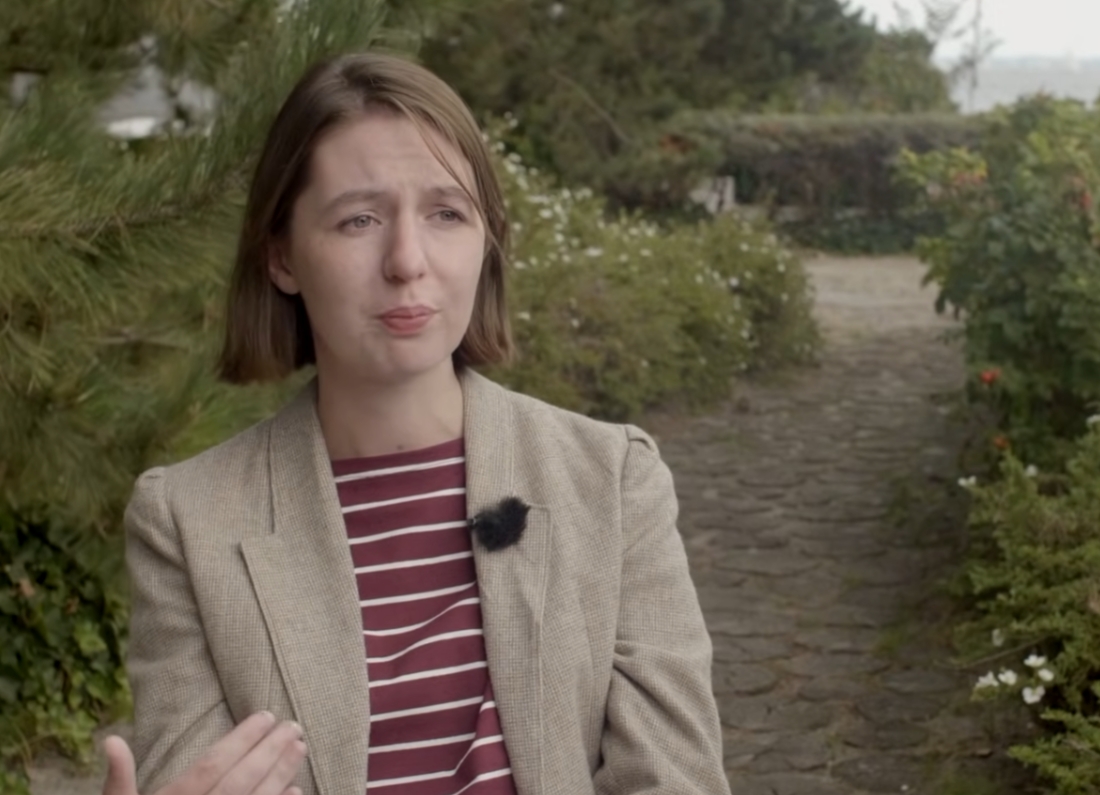
Sally Rooney says she can no longer sell her books in the UK after legal advice warned that receiving royalties could expose her to criminal liability because of her public support for the proscribed group Palestine Action.
The bestselling Irish novelist, whose books include Normal People, Conversations with Friends and Intermezzo, has agreed with her publisher Faber that it will stop supplying new copies of her work in Britain.
Rooney says the problem arises because she has publicly stated that she supports Palestine Action, which was proscribed by the UK government in July 2025 under terrorism legislation.
Support for a proscribed organisation can amount to a criminal offence in Britain, and Rooney says her lawyers have advised that income generated from UK publication could potentially create legal problems if she continues to support the group financially or politically.
She said:
“As a result, the fulfilment of contracts to publish my work in the UK could now constitute a serious criminal offence.
“After a process of consultation and deliberation, and with my full agreement, my publisher Faber has therefore determined that it can no longer supply my work within the UK.”
Rooney added:
“I have made every effort to be honest with the public about my beliefs and intentions, and I am wholly prepared to accept the consequences.”
Faber has stopped supplying new copies in Britain
The decision does not mean Rooney’s books have suddenly disappeared from every British bookshop.
Copies already held by retailers can still be sold, but Faber will no longer supply new stock in the UK while the legal position remains unresolved.
That creates the extraordinary situation in which one of the most internationally successful Irish novelists of her generation can continue publishing and receiving income from her work elsewhere, but not in Britain.
The Guardian reports that Rooney has also been advised that accepting payments connected to BBC television adaptations of her work could create similar legal problems under current anti-terror legislation.
Her novels Normal People and Conversations with Friends have both been adapted into major BBC television series.
Why Palestine Action was banned
Palestine Action was proscribed in July 2025 after a series of direct-action protests targeting companies and facilities connected to Israel’s arms industry.
The government argued that some of the group’s activities crossed the threshold into terrorism and said proscription was necessary to protect national security and property.
The ban made membership of the organisation, inviting support for it and displaying material in circumstances where it could reasonably be taken as support potentially criminal offences.
The maximum sentence for some proscription-related offences is 14 years in prison.
The decision immediately triggered a major civil-liberties row because Palestine Action had previously operated openly as a direct-action protest group and had attracted support from writers, artists, academics and campaigners.
Rooney was among those who continued publicly supporting the group after the ban.
Thousands have been arrested
The consequences of the proscription have been unusually broad.
According to figures reported by The Guardian, more than 3,700 people have been arrested in connection with protests supporting Palestine Action since the ban came into force, with around 2,500 charged but not yet tried.
Many of those arrests have involved people displaying signs or making statements in support of the group rather than participating in violent activity.
That has prompted criticism from civil-liberties organisations, including Amnesty International UK, which has warned that the use of terrorism legislation against peaceful expression risks creating a serious chilling effect on protest and free speech.
The government maintains that the law is clear and that police are enforcing legislation passed to deal with support for a proscribed organisation.
Rooney has never hidden her position
Rooney has been one of the most prominent cultural figures to speak publicly in support of Palestine.
She has backed the Boycott, Divestment and Sanctions movement and previously refused an offer to publish one of her novels with an Israeli publisher she said did not meet BDS guidelines.
Earlier this year, she agreed to publish a Hebrew translation of Intermezzo through November Books, a publisher she regarded as compliant with the Palestinian-led boycott campaign.
She has repeatedly argued that opposition to Israeli government policy and support for Palestinian rights should form part of an international cultural boycott.
Her support for Palestine Action therefore did not emerge after the organisation was proscribed. It forms part of a much longer record of public activism on Palestine.
The ban itself is still being challenged
Palestine Action’s proscription remains the subject of ongoing litigation.
In June, the Court of Appeal ruled that the Home Secretary had been entitled to proscribe the group and that a fair balance had been struck between freedom of expression and association on one hand, and national security on the other.
However, the Supreme Court later granted permission for a further appeal on a narrower question: whether the Home Secretary followed her own published policy when making the decision.
That hearing is scheduled for 4 and 5 November.
The outcome could have significant consequences for the thousands of criminal cases and other legal disputes that have followed the ban.
It could also affect Rooney’s position if the proscription were ultimately overturned or reconsidered.
Free-speech concerns are growing
Rooney’s case is likely to intensify criticism of how broadly proscription law can operate.
The issue is no longer only whether activists can hold demonstrations or display placards supporting Palestine Action.
It now reaches into publishing, television rights and artistic income.
Amnesty International UK has said the case demonstrates how anti-terror laws can affect legitimate expression far beyond the immediate actions that led to an organisation being banned.
Supporters of the proscription argue that once a group has been legally designated as a terrorist organisation, prominent public figures cannot expect to be treated differently from anyone else simply because their support is expressed through art or political campaigning.
Critics respond that the law is now producing consequences that go far beyond preventing violence, including effectively stopping an author from receiving income from her own books in Britain.
Books already on shelves can still be bought
Readers will still be able to buy Rooney’s books in Britain for the time being where shops already hold stock.
The immediate change is that Faber will no longer supply new copies into the UK market.
That means availability is likely to become increasingly limited as existing stock sells through unless the legal position changes.
Booksellers quoted by The Guardian expressed concern about the situation and some said they supported Rooney’s stance.
The novelist herself appears prepared for the consequences.
She says she has been open about her beliefs throughout and does not intend to distance herself from Palestine Action simply to preserve her UK publishing income.
For now, that means the author of some of the biggest-selling literary novels of the past decade is effectively unable to receive money from new British sales of her own work.


Leave a Reply