


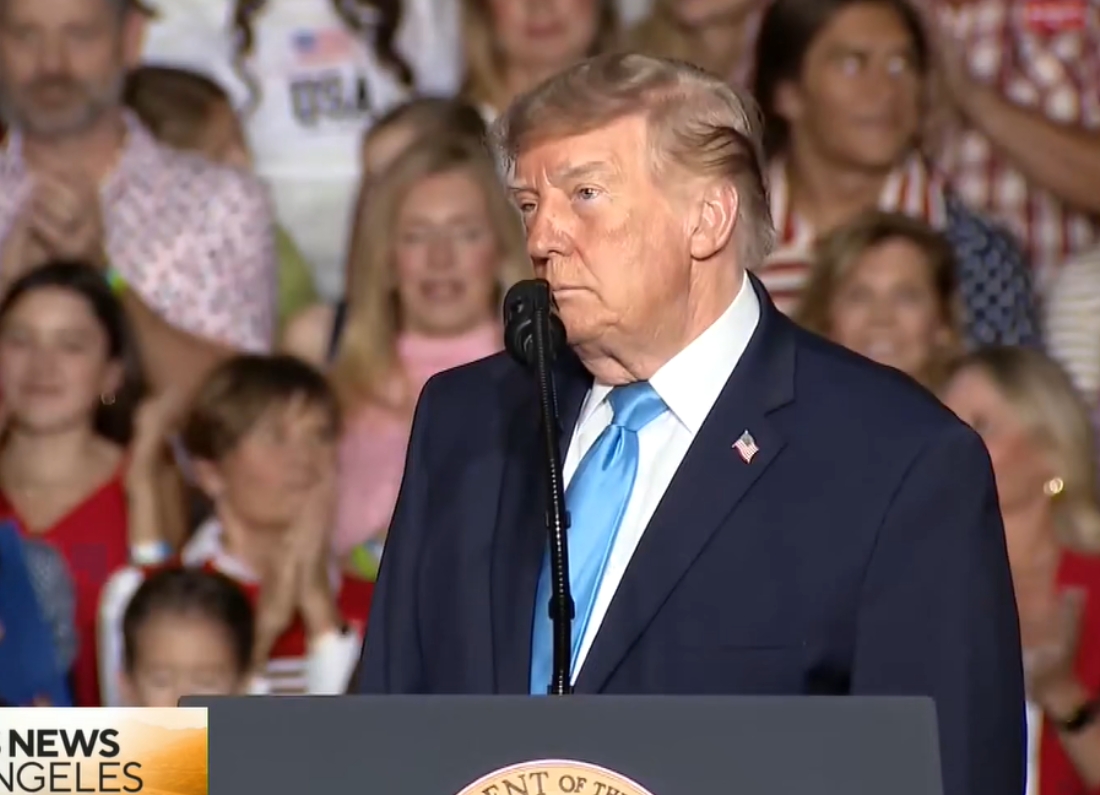
Donald Trump has delivered a stark warning to allies and critics alike, insisting that only his personal judgement restrains the use of American military power, as concerns mount over a sharp escalation in US foreign policy.
The US president’s comments come after a turbulent week in which Washington launched military strikes against Venezuela, seized its president Nicolás Maduro, and renewed threats against a string of countries including Colombia, Cuba, Mexico, Iran and Greenland.
While European leaders have so far avoided directly accusing the US of breaching international law, alarm is growing over Trump’s apparent willingness to discard long-standing diplomatic norms – particularly when it comes to Nato allies.
🌍 A week that rattled allies
The international fallout began when the US confirmed military action against Venezuela and the capture of President Nicolás Maduro, an unprecedented move that stunned governments across Europe and Latin America.
Trump subsequently suggested that Washington would take control of Venezuelan oil assets, fuelling fears that the intervention could encourage similar actions by rival powers elsewhere in the world.
At the same time, the White House revived aggressive rhetoric towards Greenland, a semi-autonomous territory within the Kingdom of Denmark. European governments have repeatedly warned that any attempt to seize the Arctic island would cross a red line and threaten the foundations of Nato itself.
🗣️ ‘Only my own morality’
In a wide-ranging interview with the New York Times, Trump was asked what, if anything, constrained his use of military force.
“Yeah, there is one thing,” he replied. “My own morality. My own mind. It’s the only thing that can stop me.”

He dismissed international law as a binding force, adding: “I don’t need international law. I’m not looking to hurt people.”
Pressed on whether the US must still comply with global legal frameworks, Trump responded: “It depends what your definition of international law is.”
The comments have intensified fears that Washington is increasingly willing to interpret global rules unilaterally – or ignore them entirely.
🧊 Greenland and the Nato dilemma
Greenland has emerged as a focal point of the crisis. Trump openly questioned whether maintaining Nato unity should take precedence over US ambitions in the Arctic.
Asked which mattered more, Nato or Greenland, he declined to choose, saying: “It may be a choice.”
He also rejected the idea that existing treaties were sufficient, despite a 1951 agreement allowing the US to operate military bases on the island.
“Ownership is very important,” Trump said. “Ownership gives you things and elements that you can’t get from just signing a document.”
The strategic value of Greenland – positioned between Europe and North America and rich in critical minerals – has long attracted US interest. But European leaders fear that any attempt to annex the territory would shatter the post-war security order.
🇪🇺 Europe pushes back – cautiously
In response, Keir Starmer and several European leaders signed a joint statement reaffirming that Greenland’s future can only be decided by Greenland and Denmark.
The UK prime minister also raised the issue in private calls with Trump, although Downing Street has given no indication that progress was made.
Despite growing unease, European governments have largely stopped short of taking concrete action. Analysts say this reluctance reflects fears of provoking retaliation from Washington, as well as uncertainty over how to counter US power effectively.
⚖️ Law, power and selective enforcement
Foreign policy experts warn that Trump’s posture risks accelerating the erosion of the rules-based international order.
Keir Giles, an associate fellow of the Russia and Eurasia Programme, said the US has long been seen as the main enforcer of international law – allowing it to pick and choose which principles to uphold.
“If nobody is willing to challenge the United States,” he warned, “then effectively nobody is going to stop it.”
Giles added that Europe must move beyond a strategy of accommodation, arguing that quietly pandering to Washington is failing to moderate Trump’s approach.
🇷🇺 Russia watching closely
There are growing concerns that Trump’s actions are emboldening Moscow.
On Thursday, Russia launched a long-range ballistic missile strike on western Ukraine, targeting Lviv. Ukrainian humanitarian groups say the escalation reflects a perception of weakening Western unity.
Yuriy Boyechko, CEO of Hope for Ukraine, said: “Putin has been emboldened by president Trump’s recent aggressive posturing, including his dismissal of Nato’s traditional role and renewed threats to use military force to acquire Greenland.”
He warned that signalling uncertainty over Nato commitments risks creating a vacuum that Russia is eager to exploit.
🔮 What happens next?
European commentators are increasingly calling for a tougher stance. Some have suggested economic pressure, restrictions on US technology exports, or coordinated diplomatic action could force Washington to reconsider.
Others warn that hesitation now could have long-term consequences, not just for Greenland but for global stability.
As Trump continues to test the limits of US power, allies face a stark choice: challenge a shifting world order – or adapt to one increasingly shaped by a single leader’s personal judgement.



Leave a Reply