


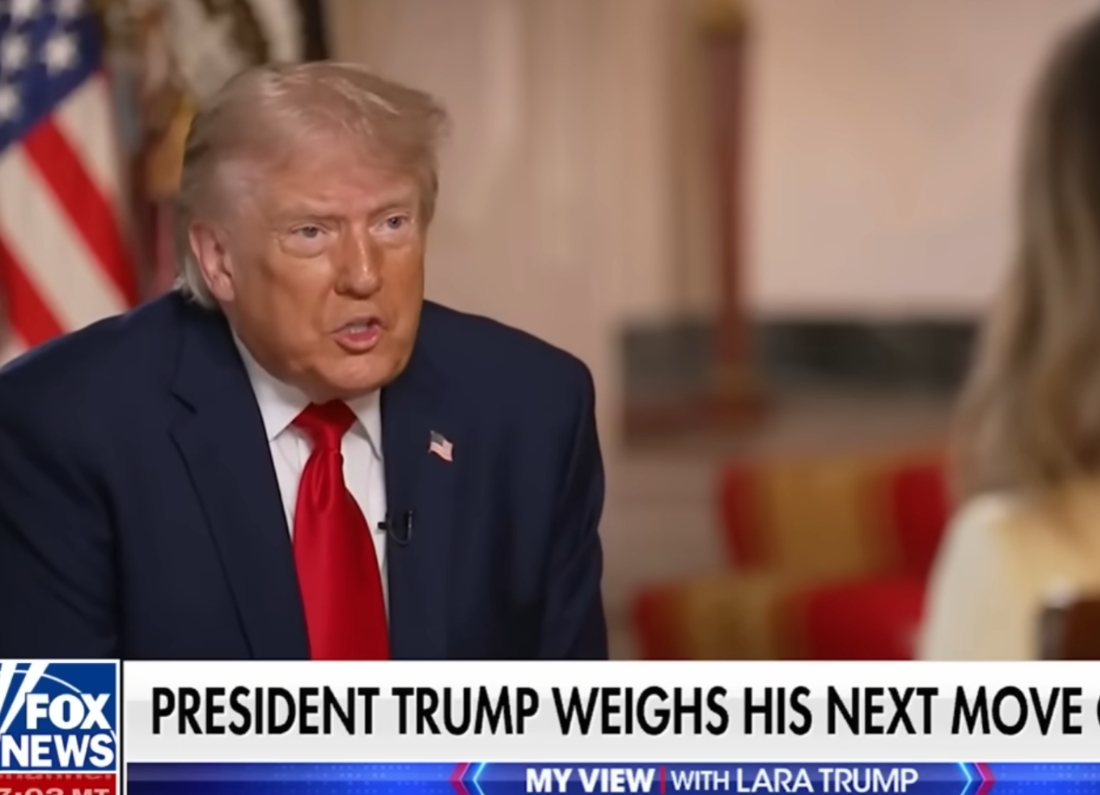
Donald Trump has launched an extraordinary personal attack on Pope Leo XIV – the first American pope in history – calling the leader of 1.4 billion Catholics “weak on crime”, “terrible for foreign policy” and “a very liberal person”, in comments that represent one of the sharpest public confrontations between a US president and the Catholic Church in living memory.
Flying back to Washington from Florida on Sunday, Trump used a lengthy Truth Social post to sharply criticise Leo, then kept it up after deplaning in comments to reporters on the tarmac. “Pope Leo is WEAK on Crime, and terrible for Foreign Policy,” the president wrote. He also claimed he did not “want a Pope who thinks it’s OK for Iran to have a Nuclear Weapon.”
Speaking to reporters, he added: “We don’t like a pope who says it’s OK to have a nuclear weapon. He’s a very liberal person. I’m not a fan of Pope Leo.”
What prompted the attack
Trump’s comments came after Leo suggested over the weekend that a “delusion of omnipotence” was fuelling the US-Israel war in Iran and demanded political leaders stop and negotiate peace. Leo presided over an evening prayer vigil in St Peter’s Basilica on the same day the United States and Iran began face-to-face negotiations in Pakistan during a fragile ceasefire.
The Pope did not mention the United States or Trump by name. But his message was unmistakeable. The pontiff said it was “truly unacceptable” for Trump to have threatened that he would destroy “an entire civilisation” in Iran. Leo used his Easter message to call for peace: “Let those who have weapons lay them down! Let those who have the power to unleash wars choose peace! Not a peace imposed by force, but through dialogue!”
Leo has also previously said that God “does not listen to the prayers of those who wage war, but rejects them,” and referenced an Old Testament passage from Isaiah: “Even though you make many prayers, I will not listen – your hands are full of blood.”
The full scope of Trump’s attack
The post went far beyond the Iran war. Trump also said he did not want a Pope who criticised the administration’s attacks on Venezuela – a reference to the ousting of President Nicolás Maduro in January. He criticised the Catholic Church’s stance during the COVID pandemic and said he liked Leo’s elder brother Louis Prevost “much better” than him because, he claimed, he was “all MAGA.”
Most strikingly, Trump appeared to suggest that Leo’s election as Pope was engineered specifically to manage Trump himself – and that without Trump’s presence in the White House, Leo would never have become Pope. “Leo should be thankful because, as everyone knows, he was a shocking surprise. He wasn’t on any list to be Pope, and was only put there by the Church because he was an American, and they thought that would be the best way to deal with President Donald J. Trump. If I wasn’t in the White House, Leo wouldn’t be in the Vatican.”
He concluded: “Leo should get his act together as Pope, use Common Sense, stop catering to the Radical Left, and focus on being a Great Pope, not a Politician. It’s hurting him very badly and, more importantly, it’s hurting the Catholic Church!”
A president claiming God is on his side
The confrontation between Trump and the Pope pits the Vatican’s moral authority against Washington’s political and military power as both shape global narratives on war, diplomacy and human dignity. It represents one of the sharpest public divides between a pope and a US president in decades. Axios
The contrast in how the two men relate to religion could not be more striking. While Leo speaks in the language of just war theory, civilian protection and dialogue, the Trump administration has infused the Iran conflict with explicitly religious rhetoric of a very different kind. Defence Secretary Pete Hegseth urged Americans to pray for victory “in the name of Jesus Christ.” When Trump was asked whether he thought God approved of the war, he said: “I do, because God is good – because God is good and God wants to see people taken care of.”
Leading US cardinals including Chicago’s Cardinal Blase Cupich and Washington’s Cardinal Robert McElroy have publicly reinforced Pope Leo’s criticism of the Iran war. Cupich called it “sickening” to treat “a real war with real death and real suffering like it’s a video game.” McElroy questioned the war’s legitimacy under Catholic teaching, warning it does not meet “just war” standards.
The political stakes for Trump
In the 2024 election, Trump won 55% of Catholic voters according to AP VoteCast, an extensive survey of the electorate. Publicly attacking the first American pope – a man born in Chicago – while that pope enjoys a +34 favourability rating according to recent polling, carries obvious political risks.
Only 18% of Hispanic Catholics, a fast-growing segment of the US population, supported Trump’s agenda. A March NBC News poll found Leo with a +34 favourability rating – far higher than Trump’s, underscoring the Pope’s broader public appeal.
The political calculation appears to be that Trump’s base – which includes large numbers of evangelical Protestant voters who have been enthusiastic supporters of the Iran war – will respond positively to the confrontation with the institutional Church. Whether the 55% of Catholics who backed him in 2024 will respond the same way to watching their president attack the first American pope in history is less certain.
The wider context
This is not the first sign of tension between the Vatican and the Trump administration. Earlier reports revealed that senior Pentagon officials had summoned the Vatican’s US ambassador to a meeting and warned that America “has the military power to do whatever it wants in the world,” invoking the 14th century Avignon Papacy as what Vatican officials interpreted as a threat of military force. The Defence Department denied the characterisation of that meeting as threatening.
Pope Leo subsequently cancelled a planned visit to the United States and is set to spend America’s 250th birthday on 4 July on Lampedusa – the Mediterranean island where African migrants wash ashore by the thousands. One Vatican official said the Pope “may well never visit the United States under this administration.”
Sunday’s attack – the most direct and personal yet – suggests the relationship between the White House and the Vatican has moved well beyond mere diplomatic tension and into something considerably more confrontational. A president who won an election in part on Catholic votes is now publicly saying he is “not a fan” of the first American pope in the history of the Church, calling him weak, terrible and liberal, and claiming credit for his election.
In the same week that Viktor Orban lost power in Hungary and Peter Magyar celebrated a victory for “Western-type democracy” over “Eastern-type dictatorship,” the spectacle of the US president attacking the leader of the global Catholic Church for being too peace-loving and too concerned with the rule of law adds to an increasingly surreal picture of where American power is heading.
You may also like: UK could adopt EU single market rules without MPs’ vote under new Brexit reset bill

Leave a Reply