


Reform UK is facing mounting pressure to sack its housing spokesperson after he suggested that building safety regulations introduced in the aftermath of the Grenfell Tower fire – in which 72 people died – have gone too far, telling an interviewer that “sadly, everyone dies in the end. It’s just how you go, right?”

Simon Dudley, a former chair of Homes England who was appointed Reform’s housing and infrastructure spokesperson last month, made the remarks in an interview with Inside Housing magazine. The comments have prompted calls for his dismissal from the Housing Secretary, the Green Party, and advocates for the families of Grenfell’s victims, and have landed Reform with a serious political controversy at a sensitive moment – with just over a month to go until the May 7 local elections.
What Dudley said
Dudley’s remarks came in the context of a broader argument that Britain’s housebuilding sector is being strangled by excessive regulation, and that the Building Safety Act – introduced after Grenfell – is a prime example of well-intentioned policy producing damaging unintended consequences.
His underlying point – that the Building Safety Regulator has caused significant delays to high-rise residential development – is not without basis. The regulator has faced cross-party criticism for backlogs and slow processing times, and the government itself has taken steps to reform it.
But the language Dudley used to make that argument has created a very different kind of story.
“You can’t stop tragic things from happening. You can try to minimise excesses, but bad things do happen. Fires do happen,” he said. “Sadly, you know, everyone dies in the end. It’s just how you go, right?”
He went on to suggest that the regulatory response to Grenfell had been disproportionate: “Grenfell was a reaction to a tragedy, but the impact it has had is to stop housebuilding of any tall buildings, generally in London and the whole of the country.”
He also drew a comparison that many will find jarring in this context: “Extracting Grenfell from the statistics, actually people dying in house fires is rare. Many, many more people die on the roads driving cars, but we’re not making cars illegal, so why are we stopping houses being built?”
On whether Reform would scrap the Building Safety Regulator entirely, Dudley declined to commit, saying the party was reviewing whether the regulator could be “modified” to perform faster while protecting people, or whether it was “so rotten that it needs to be changed fundamentally.”
What Grenfell actually found
The Grenfell Tower fire killed 72 people on 14 June 2017 and remains the deadliest structural fire in the United Kingdom since the Second World War. It is not a case study in inevitable tragedy or unavoidable risk. The Grenfell Tower Inquiry, which published its final report in September 2024, concluded that the deaths were entirely avoidable and had been preceded by decades of failure by governments and the building industry to act on known dangers – particularly the use of flammable cladding on high-rise buildings.
The inquiry found that safety concerns had been repeatedly raised and repeatedly ignored. Residents of Grenfell Tower and the wider Lancaster West estate had warned about fire safety risks years before the blaze. Those warnings were dismissed. The fire itself spread with catastrophic speed because of the combustible cladding that had been applied to the building’s exterior during a refurbishment – cladding that was cheaper than safer alternatives and was used despite warnings about its fire performance.
On the day of Dudley’s interview, the Regulator of Social Housing published statistics showing that 1,924 social housing blocks taller than 11 metres still have “life-critical fire safety” defects relating to their exterior walls. That figure sits as a stark counterpoint to any argument that the regulatory response has been excessive.
Who is Simon Dudley?
Dudley is not a fringe figure. He has a substantial track record in the housing sector. He chaired Homes England from 2019 to 2021, oversaw the development corporation for the Ebbsfleet new town for four years, and served as Conservative leader of the Royal Borough of Windsor and Maidenhead from 2016 to 2019, where he built a reputation as a pro-development, pro-housebuilding council leader.
He announced he was joining Reform in February 2026, writing in a Telegraph column that “after a career spent getting good-quality homes built, I do not trust the Tories – or Labour – to reverse the problems they helped create.” Reform said at the time that he would lead an urgent review into “Britain’s building crisis” covering planning reform, housing delivery and national infrastructure.
His appointment was intended to give Reform credibility and policy substance on housing – a core voter concern. That positioning now looks considerably more complicated.
The reaction
The backlash was swift and cut across party lines.
Housing Secretary Steve Reed called on Nigel Farage to act immediately: “If Nigel Farage has an ounce of decency, he will sack his housing chief immediately. These disgraceful comments about those who died in the Grenfell Tower fire are beyond the pale and it is completely untenable for Simon Dudley to continue in his position.”
Kimia Zabihyan, speaking on behalf of Grenfell Next of Kin – a group representing the immediate families of those who lost their lives in the fire – said the comments revealed a “moral vacuum” and suggested that “preserving human life is optional in the race to build faster.”
“Framing housing as a choice between building homes and safety creates a false dilemma – unless the goal is to solve the housing crisis by lowering life expectancy?” she said. “Dudley has made Reform’s position crystal clear: safety is inconvenient, regulation is a nuisance, and death is just one of those things. His idea of ‘balance’ is relaxed – as long as it’s not his family on the wrong side of it.”
Green Party MP Siân Berry also called for Dudley’s removal: “Reform has sunk to a new low and shown a real disrespect to the victims of Grenfell. Anyone who has any awareness of what Grenfell residents went through – in fact anyone with any empathy or humanity – will find these comments truly abhorrent. Nigel Farage must sack Simon Dudley for this disgusting outburst.”
Reform’s response
Reform UK did not retract the comments, instead issuing a statement that sought to recontextualise them. A party spokesperson said: “Homes must, of course, be built safely. However, overly burdensome building safety regulations can stifle housebuilding, meaning targets are missed and the waiting list for homes grows longer at a time when we need more.
“Simon’s comments on Grenfell reflected his broader point that the regulatory pendulum has swung too far in response to the tragedy. As he explained, there is a fine balance between over-regulation – which can slow the delivery of new homes – and ensuring that more homes are built safely without too much red tape.”
The Ministry of Housing, Communities and Local Government hit back directly: “The Grenfell Tower fire was a wholly avoidable tragedy. The regulations brought in after the disaster are in place to make sure that something so terrible doesn’t happen again. We will not apologise for taking tough action to save lives and protect people from unsafe buildings.”
The broader context
There is a genuine and important debate to be had about the Building Safety Regulator’s performance. The government itself has acknowledged the backlog problem and has taken steps to reform the regulator since bringing it under direct departmental oversight. Labour’s housebuilding target of 1.5 million homes by 2029 is already projected to fall short by around 300,000. Real barriers to building – the rising cost of labour and materials, a lack of effective housing demand, and planning system complexity – are legitimate policy challenges.
But Dudley chose to make that argument by invoking the deaths of 72 people in language that strips away the specific, avoidable, documented failures that caused them. The Grenfell fire was not an example of bad things happening that we cannot prevent. It was, as the inquiry found, a preventable disaster that resulted from years of regulatory failure, corporate corner-cutting, and the systematic dismissal of residents’ safety concerns.
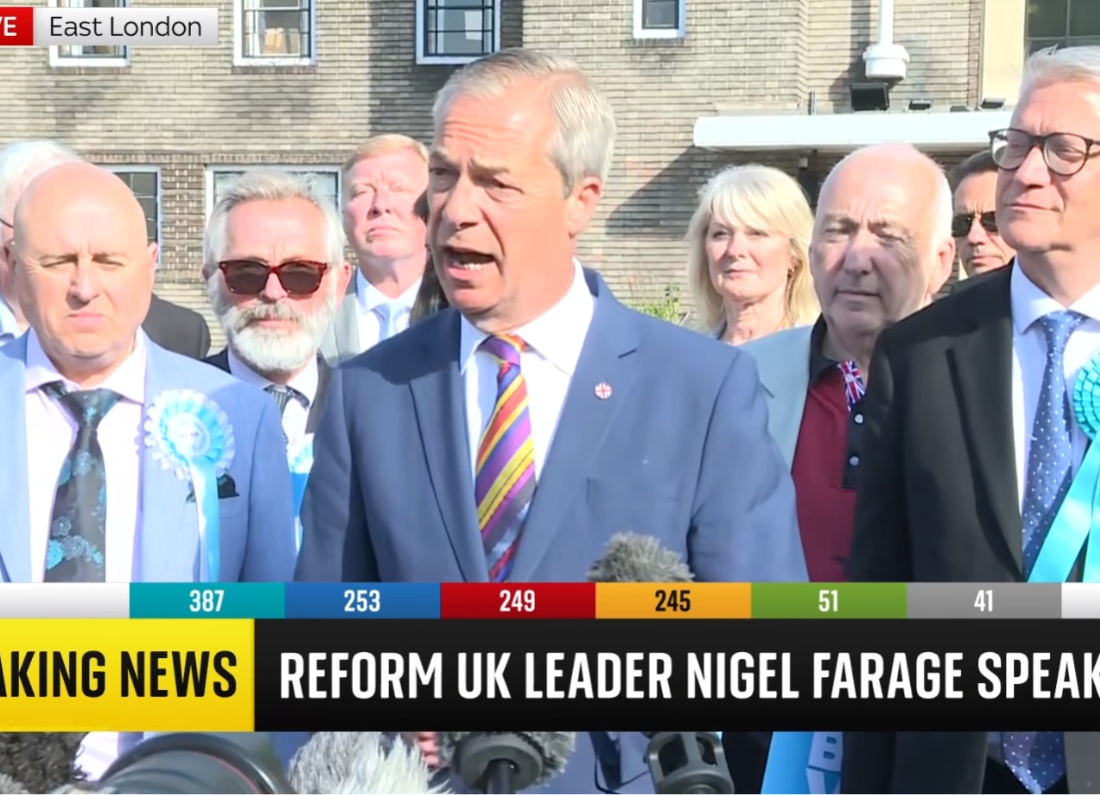
The question of whether Farage will act on the growing calls for Dudley’s dismissal will test how seriously Reform takes the political cost of this controversy – and whether it regards the outrage as genuine, or simply as noise it can ride out.
You may also like: The vetting headache: Why Reform UK is clashing with the BBC over candidate scandals






Leave a Reply