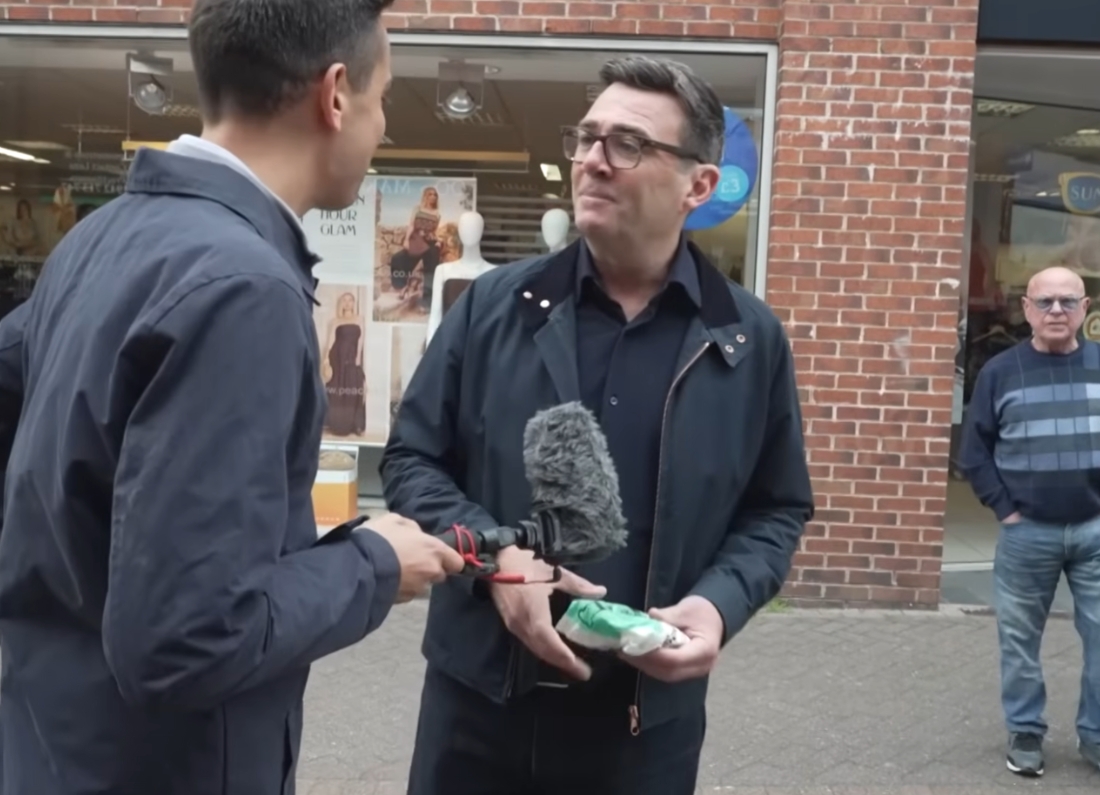
New hypothetical polling from More In Common shows Labour jumping eight percentage points to 30% under Andy Burnham as leader, enough to overtake Reform who drop from 29% to 27% – while the Greens would lose four points and the Lib Dems two, suggesting that a significant portion of the progressive vote currently parked elsewhere would return to Labour under the Greater Manchester mayor.
The polling, conducted 15-19 May and shared by Election Maps UK, represents the most significant data yet on the specific electoral impact of a Burnham leadership – and arrives at the precise moment he is preparing to contest the Makerfield byelection that would give him a route back to parliament, as we reported in our full Makerfield analysis.
The full numbers
Standard Westminster voting intention (More In Common, 15-19 May):
- Reform UK: 29%
- Labour: 22%
- Conservatives: 19%
- Lib Dems: 13%
- Greens: 11%
Hypothetical voting intention with Burnham as Labour leader:
- Labour: 30% (+8)
- Reform UK: 27% (-2)
- Conservatives: 20% (+1)
- Lib Dems: 11% (-2)
- Greens: 7% (-4)
- SNP: 3% (=)
The swing required to overtake Reform is real and meaningful. Labour currently trails Reform by seven points in standard polling. Under Burnham, that flips to a three-point Labour lead.
Where the votes come from
The movement in the numbers tells a specific story about where a Burnham bounce would come from – and it is not primarily from Reform.
Reform drops just two points – from 29% to 27%. The bulk of Labour’s eight-point gain appears to come from the progressive end of the political spectrum. The Greens lose four points and the Lib Dems two. Combined, that accounts for six of Labour’s eight-point gain, with the remaining two coming largely from Reform and the Conservatives.
The implication is significant. Burnham’s appeal is not primarily that he would win back the voters who have gone to Reform – though he picks up some of those. His primary electoral benefit, according to this polling, is that he consolidates the fractured centre-left vote that is currently distributed between Labour, the Greens and the Lib Dems.
As we reported in our analysis of the Green Party’s local election gains, the Greens have built their surge substantially from voters who were previously Labour supporters – young, urban, progressive voters who felt Labour had abandoned them. The polling suggests a significant proportion of those voters would return under Burnham.
This creates a specific tension for the Greens, who are currently weighing whether to contest Makerfield or stand aside, as we reported in our Caroline Lucas stand aside piece. If Burnham becomes leader, the party’s national polling base drops from 11% to 7% – a four-point loss that would significantly affect their Westminster seat projections.
The caveats – what hypothetical polling can and cannot tell you
This is hypothetical polling. It asks voters how they would vote in a scenario that has not yet happened, with a leader they have not yet seen in action at a national level, against opponents whose own responses to that scenario cannot be known.
Hypothetical polling consistently overstates the impact of leadership changes. The “Boris bounce” that followed Johnson’s ascension to the Conservative leadership was real but considerably smaller than some pre-leadership hypotheticals suggested. The “Corbyn effect” proved both larger and more complex than early polling indicated.
What hypothetical polling can do reliably is measure the name recognition premium – the gap between a known, trusted figure and the current baseline. Burnham has a 72% net favourability among Labour members and genuine crossover appeal that no other Labour figure currently possesses, as we reported in our Compass poll analysis. The eight-point hypothetical swing reflects that premium. Whether it survives the scrutiny of a general election campaign, the specific attacks that Reform and the Conservatives would direct at him and the governing reality of taking office in a difficult economic environment is unknown.
Why Makerfield just got higher stakes
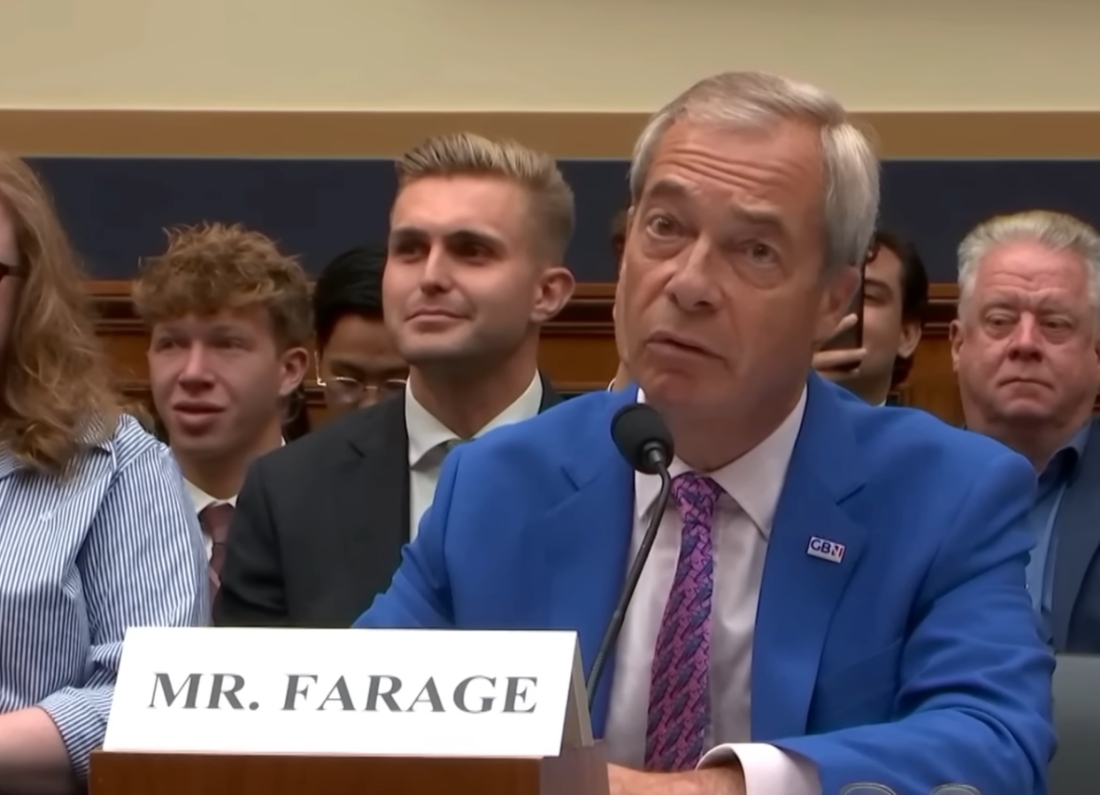
The polling arrives at a moment when the Makerfield byelection is already one of the most consequential contests in British politics. As we reported in our byelection coverage, Farage has vowed to “throw absolutely everything” at the contest, viewing Burnham as a far more dangerous long-term opponent than Starmer.
This polling explains exactly why. A Starmer-led Labour is seven points behind Reform in standard polling. A Burnham-led Labour is three points ahead. For a party that has spent the past year positioning itself as the inevitable governing force of British politics, the prospect of a leader who closes that gap and opens one in Labour’s favour represents an existential electoral threat.
The argument for Burnham as leader is not primarily ideological – though as we reported in our Burnham platform piece, his programme of renationalisation, devolution and attacking Reform as “arch-Thatcherites” is a substantive one. The argument is electoral: he is the one Labour figure the polling consistently shows could reverse the party’s trajectory.
Whether he gets the chance depends first on winning Makerfield – in a constituency where Reform won 50.4% of the local election vote two weeks ago.
What it means for the leadership contest
The polling strengthens Burnham’s position in the leadership contest that is now formally underway following Wes Streeting’s cabinet resignation, as we covered in our Streeting resignation piece. It provides the parliamentary Labour Party with a specific, data-driven argument for why the Burnham path is not just emotionally satisfying but electorally rational.
It also puts pressure on the NEC’s previous position of blocking Burnham from parliamentary byelections. As NEC sources have now indicated – as we reported – they are unlikely to block him again given the scale of Starmer’s authority collapse. The More In Common data gives those sources further ammunition: this is not a sentiment question about who people like, it is a voting intention question about who would win.
Eight points is a significant hypothetical bounce. Whether it becomes a real bounce depends on a byelection in Makerfield, a leadership contest against Streeting, Miliband and potentially Starmer himself, and then a general election in which Farage – currently at 27% in this very poll – would be gunning for him with everything he has.