

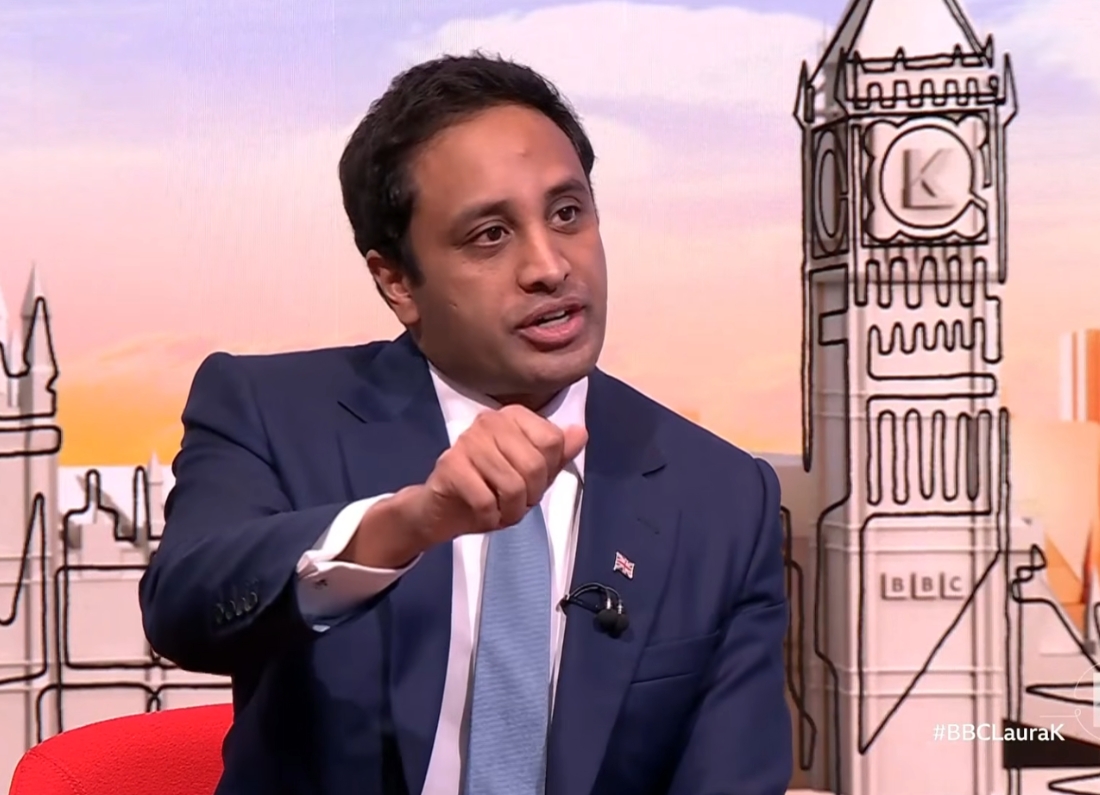
The Sunday morning political circuit is rarely a comfortable place for party chairmen, but Zia Yusuf’s recent appearance on Sunday with Laura Kuenssberg felt particularly combative. Yusuf, the man tasked with professionalising Reform UK and turning it into a “government in waiting,” found himself in a familiar defensive crouch. He was pressed on a growing list of candidate controversies that threaten to undermine the party’s momentum as we head toward the 2026 local and devolved elections.

What followed was a masterclass in modern political counter-punching. Rather than simply apologising for the latest round of social media outbursts and extremist links, Yusuf turned his fire on the BBC itself. He accused the broadcaster of “disproportionate coverage” and “unbecoming” bias. However, beneath the heated rhetoric lies a mounting structural problem: Reform UK has reportedly lost at least 67 candidates since May 2025. For a party that promised to “drain the swamp,” the water in their own camp is looking increasingly murky.
The ‘99.9%’ defense: A numbers game
The core of the tension during the interview revolved around the sheer volume of candidates being dropped or investigated. When Kuenssberg listed the most recent offenders, Yusuf’s response was a mix of condemnation and statistical deflection.
“All of that is abhorrent and the party has taken action,” Yusuf stated, before pivoting to a numbers game. He claimed that Reform has vetted over a thousand candidates over the last couple of years and that even if their success rate was “99.9%,” a handful of individuals would inevitably “slip through.”
However, political analysts and polling experts like Mark Pack suggest the math doesn’t quite hold up to scrutiny. If dozens of candidates have been lost in less than a year, that represents a failure rate far higher than the “handful” Yusuf suggests. Kuenssberg was quick to point this out, noting that, proportionally, Reform is losing more potential representatives to these kinds of scandals than any other major UK party.
A litany of ‘abhorrent’ remarks: The candidates in question
To understand why the BBC-and the wider press-is focusing so heavily on Reform, one has to look at the nature of the scandals. These are not just minor administrative errors or late tax returns; they often involve deep-seated ideological red flags that the party’s “improved” vetting process was supposed to catch.
- Linda Holt: A candidate whose past social media posts referred to former Scottish First Minister Humza Yousaf as an “Islamist moron.” Notably, Reform has chosen to stand by her, a move that critics suggest signals a blurring of the line between “plain speaking” and outright bigotry.
- Corey Edwards: A Senedd election hopeful who was photographed appearing to perform a Nazi salute. While Edwards has since stood down, the fact that he reached the selection stage at all raises questions about the depth of the party’s background checks.
- Chris Parry: A mayoral hopeful who was dropped after comparing a Jewish community group to “Islamists on horseback.”
These incidents are particularly damaging because Reform UK leader Nigel Farage spent much of the 2024 General Election blaming a professional vetting firm for failing to spot “bad apples.” The party promised a “gold standard” check for future cycles, yet the “apples” continue to fall from the tree at a rapid rate.
The ‘whataboutism’ strategy: Why Yusuf targeted the Greens
When cornered on Reform’s record, Yusuf deployed a classic political tactic: the “whataboutism” pivot. He accused the BBC of ignoring similar issues within the Green Party, specifically referencing reports from The Telegraph regarding antisemitic remarks allegedly made in a “Greens for Palestine” group chat.
While Yusuf claimed the BBC “hasn’t even reported” on such matters, the facts suggest a more nuanced picture. The BBC has a documented history of covering antisemitism allegations within the Green Party, including the dropping of several candidates in the lead-up to previous elections over problematic or extreme social media posts.
Yusuf’s attack on the BBC’s “news cycles” is a calculated move. By framing the party as a victim of a “mainstream media stitch-up,” Reform keeps its core base energized. For many Reform voters, an attack on the BBC is just as popular as a policy on immigration. However, for the “swing” voters Reform needs to win over to become a mainstream force, the constant stream of extremist headlines remains a significant barrier.
The Scottish front: A ‘terrific’ success or a ‘shambolic’ start?
The crisis isn’t limited to Westminster. In Scotland, the party is facing a similar uphill battle as it prepares for the Holyrood elections. Malcolm Offord, Reform’s leader in Scotland, was recently asked if the Scottish branch was “shambolic” after losing five candidates in a matter of days.
Offord’s defense was strikingly similar to Yusuf’s. He argued that the process of interviewing 300 people and selecting 73 in just six months was a “terrific” achievement for a brand-new party. He highlighted that 80% of their candidates are not career politicians, suggesting that their “interesting mix” of backgrounds naturally leads to a higher risk of “unfiltered” pasts coming to light. This “real people” defense is a double-edged sword: it explains why the candidates have colourful histories, but it also highlights a lack of professional oversight.
The insurgent’s dilemma: Can Reform ever truly professionalise?
The central problem for Reform UK is its own identity. The party thrives on being an anti-establishment outsider that welcomes people who are “fed up” with the status quo. This naturally attracts individuals who have been vocal, and often controversial-on social media for over a decade.
The party now faces a difficult choice. If they implement the kind of rigorous, invasive vetting used by the Conservatives or Labour, they risk alienating the very “average Joes” they claim to represent. They also risk a “hollowed out” candidate list if they disqualify everyone who has ever posted something controversial.
However, if they don’t tighten the screws, they will continue to provide their opponents and the media with an endless supply of “scandal” fodder. As the 2026 elections approach, the pressure on Zia Yusuf to move beyond the “99.9% defense” will only grow. For a party that wants to be taken seriously as a legitimate political force, shouting at the BBC might work for a Sunday morning headline, but it won’t fix a vetting system that appears to be leaking from every side.
Final thoughts on the road to 2026
Ultimately, the clash between Zia Yusuf and Laura Kuenssberg is about more than just a few bad tweets. It is a battle over the legitimacy of Reform UK. If the party can’t purge the “abhorrent” elements from its ranks, it will remain a protest movement confined to the fringes of the political debate. If they can successfully professionalise, they may well pose the biggest threat to the established order in decades. For now, the “vetting headache” shows no signs of clearing up.
You may also like: Sadiq Khan says Brexit will be reversed “in my lifetime” as he urges closer EU ties






Leave a Reply