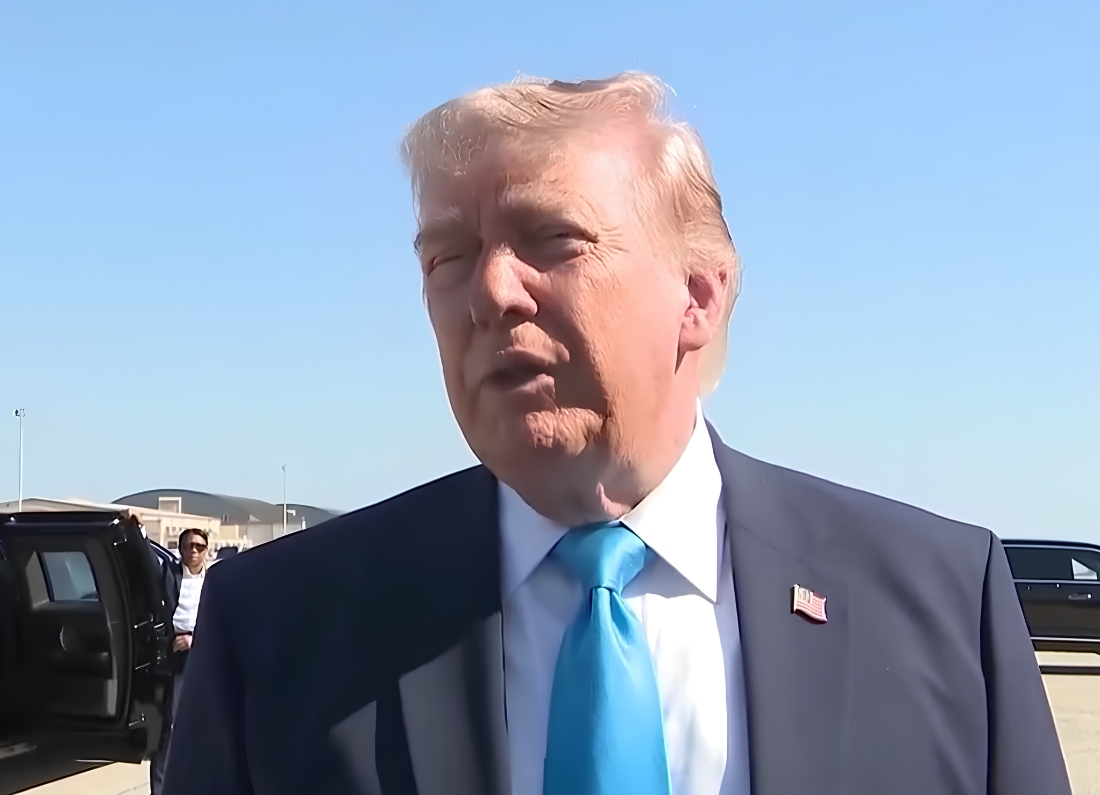
Donald Trump has suggested he might stand as Israeli prime minister after claiming a 99% approval rating in the country during a Wednesday press gaggle – a figure that no published poll supports, cited during a rambling exchange in which he described Benjamin Netanyahu as someone who “will do whatever I want him to do,” dismissed Iran’s peace proposals as “garbage” in the same week he declared the ceasefire “on life support,” and added the Israeli prime ministership to Venezuela’s presidency as a foreign leadership role he has floated pursuing.
The comment came when a reporter asked what Trump had said to Netanyahu about holding off on strikes on Iran. The answer that followed bore only a loose relationship to the question.
What Trump actually said
“He’s fine,” Trump said of Netanyahu. “He’ll do whatever I want him to do. He’s a very good man. He was a wartime prime minister, and he’s not treated right in Israel, in my opinion.”
Having established that Netanyahu was both a great guy and someone who does whatever Trump wants, the president pivoted without apparent transition to his own Israeli polling numbers.
“I’m right now at 99% in Israel. I could run for prime minister, so maybe after I do this, I’ll go to Israel and run for prime minister. I had a poll this morning – I’m at 99%, so that’s good.”
The White House did not respond to requests for the poll Trump cited. Journalists attempting to locate a survey showing 99% Israeli approval for Trump were unsuccessful. This is not unusual: Trump has a well-documented history of citing polling figures that cannot be independently verified or that represent significant upward rounding of actual data.
What the actual polling says
The Jerusalem Post’s most recent published survey on Israeli attitudes toward Trump, conducted in February, found that 73% of Israelis consider him a better-than-average US president where Israel is concerned, and 49% call him one of the best in American history for the country. These are strong numbers – considerably stronger than most Western leaders achieve – and reflect genuine Israeli appreciation for Trump’s decision to move the US embassy to Jerusalem in his first term and his generally supportive position on Israeli security questions.
They are not 99%. A 99% approval rating would make Trump the most popular figure in the history of democratic polling in any country. For context, even wartime leaders at the height of national crises rarely exceed 90%.
The legal obstacles
Trump is not eligible to become Israeli prime minister. Israeli law requires the holder of that office to be a member of the Knesset – Israel’s parliament. Knesset membership requires Israeli citizenship. Trump is an American citizen. He does not hold Israeli citizenship and has no evident pathway to acquiring it.
He is also currently serving as President of the United States, a role that is generally understood to be incompatible with simultaneous service as head of government of a foreign nation. The US constitution does not explicitly address this scenario, possibly because it was not anticipated.
Trump has previously hinted at pursuing an unconstitutional third presidential term in the United States, suggesting that legal eligibility requirements do not function as significant deterrents in his framework. The Knesset and its citizenship requirements may present a more practical obstacle than the American constitution’s two-term limit.
The Venezuela comparison
Wednesday’s suggestion was not the first time Trump has floated running for the leadership of a foreign country during his current term. Last month he suggested he might run for president of Venezuela after “toppling” the country’s current leader, dubiously claiming he was “polling higher than anybody has ever polled” there. Venezuela is not currently holding elections that would accommodate this aspiration. The Venezuelan government has not invited him to stand.
The Israel suggestion and the Venezuela claim share a specific rhetorical structure: Trump claims extraordinary popularity in a foreign country, notes that his poll numbers are higher than anyone else’s, and suggests he might seek elected office there. Whether this represents genuine belief in his international popularity, a deliberate performance designed to generate the specific reaction it reliably produces, or something between the two is not something his press gaggles typically clarify.
‘He’ll do whatever I want him to do’
The Netanyahu characterisation is worth dwelling on separately from the prime ministerial speculation. “He’ll do whatever I want him to do” – delivered as praise, in response to a question about whether Netanyahu was being asked to hold off on Iranian strikes – is a specific statement about the relationship between the US president and a sovereign allied nation’s elected leader.
Netanyahu’s position in the Israel-US relationship is one of permanent careful navigation: maximising American support while preserving Israeli strategic independence on questions of existential national security. Trump’s public framing of that relationship as Netanyahu doing whatever he is told is the kind of characterisation that will be processed carefully in the Knesset regardless of how it was intended.
It is also notable in the specific context of the Iran conflict. As we reported in our UN starvation warning piece, the Strait of Hormuz remains closed and 45 million people face potential starvation if fertiliser ships are not permitted through before the global planting season ends. The ceasefire Trump declared “on life support” and Iran’s peace proposals he dismissed as “garbage” in the same week are the context in which Netanyahu is allegedly doing whatever Trump wants.
The broader pattern
Trump’s foreign leadership suggestions – Venezuela last month, Israel this week – form part of a broader rhetorical pattern that has characterised this term of his presidency: the explicit assertion of American dominance over other nations presented not as foreign policy doctrine but as personal popularity contest. He does not say the US should lead the world; he says he personally is more popular than any other leader in that world, and that this popularity might translate into leadership roles in countries whose legal systems do not accommodate the aspiration.
Whether it is serious or not – and the balance of evidence suggests it is primarily performance – the framing tells you something specific about how Trump conceives of international relationships. Netanyahu will do whatever he wants because he is popular in Israel. He might as well run the place.
The Knesset has not yet revised its citizenship requirements.