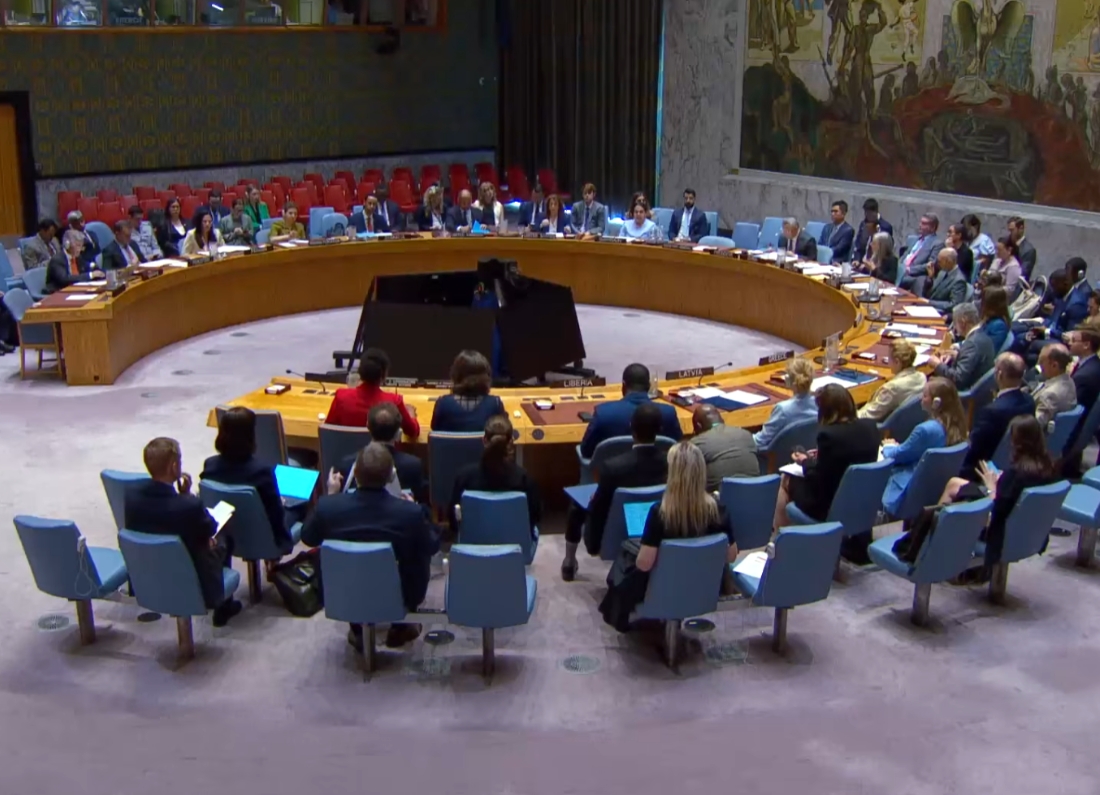
The United Nations General Assembly has voted 141 to 8 to adopt a resolution affirming that countries have a legal obligation to address the climate crisis, backing a World Court advisory opinion that states must reduce fossil fuel use and tackle global warming – with the United States, Russia, Saudi Arabia, Iran, Israel, Yemen, Liberia and Belarus forming the eight-nation bloc opposing it, and 28 countries including India and Turkey abstaining.
The resolution was brought by Vanuatu, a Pacific island nation where the consequences of climate change are not a future projection but a present reality. It affirms a July 2025 advisory opinion by the International Court of Justice finding that states are legally obligated to address global warming. While not itself legally binding, the ICJ opinion is already being cited in climate litigation around the world and being referenced by judges in climate-related rulings.
The vote took place after the Trump administration had spent months attempting to pressure Vanuatu into withdrawing the resolution before it reached the floor.
What the resolution says – and what it does not
The ICJ advisory opinion, requested by Vanuatu and adopted in July 2025, provides international courts with a formal legal framework for addressing climate obligations. It clarifies that existing international law – including the UN Charter and established principles of environmental law – creates binding obligations on states to reduce fossil fuel emissions and prevent foreseeable harm from climate change.
The resolution adopted on Wednesday affirms that opinion and asks the UN Secretary General to report on the legal issues it raises. It does not itself create new legal obligations. It does not have the force of a treaty. But in establishing that the ICJ has formally addressed these questions and that 141 of the UN’s 193 members support that framing, it significantly strengthens the position of climate litigants in domestic and international courts.
The resolution had already faced resistance at last year’s COP30 climate talks in Belem, where Saudi Arabia called its inclusion in final texts a “red, red line.” Its adoption by a 141-8 margin represents the largest formal international consensus on climate legal obligations in the UN’s history.
Who voted no – and why
The eight nations voting against were: the United States, Russia, Saudi Arabia, Iran, Israel, Yemen, Liberia and Belarus.
Their common thread is not difficult to identify. The US, Russia, Saudi Arabia and Iran are among the world’s largest fossil fuel producers. Saudi Arabia’s economy depends on oil revenues. Russia’s state budget depends on gas and oil exports. Iran’s position is shaped by a combination of fossil fuel dependency and its current confrontation with the West over the Hormuz standoff – which, as we reported in our UN starvation warning piece, is threatening 45 million people with food insecurity as fertiliser shipments are blocked from reaching planting season farmers.
US deputy ambassador Tammy Bruce said Washington saw “inappropriate political demands relating to fossil fuels” in the resolution and saw no basis for requiring the Secretary General to report on the legal issues raised. The Trump administration withdrew the US from the Paris climate agreement in January and has pursued policies to expand fossil fuel production. It had spent the preceding months urging other nations to pressure Vanuatu to withdraw the resolution before it came to a vote.
Who abstained – and what that signals
The 28 abstaining nations include some significant actors. COP31 host Turkey abstained. India abstained. Oil producers Qatar and Nigeria abstained. The abstentions represent a different political position from opposition – these countries did not vote against acknowledging a climate legal obligation, but were not prepared to formally endorse the resolution.
India’s abstention is particularly significant. As the world’s third-largest emitter, India’s position on international climate obligations carries substantial weight. Its abstention reflects the specific tension between acknowledging the scientific reality of climate change – which India does – and accepting international legal frameworks that might constrain its development pathway.
The UK voted in favour. Germany, France and Australia also voted for. The vote exposes the specific geopolitical alignment on climate action in 2026: a large majority of the world’s nations, including the major European economies, ranged against a small bloc led by the world’s largest fossil fuel exporters and an American administration that has positioned itself as their ally.
The Pacific dimension – where climate is not a future problem
The resolution was brought by Vanuatu, and the Vanuatu ambassador’s words before the vote deserve to be quoted at length. “We should be honest with one another about why this matters,” he said. “It matters because the harm is real and it is already here, along our islands and coastlines, for communities facing drought and failed harvests. The states and peoples bearing the heaviest burden are very often those who contributed least to the problem.”
This is not rhetorical framing. It is a factual description of who is experiencing the consequences of decisions made predominantly in Washington, Moscow, Riyadh and Beijing.
In Tuvalu, where the average elevation above sea level is two metres, more than a third of the population has applied for a climate migration visa to Australia. By 2100, much of the country is projected to be underwater at high tide. In Nauru, the government has begun selling passports to wealthy foreigners – offering visa-free access to dozens of countries – specifically to generate revenue for possible national relocation.
These are not future scenarios. They are the present circumstances of nations whose total combined carbon emissions are negligible fractions of what the eight voting nations produce. Vanuatu’s minister of climate change, Ralph Regenvanu, said: “In the current geopolitical context, sustained commitment to the rule of law is more important than ever.”
The 1.5°C target – and what scientists now say
The Paris climate agreement in 2015 set a goal of limiting global warming to 1.5°C since preindustrial times, producing the mantra “1.5 to stay alive” that has defined a decade of climate negotiations. Scientists now say that even their best-case scenarios project temperatures exceeding that threshold. The discussion has shifted from how to prevent 1.5°C of warming to how to limit the damage from a world that will exceed it.
The ICJ opinion provides international courts with tools to pursue accountability even in that context – establishing that states had legal obligations they did not meet, and that damages may be sought by those bearing the consequences of that failure. Vanuatu’s campaign director Vishal Prasad called the 141-8 vote a commitment to “making it a reality.”
What this means for climate litigation
The specific practical consequence of the vote is its effect on climate litigation. Courts in multiple jurisdictions are already citing the ICJ opinion in cases brought by communities, individuals and governments affected by climate change against both states and corporations. The 141-8 GA vote strengthens the legal argument that the ICJ opinion reflects genuine international consensus rather than a contested position.
As we reported in our analysis of what local councils can do on climate change, English local authorities have no specific legal climate duties – a situation the Equality Trust and others have argued requires mandatory targets and legal obligations. The ICJ advisory opinion, now backed by 141 UN member states, provides the international legal framework within which those arguments will increasingly be made.
Reform UK, whose councils have deleted climate targets in seven of the ten they control as we reported in our Reform first year piece, now governs hundreds of additional councils following the local elections. John Major’s assessment, as we reported in our net zero piece, was direct: scrapping net zero commitments is telling our children “tough luck.” 141 countries and the World Court have now said something considerably more specific.