


Labour has drawn level with Reform UK in a Survation voting intention poll for the first time in more than a year, raising hopes inside the party that Andy Burnham’s arrival in Downing Street could begin to reverse its political decline.
The new survey puts Labour and Reform on 24 per cent each, ending the consistent lead Nigel Farage’s party has enjoyed in Survation’s polling series.
Labour has gained five points since the pollster’s previous survey in June, while Reform has fallen by three. It is Labour’s largest single increase in a Survation poll since the 2024 general election and leaves the party on its highest figure with the company since November last year.
The Conservatives remain close behind after gaining one point to reach 21 per cent. The Liberal Democrats have slipped to 11 per cent, putting them level with the Greens, whose support remains unchanged.
The poll was carried out between 10 and 14 July, when it was already clear that Burnham was likely to replace Keir Starmer as Labour leader and prime minister. Burnham was formally confirmed as leader on Friday and will enter Downing Street on Monday.
It means the change may represent an early Burnham boost, even though he had not officially taken control of the party when people were questioned.
For Labour MPs who have watched their party fall behind Reform for much of the past year, the result offers some badly needed encouragement. It is still only one poll, but it suggests that changing the leader has already persuaded at least some former supporters to give Labour another look.
The full Survation results
The survey produced the following Westminster voting intention figures: Reform UK 24 per cent, down three; Labour 24 per cent, up five; Conservatives 21 per cent, up one; Liberal Democrats 11 per cent, down one; Green Party 11 per cent, unchanged; SNP 3 per cent, unchanged; Restore Britain 2 per cent, unchanged; Plaid Cymru 2 per cent, unchanged; Others 4 per cent, unchanged.
Survation questioned 2,057 adults online across the UK. The changes are measured against its previous poll, conducted on 17 June.
Labour’s recovery is particularly notable because the party has not reached 24 per cent in one of the company’s polls since 20 November 2025. Reform’s result is its lowest since the weeks after the May 2025 local elections. Farage’s party has not collapsed and remains tied for first place, but the poll interrupts a long period in which it appeared to be pulling British politics towards a three-party contest on its own terms.
The Conservatives are also only three points behind the joint leaders. With all three largest parties clustered between 21 and 24 per cent, British politics remains fragmented and unpredictable. Under the first-past-the-post electoral system, even relatively small movements between those parties could produce dramatic differences in the number of seats won at a general election.
Is this already a Burnham bounce?
Although Starmer was still prime minister during the fieldwork, Burnham had already secured the nominations required to replace him. By that point, his elevation to the Labour leadership was effectively guaranteed.
Survation tested the question again while including the leaders’ names. The result barely changed, with Burnham’s Labour on 24 per cent, Farage’s Reform on 24 per cent and Kemi Badenoch’s Conservatives on 20 per cent. The pollster suggested this may indicate that voters were already treating Burnham as Labour’s de facto leader.
That is important because it also means there may not be a large additional bounce waiting to appear simply because Burnham formally takes office. His name and imminent arrival in Downing Street were already familiar to respondents. His next challenge will be turning initial goodwill into durable support once voters see his Cabinet and learn more about his policies.
Burnham used his first speech as Labour leader to promise a more recognisably Labour government, saying the party would give people “hope back” and listen to those living in places that had been ignored by Westminster. He pledged to move power away from Whitehall, increase public control over essential services and end the factional infighting that damaged Labour under previous leaders.
Those broad commitments appear to have created some optimism, but difficult decisions will follow quickly. Burnham will inherit weak economic growth and strained public services, while Labour remains vulnerable to Reform on immigration and to the Greens among progressive voters.
Starmer leaves with disastrous personal ratings
The improvement in Labour’s position comes as Starmer leaves office with some of the worst personal ratings recorded for a departing prime minister. Only 22 per cent of those questioned by Survation said they liked him, while 55 per cent said they did not. That left Starmer with a net score of minus 33, the lowest of the five party leaders tested.
Green leader Zack Polanski received a net score of minus 21, while Farage was on minus 18. Liberal Democrat leader Ed Davey recorded minus three. Badenoch was the only leader with a positive result. Thirty-six per cent said they liked the Conservative leader and 32 per cent said they did not, giving her a net score of plus four.
Starmer also performed poorly when respondents were asked about individual leadership qualities. Thirty-eight per cent identified him as the leader most out of touch with ordinary people, compared with 27 per cent for Farage. Confidence in Starmer’s ability to handle immigration stood at just 17 per cent, while 61 per cent said they were not confident in him. His ratings were also deeply negative on the economy and the asylum system.
Those figures help explain why his departure appears to have benefited Labour before Burnham has even had a chance to govern. Some of the party’s five-point rise may reflect enthusiasm for its new leader, but some may simply come from relief that Starmer is leaving.
Labour has not solved its wider problem
The headline tie is welcome news for Labour, but the rest of the polling shows Burnham still has a considerable rebuilding job ahead. Only 20 per cent of respondents said Labour was the party they felt closest to. Reform followed on 18 per cent and the Conservatives on 17 per cent, while 21 per cent said they did not feel close to any party.
Labour itself retains a net likeability score of minus 16. That is worse than Reform’s minus 11 and the Conservatives’ minus six. In other words, replacing Starmer has improved Labour’s voting intention without completely repairing public attitudes towards the party.
Burnham will need to convince voters that the change involves more than putting a more popular figure at the front of the same government. He has promised a new political direction, but the details will determine whether the current improvement lasts.
There is also good reason to treat any single survey carefully. Different polling companies use different methods, and several recent polls have continued to show Reform ahead. A seven-poll average published before the new Survation result placed Reform on approximately 25 per cent, with Labour below 20 per cent. One favourable survey does not erase that wider trend.
Survation itself warned that “a single poll is not a trend” and said the picture would become clearer after Burnham had spent several months as prime minister.
Still, the direction of movement is unmistakable. Labour is up five points and Reform is down three in the same poll. For a government that has spent more than a year watching Farage dominate the political conversation, that is a meaningful change.
Reform’s difficult summer
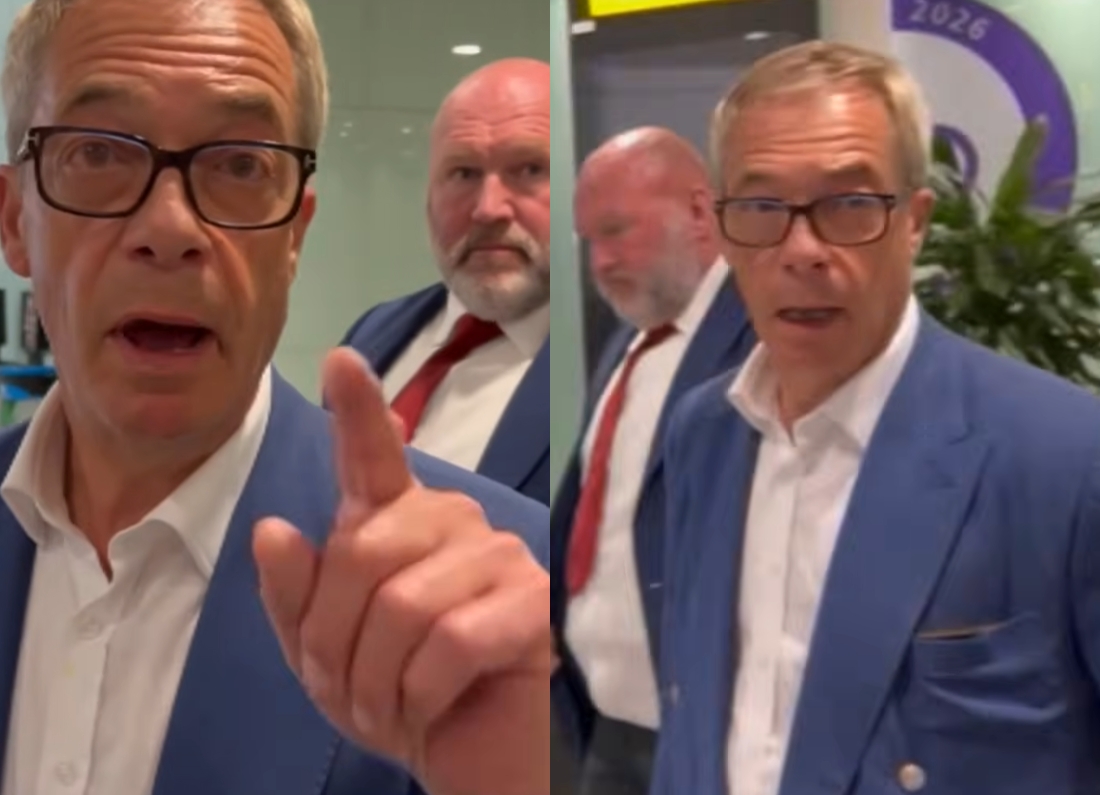
The narrowing of the polls also arrives during an increasingly turbulent period for Reform. Farage resigned as the MP for Clacton earlier this month and announced that he would stand again in the resulting by-election. He portrayed the contest as “the people versus the establishment” and said his constituents should be allowed to judge the controversy surrounding his finances.
The decision followed intense scrutiny of a previously undeclared £5 million gift from billionaire cryptocurrency investor Christopher Harborne. Farage has said it was an unconditional personal gift and denied breaking parliamentary rules. The Parliamentary Commissioner for Standards opened an investigation into whether the payment should have been declared. The inquiry was paused when Farage ceased to be an MP and will resume if he wins the by-election and returns to Parliament.
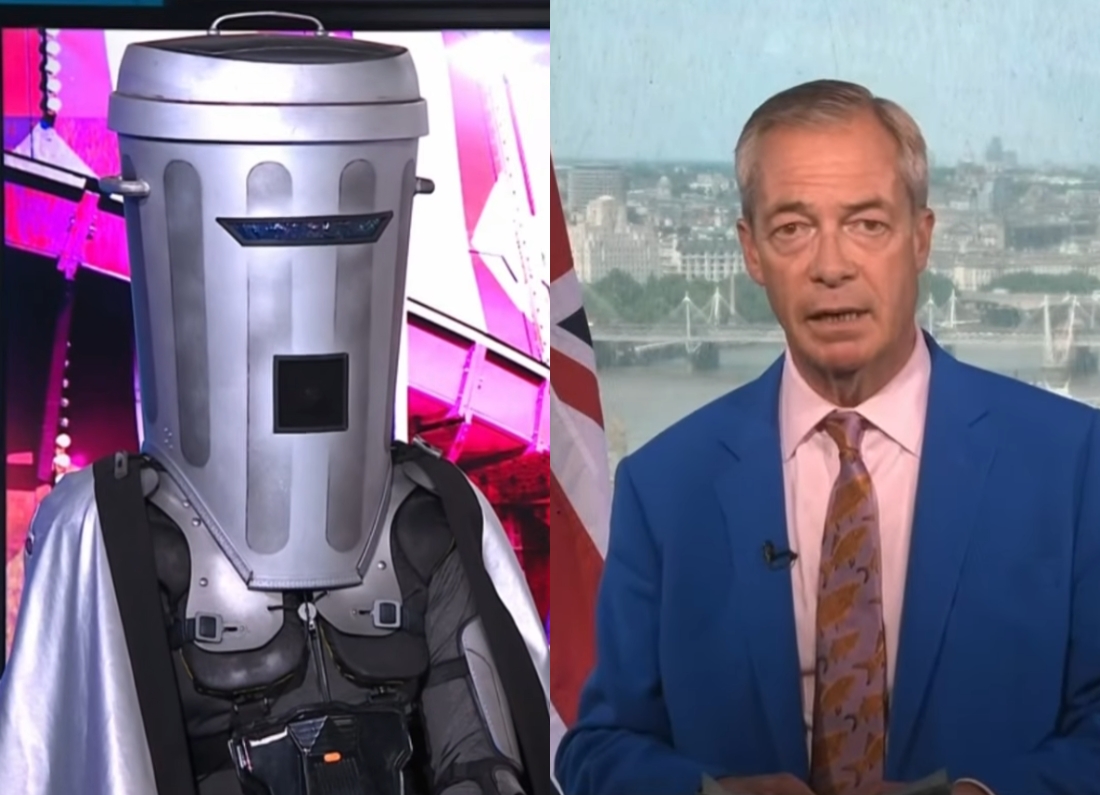
Labour, the Conservatives and the other main parties declined to put forward candidates, describing the election as a stunt. That has left Farage facing Count Binface as his most prominent challenger, alongside a collection of smaller parties and independent candidates.
Farage is still expected to reclaim the seat, but the spectacle has distracted Reform from its attempt to present itself as a government in waiting. The fall recorded by Survation may be an early indication that the financial questions surrounding its leader are beginning to cut through.
Burnham’s opportunity
Burnham will enter Downing Street with Labour in a better polling position than it has enjoyed for months, but he will also face expectations that Starmer was no longer capable of meeting.
The new leader is more personally popular and is widely regarded as a stronger communicator. An Ipsos poll conducted before his confirmation found that 30 per cent preferred Burnham as prime minister, compared with 16 per cent for Farage and 13 per cent for Badenoch.
That advantage will only matter if Burnham can show voters what his government intends to do differently.
For now, the change at the top appears to have given Labour an opening. Reform’s lead has disappeared in one important polling series and the party has recorded its biggest increase since winning the general election.
Whether this becomes the beginning of a genuine recovery or a short-lived leadership bounce will depend on what Burnham does after he receives the keys to Number 10.



Leave a Reply